China’s latest attempt to reassure foreign investors is colliding with a much larger structural shift already underway across global manufacturing.
As Beijing rolls out fresh measures to stabilise foreign investment, industry insiders say many multinational corporations are continuing to reduce their exposure to China, redirecting new investment and production capacity to Southeast Asia, India and Mexico amid concerns over regulatory uncertainty, cross-border data restrictions and growing geopolitical tensions.
On June 23, China’s Ministry of Commerce announced a 15-point action plan designed to attract and retain foreign capital. The package covers a broad range of issues, including cross-border data transfers, foreign mergers and acquisitions, profit reinvestment, research and development centres, financial risk management tools, and pilot programmes permitting wholly foreign-owned hospitals.
The initiative comes at a time when Beijing faces mounting difficulty in persuading foreign companies to expand operations in the world’s second-largest economy. While the government has introduced new incentives, reports suggest that many global businesses remain cautious about committing fresh capital.
Official incentives meet growing investor skepticism
Unofficial reports from China’s Ministry of Commerce suggest that foreign capital is leaving China at a significantly faster pace than official statistics indicate.
According to the reports, foreign-investment withdrawals during the past few months have increased by about 30 per cent compared with the same period last year, a trend that observers say has not been seen during the past five years.
The reports indicate that the Chinese Communist Party (CCP) has become increasingly concerned about the outflow. Vice Premier He Lifeng has reportedly been tasked with leading efforts to stabilise foreign investment, particularly from Germany and other major trading partners.
Officials are also worried that worsening trade frictions with Europe and the United States could further weaken investor confidence.
The "Made in China" era for smartphones isn't just ending; it has officially collapsed.
New data from SemiAnalysis reveals a tectonic shift in the global supply chain: U.S. smartphone imports from China have plummeted from a dominant 90% in 2022 to just 25% today.
The… pic.twitter.com/5gBIJhi15V
— Jack Straw (@JackStr42679640) April 15, 2026
The reports point to what they describe as a contradiction in Beijing’s approach. While the government wants to retain foreign investment, it is simultaneously increasing scrutiny of foreign companies’ supply chains and industrial networks.
Chinese news portal Sohu reported that official Ministry of Commerce figures showed that 25,297 new foreign-invested enterprises were established nationwide between January and May, representing an increase of 5.3 per cent compared with the same period last year.
However, actual foreign direct investment utilised during the same period declined by 8.6 per cent year-on-year to 327.3 billion yuan (US$45.6 billion). Investment inflows during May alone increased by 5.9 per cent from a year earlier.
Unofficial reports questioned the reliability of these official figures, arguing that many reported investments originate from Chinese firms that first register entities overseas before reinvesting back into China.
The reports also raised concerns about the quality of statistics compiled by local governments.
According to the reports, these figures are largely collected by provincial authorities before being submitted to the Ministry of Commerce. Historically, separate internal and public datasets reportedly existed, but the internal data disappeared several years ago, leaving only the publicly released figures.
Data controls and state expansion deepen business concerns
The newly announced action plan attempts to address several long-standing concerns raised by foreign businesses operating in China.
Among its key provisions are proposals to accelerate revisions to rules governing foreign acquisitions of domestic Chinese companies, simplify approval procedures and improve payment arrangements for mergers and acquisitions.
The plan also proposes expanding pilot programmes that allow local authorities to create negative lists governing cross-border data transfers, implementing tax incentives for reinvested profits and strengthening support for foreign-funded research centres.
According to the reports, these issues have become central concerns for multinational companies.
Investors, the reports say, are looking beyond financial incentives. They want certainty over whether business data can move across borders and whether they will be able to exit the Chinese market when necessary. Many foreign companies are therefore no longer directing their new investment towards China.
For multinational corporations, cross-border data regulations affect customer information, financial records, supply-chain management systems and research operations. Restrictions on transferring data outside China complicate oversight by corporate headquarters and increase compliance costs.
The reports caution against interpreting Beijing’s latest policy package as evidence of a significant reopening of China’s economy.
Although the measures combine market access, capital flows, data management, research support and broader business-environment policies, the reports argue that they do not represent a fundamental shift towards greater openness.
Instead, under Chinese leader Xi Jinping, state-owned enterprises have continued to assume a larger role within the economy while private firms face increasing pressure.
According to the reports, the continued expansion of state-owned enterprises makes the market more closed and more centralised. Industries increasingly dominated by large state-owned firms leave less room for private-sector competition, further discouraging foreign investment.
Manufacturing diversifies beyond China
The changing investment climate is increasingly reflected on factory floors across China.
Manufacturers in Guangdong Province report that foreign clients have steadily shifted orders to countries including Vietnam, India and Mexico.
According to the reports, orders are gradually being transferred to these alternative destinations, with many overseas customers now requiring suppliers to establish production facilities outside China because of concerns over tariffs and broader political risks.
Although China continues to retain significant supply-chain advantages, industry participants say the period during which multinational corporations concentrated nearly all production in China has largely come to an end.
As manufacturing moves elsewhere, the effects extend well beyond factories themselves, affecting suppliers, logistics providers, packaging companies, labour contractors and commercial landlords.
Companies in eastern China are also experiencing similar pressures. According to the reports, many firms in Zhejiang and Jiangsu are considering establishing overseas factories as clients increasingly request production to be relocated to neighbouring countries in order to avoid trade barriers.
However, relocation remains a difficult process for many businesses. Factories are spread across the region, and many companies don’t have the money to move everything overseas. Legal and operational challenges also make expansion into markets such as Vietnam more complicated.
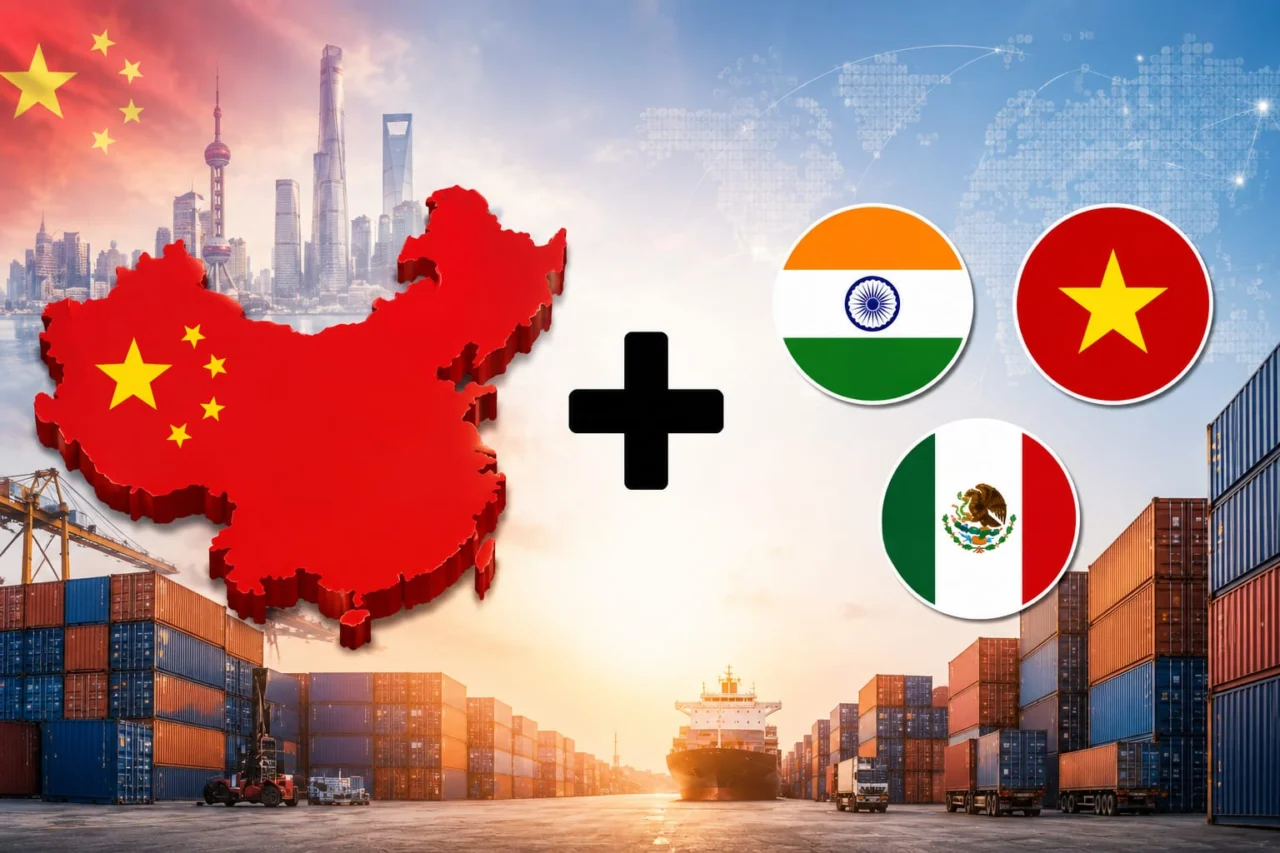
Rather than abandoning China entirely, many multinational corporations are adopting what has become known as the “China + 1” strategy. Under this approach, companies retain research, management functions and part of their manufacturing base in China while directing new production capacity and future manufacturing investment towards alternative locations such as Vietnam, India and Mexico.
The trend reflects a broader recalibration of global supply chains rather than a complete withdrawal from China. Even so, Beijing’s efforts to reverse the movement face what the reports describe as a fundamental dilemma.
On one hand, the CCP is introducing incentives designed to attract foreign investors. On the other, it continues to treat foreign capital with suspicion while strengthening regulatory controls over business activity, supply chains and data. According to the reports, these two approaches are difficult to reconcile.
As multinational companies continue to diversify manufacturing networks under the “China Plus One” strategy, Beijing’s latest incentives may slow, but have yet to reverse, the broader shift of global investment towards new strategic manufacturing hubs across Asia and beyond.