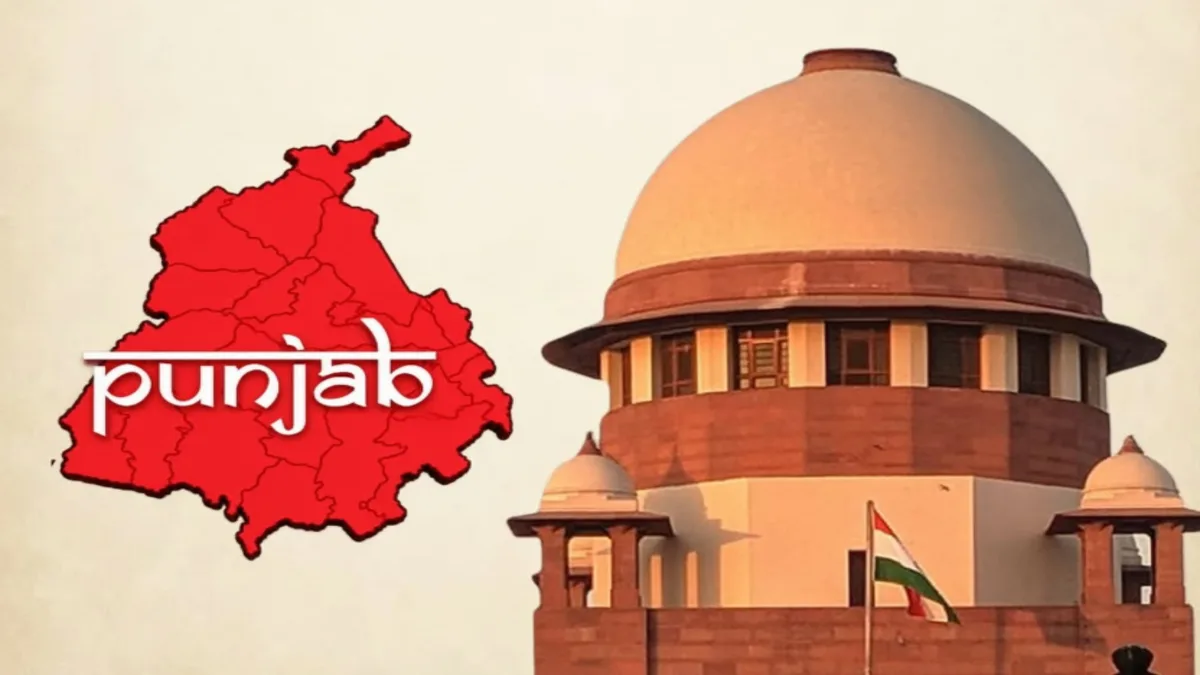
The Supreme Court has set aside elections in 50 municipal wards across Punjab’s Patiala and Moga districts after a fact-finding commission found that opposition candidates were forcibly prevented from filing nominations. The court ordered fresh elections within six weeks, with safeguards covering nominations, polling and declaration of results.
A Bench comprising Chief Justice of India Surya Kant and Justices Joymalya Bagchi and V. Mohana passed the order on September 28 in Seema Sharma and Others v. State of Punjab and Others. The order, made available on October 7, covers 28 wards of Patiala Municipal Corporation, seven wards of Dharamkot Municipal Council and all 15 wards of Baghapurana Municipal Council.
The dispute arose from the December 2024 municipal elections. Petitioners associated with different national and state political parties alleged that ruling-party members, police officials and others obstructed the submission of nomination papers through physical assault, tearing of clothes and snatching of documents. They also complained that the nomination process was not video graphed despite directions from the Punjab and Haryana High Court.
On March 24, 2025, the Supreme Court appointed former Punjab and Haryana High Court judge Justice Nirmaljit Kaur as a one-member fact-finding commission, with the parties’ consent. Her inquiry examined affidavits, official replies, CCTV footage, photographs and electoral records, alongside statements from candidates, election personnel, police officers and other officials.
The commission found widespread interference during nominations, including the destruction of nomination papers and assault, detention or intimidation of candidates. In Patiala, opposition candidates were prevented from filing nominations in 13 wards. In another 14, particular opposition candidates were forcibly excluded from contesting, although the commission could not determine whether their participation would have changed the results. A further ward was affected because a candidate was prevented from submitting his nomination.
In Dharamkot, seven ward elections were vitiated by obstruction of nominations, coercive withdrawals or wrongful rejection. In Baghapurana, opposition candidates were systematically prevented from filing nominations across all 15 wards. Senior advocate Kapil Sibal, appearing for Punjab, informed the court that the State had no objection to accepting the commission’s recommendations.
The court requested the High Court Chief Justice to appoint a monitoring committee comprising a retired High Court judge within one week. The election schedule can be notified only after its constitution. Two or three senior High Court lawyers will serve as observers, with nominations, scrutiny, symbol allocation and polling to be video graphed.
Punjab must provide ward-wise details of election personnel and police officers of DSP rank and above. Complaints of interference will be examined by the committee and, where substantiated, referred to the High Court Chief Justice for appropriate judicial action.
Results may be declared only after the High Court Chief Justice records satisfaction, based on the monitoring report, that the elections were free and fair. Punjab will bear the monitoring expenses and provide necessary support.