PARIS: France is witnessing a nationwide wave of high-school student protests over overcrowded classrooms, teacher shortages, deteriorating school infrastructure and inadequate education funding. What began as school blockades in the Paris region has spread to cities including Marseille, Lyon, Strasbourg, Nantes, Rennes and Lille, with arson, clashes with police and damage to educational institutions prompting thousands of arrests.
The protest most importantly highlights growing anti-establishment trend and Gen Z protests across the globe, similar to the Cockroach Party protest in India. Beyond demanding fundamental rights, students are increasingly resorting to violence and other harnful means against teachers, police and the government. This trend, raises concern about the hidden hands and agenda behind the soaring Gen Z protests worldwide.
Schools are set on fire in France.
Student protests are happening across the country, with many schools blocked or closed. And unfortunately, in some places things have gone much further, with clashes, damage and even fires in schools.
The students are calling for better…
— Karata (@karatademada) October 2, 2026
Protests spread nationwide; Schools face closures as students embark on violence
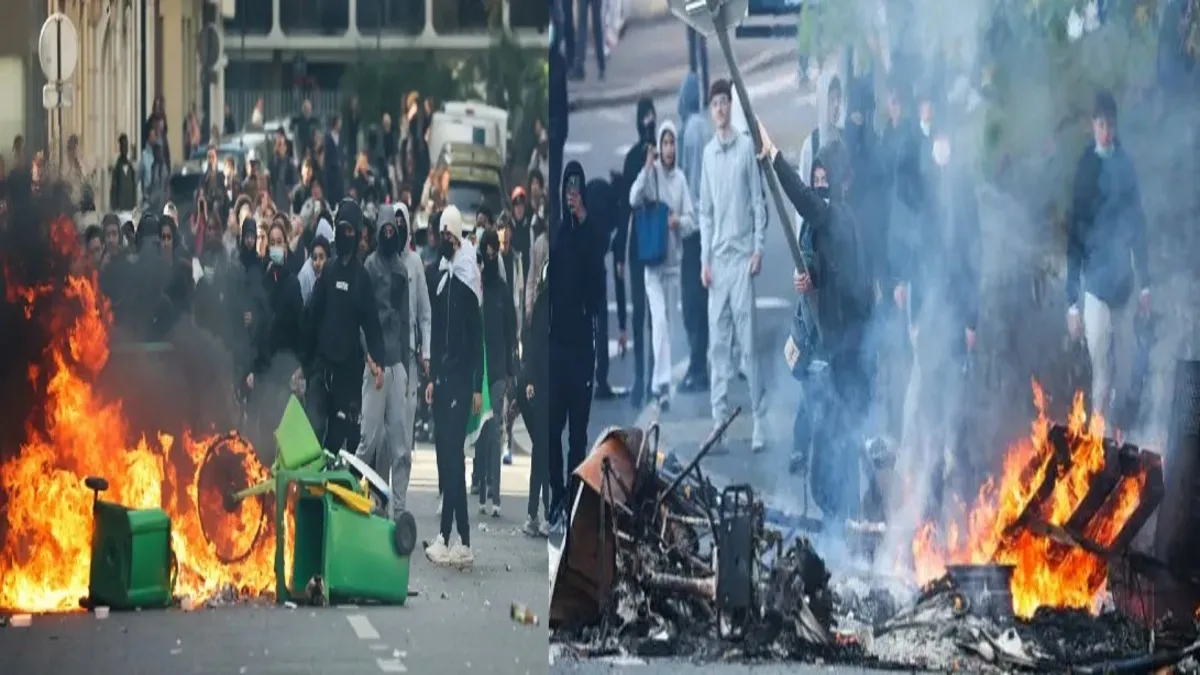
The student demonstrations, which began in the Île-de-France region last week, has escalated into a nationwide public-order challenge, with protesters blockading school entrances, setting fire to rubbish bins and confronting police officers.
According to figures reported by the French authorities, approximately 400 of the country’s 3,700 secondary schools, known as lycées, were expected to remain closed on October 2 Friday. The protests have also disrupted university campuses and local transport networks in several cities.
The Interior Ministry reported thousands of arrests since the protests began. Justice Minister Gérald Darmanin said around 2,000 people had been arrested by October 2, Friday, while subsequent reports citing the Interior Ministry indicated that nearly 3,000 lycée students had been detained for trigggering the unrest, including 1,949 on Thursday alone.
Scooters incendiés devant le lycée Diderot de Paris 19e.
Un précédent incendie a noirci la façade de l’établissement pic.twitter.com/KA5PSI1elb— CLPRESS / Agence de presse (@CLPRESSFR) October 1, 2026
The unrest has forced several institutions to shift classes online, while some schools have suffered extensive fire damage. The demonstrations have affected major urban centres, including Paris, Marseille, Strasbourg, Rennes, Toulouse, Lille, Dijon, Nantes, Brest and Tours. In neighbouring Belgium, student protests were also reported in Liège, indicating that the violent unrest could extend beyond France.
Overcrowded classrooms & teacher shortages claimed as reason behind violent unrest
At the centre of the protests are students’ complaint about deteriorating educational conditions, including overcrowded classrooms, insufficient teaching staff, inadequate sanitation, ageing buildings and a lack of essential facilities.
Students have highlighted classrooms accommodating 34 to 35 pupils, shortages of chairs, inadequate cafeteria capacity and difficulties accessing toilets. Others have complained about excessive school hours, staff absences and classrooms becoming unbearably hot during heatwaves.
Students in Strasbourg have similarly raised concerns about water leaks, insufficient resources and overcrowded cafeterias. The Secondary School Students’ Union, known as USL, has backed further demonstrations and called for a large national protest on October 6. Its president, Ryad Rani, has accused the government of repression and alleged that police have used excessive force against young demonstrators.
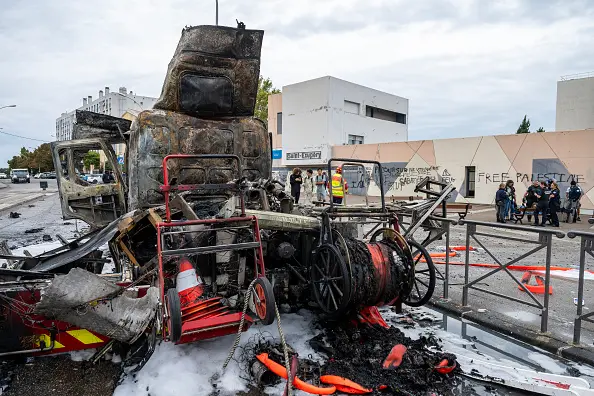
Arson, clashes, attacking teachers & damage to school buildings by masked individuals
Students have apparently stimulated violent incidents, which has increasingly overshadowed their demands. Nantes has emerged as one of the most prominent examples of the damage caused during the unrest. A fire at Lycée Nelson-Mandela damaged the cafeteria and other parts of the 12-year-old institution, which cost approximately €64 million to construct and serves around 1,700 students. The school is expected to remain closed until the half-term break.
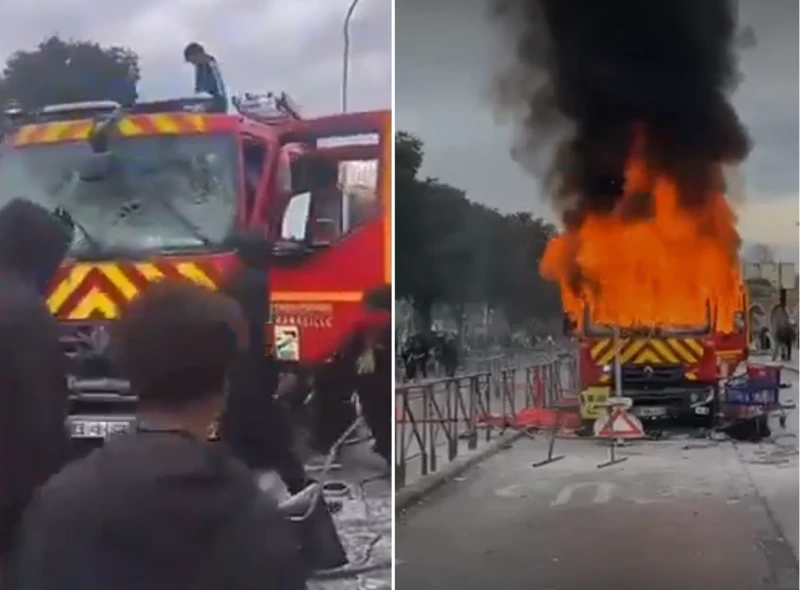
In Marseille, footage showed masked individuals attacking a fire engine outside a school, smashing its windows and setting the vehicle ablaze. Other incidents involved attempts to start fires inside school premises, with a teacher splashed with petrol during unrest at one institution. Fire damage was also reported at two high schools in Paris on Friday. In Lille, a teacher was attacked after attempting to contact firefighters about a burning rubbish bin.
These violent episodes clearly indicate a hidden agenda by invisible hands, who are using students and their distress against education system, as tool to trigger unlawful and harmful activities.
Government blames violent groups; Left parties support unrest
Prime Minister Sébastien Lecornu has convened crisis-level discussions as the unrest spread, warning that escalating violence threatens the continuity of public education and places students and staff at risk.
Education Minister Édouard Geffray has acknowledged that some student grievances are legitimate but warned that violent groups are exploiting the movement. He has urged parents to discourage their children from participating in street protests, arguing that minors face serious risks amid clashes with police. Darmanin has said that the movement has been hijacked by outsiders and called for parents to be held financially responsible for damage caused by their children.
The government has also said that politicians from the hard-left France Unbowed (La France Insoumise, or LFI) party helped initiate the movement. Bally Bagayoko, the LFI mayor of Saint-Denis, has expressed support for protesting students and faced criticism after suggesting that violence could be legitimate in certain confrontations involving police. The violent students protest gains further significance ahead of France’s 2027 Presidential election.