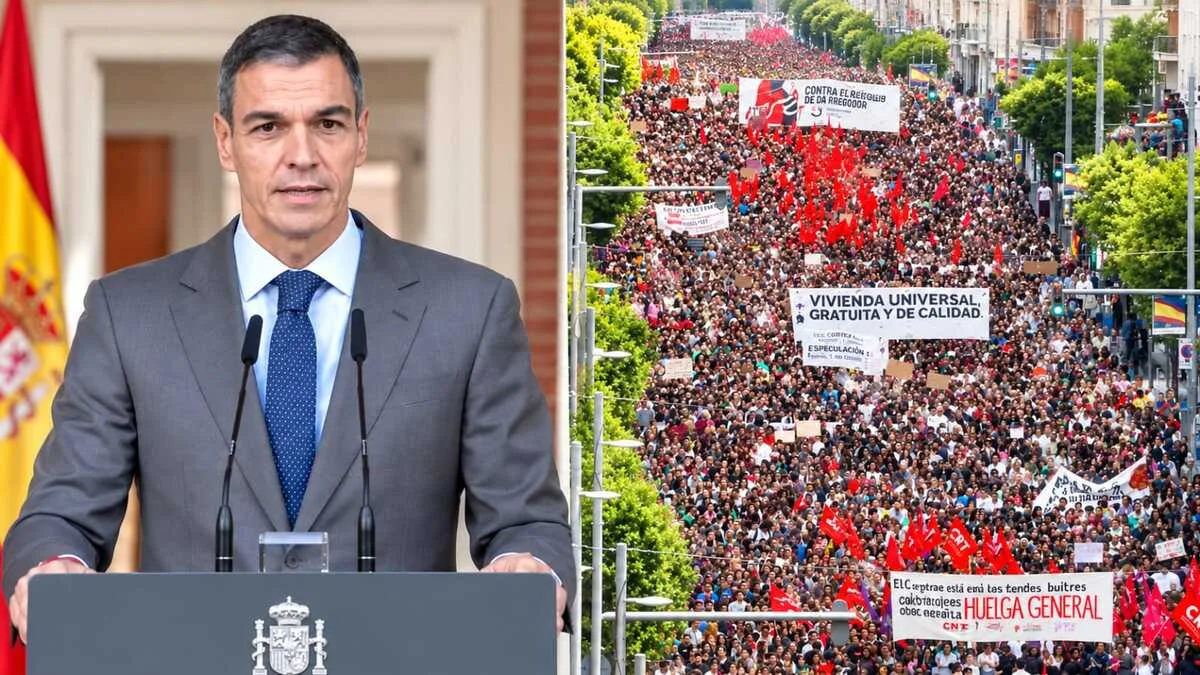
MADRID: Spain’s Prime Minister Pedro Sanchez has called a snap general election for November 29, 2026, after his Socialist Party-led government suffered a major parliamentary defeat over emergency housing measures. The decision marks the sharpest political test yet for the Spanish left government, which has governed since 2018 and is one of Europe’s remaining left-leaning national governments.
Sanchez announced the election in a televised address on October 5, saying his objective was to renew public support and secure a “broader progressive majority” in Parliament. The announcement followed the rejection of two government housing decrees in the Congress of Deputies on October 2, exposing the difficulties faced by Sanchez’s coalition in securing legislation.
The Socialist Party, formally the Spanish Socialist Workers’ Party (PSOE), has governed in coalition with the left-wing Sumar since 2023. Because the government lacks a parliamentary majority, Sanchez has depended on regional and smaller parties, including Catalan separatist party Junts, to pass legislation. Junts voted against the housing measures, arguing that they had been prepared hastily and could worsen the housing crisis.
Housing defeat deepens political crisis
The parliamentary defeat came amid mounting public anger over housing affordability. Tens of thousands of people demonstrated across Spain on October 3, demanding action on rents, evictions and the shortage of affordable homes. Around 70,000 people demonstrated in Madrid, according to the Spanish government, while protests were also reported in other cities.
The rejected measures included restrictions on evicting vulnerable tenants, measures against real-estate speculation and automatic renewal of residential tenancy contracts. The defeat was particularly damaging because the government had presented the measures as an emergency response to the housing crisis.
Frente a sus áticos, sus recortes y su servilismo a las élites, nuestro compromiso con la gente: vivienda asequible, servicios públicos y derechos sociales.
España tiene que seguir avanzando y, para eso, necesitamos que la ciudadanía amplíe nuestra fuerza en el Parlamento.
Toca… pic.twitter.com/7TJYjaceP3
— Pedro Sánchez (@sanchezcastejon) October 5, 2026
Public anger intensified after the eviction of 87-year-old Maricarmen Abascal from her Madrid apartment. She had lived there for more than seven decades. Housing campaigners said an investment company that acquired the property sought to raise her rent by 275 percent. Following the backlash, the new owners reached an agreement allowing Abascal to return at a lower rent.
Spain has also been operating without a new national budget since 2023, leaving Sánchez’s government dependent on the previous spending plan. The inability to secure parliamentary support has increasingly limited the legislative capacity of the Spanish socialist government.
The opposition conservative Popular Party (PP), led by Alberto Nunez Feijoo, has demanded that Sanchez allow voters to decide the country’s political direction. Recent polling has generally placed the PP ahead of the PSOE, although the PP is projected to fall short of an outright parliamentary majority.
Ceuta migration crisis and corruption add pressure
The housing defeat comes after months of criticism over illegal migration and legal cases involving people close to Sanchez and senior left figures. His wife and brother have faced legal scrutiny and have denied wrongdoing, while corruption cases involving members of the PSOE have added another challenge for the Spanish left government.
The migration issue has become particularly contentious following the mass arrival of migrants in Ceuta, Spain’s North African enclave and one of the European Union’s two land borders with Africa. More than 72,000 migrants reached Ceuta from Morocco on July 30, according to Reuters, overwhelming reception facilities and creating a continuing humanitarian, security and political challenge.
Tens of thousands protested across Spain after parliament rejected housing measures to ban evictions, freeze rents and regulate short-term rentals https://t.co/KrqaBzLJjv pic.twitter.com/12SfrpUbNL
— Reuters (@Reuters) October 3, 2026
Thousands of migrants remained outside reception facilities weeks later. Spain’s government representative in Ceuta, Miguel Angel Perez Triano, resigned on September 28 amid intense scrutiny of the handling of the border crisis. Spain’s High Court is investigating the events.
The scale of the Ceuta crossing has also turned migration into a wider European issue. Spanish King Felipe VI said on September 29 that the mass arrival created an unacceptable security, public-order and humanitarian challenge and argued that responsibility for Europe’s external borders should be shared across the European Union.
Sanchez has defended his broader migration approach and has consistently presented immigration as important to Spain’s economy. His government has nevertheless faced criticism over its handling of the Ceuta crisis and its response to the continuing pressure on the enclave.
The PSOE-led government now enters the November 29 election campaign with housing, migration, corruption and parliamentary paralysis likely to dominate the political debate. Sanchez has sought to frame the contest around the need for a stronger progressive majority, while Feijoo and the PP are seeking to replace the radical left government.
The formal dissolution of Parliament requires Cabinet approval. If completed, the November 29 vote will determine whether Sanchez and the PSOE can extend Spain’s current left-led political era or whether voters will bring a new parliamentary configuration to power.