Democracy is built on dissent. The right to protest, criticise governments, mobilise public opinion and challenge institutions forms the moral core of democratic systems. Yet modern democracies are increasingly confronting a dangerous paradox that the very freedoms designed to protect democratic participation are also being exploited by highly organised networks that use protests not merely for reform, but for disruption, ideological warfare, institutional paralysis and long-term social fragmentation.
India and the United States, despite vast cultural and political differences, now face remarkably similar patterns. Protest movements are no longer always spontaneous eruptions of public anger. Many have evolved into permanent ecosystems involving activist networks, ideological organisations, digital propaganda operations, litigation groups, international advocacy platforms, religious pressure networks, university ecosystems, crowdfunding infrastructures and transnational political interests. In several cases, protests increasingly operate like industries, sustained by money, media amplification, political patronage and global ideological alliances. The central question is not whether protests should exist. Democracies require protest. The deeper question is why democratic systems repeatedly become vulnerable to organised agitation capable of weakening state legitimacy, disrupting social trust, paralysing governance and deepening civilisational fault lines.
China’s Authoritarian Model vs Constitutionalism in India and the United States
China provides a revealing contrast. The Chinese Communist Party does not permit sustained protest ecosystems to institutionalise themselves. Surveillance, censorship, strict NGO regulation, financial monitoring and rapid coercive intervention prevent organised agitation from evolving into long-term destabilisation movements. The absence of democratic freedoms comes at a severe human rights cost, but it also means the state retains overwhelming control over public mobilisation.
In China, every religious institution is required to function within the ideological framework set by the Chinese Communist Party (CCP) and conform to state-imposed cultural standards. Churches in several regions have been instructed to take down crosses, while mosques have been redesigned by removing domes and minarets to reflect a more “Sinicised” appearance. Public observance of festivals and practices such as Christmas and Ramadan faces increasing restrictions and discouragement. Within many places of worship, portraits, CCP slogans, Xi Jinping Thought, and officially sanctioned political values occupy a central place alongside or above religious symbolism.
At the political level, China permits virtually no open challenge to the authority of President Xi Jinping. Public criticism of Xi or the CCP can result in surveillance, detention, or imprisonment. The judiciary does not function independently against the political leadership, and no court is positioned to rule against the president. Even high-ranking party members, military officers, and senior officials can suddenly vanish into the CCP’s internal detention and disciplinary apparatus, with little or no public information about their condition or whereabouts for extended periods.
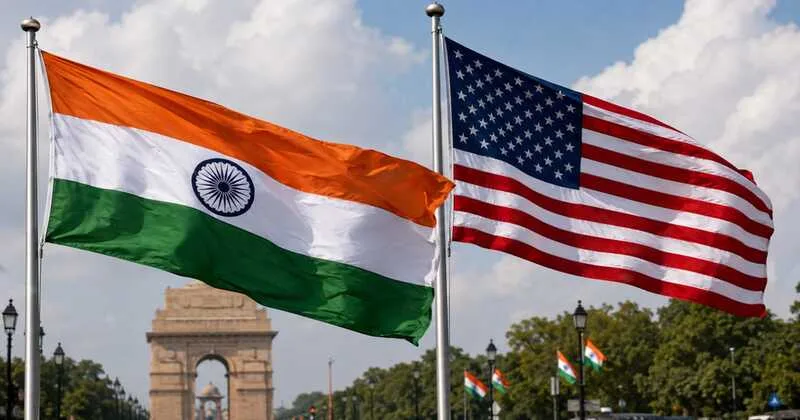
India and the United States, by contrast, operate under constitutional systems that prioritise liberty over control, making them more vulnerable to organised exploitation of democratic freedoms.
Constitutional Freedom and the Expansion of Protest Ecosystems
India’s Constitution guarantees freedom of speech and expression under Article 19(1)(a), the right to assemble peacefully under Article 19(1)(b), and the right to form associations under Article 19(1)(c). The United States Constitution similarly protects free speech, assembly and petition under the First Amendment. These provisions were designed to prevent authoritarianism and empower citizens against state excesses.
However, modern protest ecosystems increasingly use these protections not simply for democratic participation but as strategic shields against legal accountability. The challenge arises because democratic constitutions assume protests are temporary civic actions, not permanent political infrastructures with transnational support systems.
In India, large-scale protests such as the anti-CAA protests, the Shaheen Bagh sit-in, the farmers’ protests, anti-Sterlite protests in Tamil Nadu and various campus mobilisations demonstrated how long-duration agitation can paralyse urban systems, generate international diplomatic pressure and create sustained narratives against the state. The protests often involved overlapping participation from activist groups, left-wing student organisations, ideological fronts, civil society networks and digital mobilisation cells. Similarly, the United States witnessed the emergence of sustained protest ecosystems during the Black Lives Matter protests, Occupy Wall Street, pro-Palestinian university encampments and anti-police demonstrations following the death of George Floyd. The scale of mobilisation revealed how rapidly protests can transform into nationwide movements amplified by foundations, social media networks, ideological organisations and political lobbying groups. The structural vulnerability in both countries lies in the inability of democratic legal systems to distinguish between genuine civic dissent and highly coordinated political agitation designed to create long-term instability.
Funding networks, NGOs and the politics of foreign influence
One of the most contentious dimensions of modern protest ecosystems is foreign funding and NGO-based influence operations. India responded to this concern through the Foreign Contribution Regulation Act (FCRA), which regulates foreign donations to NGOs and civil society organisations.
Successive Indian governments increasingly viewed foreign-funded activism as a national security issue rather than merely a civil society matter. The Indian state tightened scrutiny on organisations using foreign funds for political mobilisation, environmental obstruction or ideological activism. Over the years, FCRA licences of thousands of NGOs were cancelled or suspended for violations involving financial irregularities, non-compliance and alleged political activities. Organisations such as Amnesty International India faced financial scrutiny under FCRA-related investigations. Greenpeace India also faced regulatory action over allegations concerning foreign funding and anti-development activism linked to energy and infrastructure projects. Certain activism ecosystems increasingly functioned as pressure instruments capable of obstructing strategic sectors including mining, nuclear energy, industrial corridors and infrastructure expansion.
14. Amnesty is the same NGO which is now banned in India, and it receives crores of grants from the Ford Foundation! pic.twitter.com/Hhaen2qJZT
— Office Of Vijay Patel (@VijayGajeraO) May 22, 2026
The United States faces similar concerns through foreign influence investigations, lobbying disclosures and nonprofit funding scrutiny, though the regulatory framework differs significantly. American protest ecosystems often receive support through foundations, donor networks, advocacy groups and ideological funding pipelines protected under nonprofit and free speech laws. Organisations associated with progressive activism, racial justice campaigns, immigration advocacy and identity politics operate through complex financial ecosystems involving universities, philanthropy networks and digital fundraising platforms.
The difficulty for democracies lies in distinguishing between legitimate activism and coordinated influence operations backed by ideological or geopolitical interests.
Religious networks, ideological mobilisation and identity politics
Modern protest ecosystems increasingly draw strength from identity-based mobilisation. Religion, race, caste, ethnicity and minority politics provide emotionally powerful narratives capable of sustaining long-term agitation.
In India, Islamist mobilisation played a visible role during anti-CAA protests. Organisations such as the Popular Front of India (PFI) were investigated by Indian agencies over links to radical mobilisation networks before the organisation was banned under anti-terror laws in 2022. The government disclosed that the organisation engaged in extremist activities and coordinated destabilising operations. Student organisations, activist groups and ideological coalitions also participated in protest infrastructures surrounding citizenship debates.
This was our first ever performance, at Shaheen Bagh. We were a group that got together impromptu, none of us knew each other before, and we debuted with barely 10 days of rehearsal. The video has 5 lakh views, 28k Likes and 600 Dislikes. Watch 🙂 https://t.co/fp3CMluCrP
— Dr. Sanjukta Basu, M.A., LLB., PhD (@sanjukta) November 28, 2020
Religious mobilisation has also emerged around issues such as hijab controversies, anti-Hindu narratives in international forums, caste-based activism and conversion-related disputes. Some evangelical networks operating internationally have increasingly linked religious freedom advocacy with political pressure campaigns against India in Western institutions. Bodies such as the United States Commission on International Religious Freedom (USCIRF) repeatedly criticise India on religious freedom grounds, influencing international discourse and diplomatic pressure.
The United States faces parallel identity-driven mobilisation through race politics, immigration activism, pro-Palestinian mobilisation and ideological polarisation. Protest movements linked to racial justice, gender activism and anti-capitalist mobilisation often intersect with university networks, advocacy organisations and digital activism infrastructures. The deeper issue is that identity politics creates permanent grievance frameworks. Once mobilisation becomes identity-centric rather than issue-centric, protest ecosystems acquire continuity, emotional intensity and ideological permanence. Democracies become vulnerable because identity-based mobilisation weakens national cohesion while strengthening group-based political confrontation.
Social media, information warfare and the manufacturing of outrage
The rise of digital platforms fundamentally transformed protest dynamics. Social media enables rapid mobilisation, narrative engineering, emotional amplification and internationalisation of local disputes.
During the farmers’ protests in India, global celebrities, activists and political figures amplified protest narratives online. Hashtags, viral videos and influencer campaigns internationalised what began as a domestic policy issue. Indian authorities increasingly argued that coordinated digital campaigns were shaping international perception and fuelling internal unrest. The United States experienced similar digital amplification during the Black Lives Matter protests, the Capitol Hill unrest of January 6, 2021, and various university protest movements. Algorithms reward outrage, emotional polarisation and identity conflict, making democratic societies highly vulnerable to information warfare.
https://twitter.com/i/status/2057660399361904983
Foreign actors also exploit these vulnerabilities. American intelligence agencies repeatedly warned about Russian and Chinese disinformation campaigns targeting social divisions in the United States. Similarly, the hostile networks based in Pakistan, China and other countries are using digital propaganda to inflame communal tensions and anti-state sentiment in India. Unlike traditional protests, digital protest ecosystems never fully disappear. Online networks preserve grievance narratives permanently, allowing mobilisation to reactivate rapidly around new triggers. The result is continuous psychological polarisation within democratic societies.
Universities, activist ecosystems and institutional capture
Universities increasingly function as ideological incubators for protest ecosystems. Student politics, activist networks, faculty groups and identity-based mobilisation often intersect within academic spaces. In India, institutions such as Jawaharlal Nehru University (JNU) frequently became centres of ideological mobilisation around nationalism, caste, minority politics and state legitimacy. Campus activism surrounding Afzal Guru commemorations, anti-CAA protests and broader anti-state narratives triggered national political controversy.
In the United States, universities such as Columbia University, Harvard University and University of California, Berkeley became major centres for anti-war protests, racial activism and pro-Palestinian encampments. American campuses increasingly reflect intense ideological polarisation, with activism often merging with broader national political struggles. The long-term danger for democracies is institutional capture. When universities, media ecosystems, advocacy organisations and cultural institutions become deeply politicised, protests cease to be isolated civic actions and instead evolve into interconnected ideological ecosystems capable of influencing law, media narratives, international opinion and electoral politics.
Why democracies remain vulnerable
The fundamental vulnerability of democracies lies in asymmetry. Democratic states must obey constitutional procedures, judicial scrutiny, media oversight and civil liberties. Protest ecosystems, however, can exploit these freedoms while remaining less accountable.
Governments cannot easily suppress protests without accusations of authoritarianism. Police action becomes politically risky. Courts often prioritise civil liberties. Media amplification rewards spectacle. International organisations intervene through human rights narratives. Social media accelerates emotional mobilisation faster than governments can respond institutionally.
This creates a structural imbalance where democratic restraint itself becomes exploitable. India’s response increasingly involves legal regulation, digital monitoring, tighter NGO scrutiny and national security framing. Measures such as stricter FCRA enforcement, financial compliance monitoring, anti-riot provisions, digital surveillance mechanisms and crackdowns on unlawful assemblies reflect an attempt to restore state control without abandoning constitutional democracy.
The United States similarly expanded surveillance capabilities after 9/11, strengthened domestic extremism monitoring and increased scrutiny of foreign influence operations. Yet the First Amendment severely restricts the ability of the American state to regulate political mobilisation. The challenge for democracies is therefore not merely law and order. It is civilisational survival within open systems vulnerable to coordinated ideological fragmentation.
The Need for democratic self-protection
Democracies cannot eliminate dissent without destroying democracy itself. Yet democracies also cannot survive if organised protest ecosystems repeatedly paralyse governance, inflame identity divisions and weaken institutional legitimacy.
India’s challenge is particularly complex because it combines religious diversity, caste divisions, regional politics, digital expansion and foreign geopolitical pressure within a highly open constitutional system. The state increasingly sees legal instruments such as FCRA, anti-terror frameworks, cyber monitoring and financial scrutiny as necessary defensive tools against coordinated destabilisation networks.
However, legal measures alone are insufficient. Democracies require stronger civic literacy, institutional neutrality, faster judicial processes, financial transparency in activism, digital accountability and stronger national integration mechanisms. Protest rights must remain protected, but permanent disruption infrastructures operating under democratic cover require deeper scrutiny.
The United States faces a similar crisis of internal fragmentation. Race polarisation, ideological radicalisation, campus activism and digital outrage ecosystems increasingly weaken institutional trust. The American experience demonstrates that even the world’s most powerful democracy remains vulnerable when social cohesion declines faster than constitutional institutions can adapt.
China avoids these vulnerabilities through centralised authoritarian control, but at the cost of individual liberty. India and the United States seek to preserve freedom while maintaining order. That balance is becoming increasingly difficult in the age of permanent digital mobilisation and transnational ideological warfare.