Can a crowd gathered on the streets become a means of exerting pressure on constitutional institutions in a democracy? The question has once again come to the fore amid the controversy surrounding the Election Commission’s Special Intensive Revision (SIR) and the proceedings before the Supreme Court.
In India, the right to democratic dissent is part of the basic structure of the Constitution. Protests against the government are permissible, questions may be raised against the Election Commission, and even judicial decisions may be criticised. But this very freedom of democracy becomes a serious question when a crowd on the streets begins to be used as a means of influencing judicial decisions.
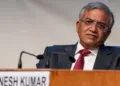
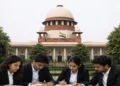
In October 2026, amid the ongoing issue concerning the Election Commission’s Special Intensive Revision, the hearing before the Supreme Court once again brought this question into focus. On 5 October, the Supreme Court heard petitions concerning Chief Election Commissioner Gyanesh Kumar. The petitioners alleged that certain important decisions relating to the Election Commission were taken without the consent or participation of the other Election Commissioners.
However, the Supreme Court declined to suspend Gyanesh Kumar or issue any interim direction against the Election Commission. The Bench headed by the Chief Justice sought responses from the Centre, the Election Commission, Gyanesh Kumar and other concerned authorities.
The Court made it clear that it could not pass an order merely on the basis of a news report. The record would first be examined, responses would be obtained from the parties, and only thereafter would it be determined whether the concerned decisions had been taken in accordance with law. During the hearing, senior advocate Vikas Singh, appearing for the petitioner, submitted that “the Court should pass an interim order, otherwise the country will burn.
This raises an important question: if, before every constitutional institution, the argument is repeatedly advanced that a decision in the “wrong” direction could lead to political instability, increased protests or unrest in the country, then, gradually, the fear of consequences begins to replace the rule of law.
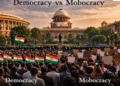
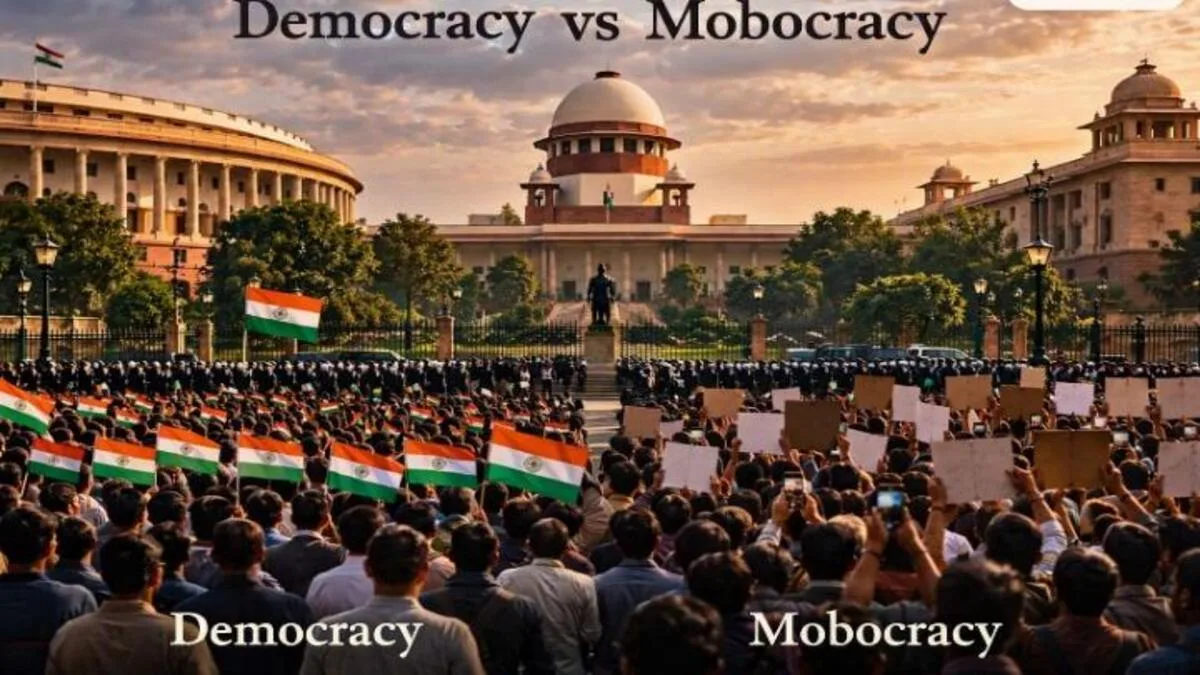
This is where the idea of “Mobocracy” comes into the picture. Mobocracy does not simply mean a large crowd. A large crowd can certainly be part of democratic protest. Mobocracy emerges when the size of a crowd, political mobilisation, pressure and the possibility of unrest are presented before a decision-making constitutional institution in such a manner that the institution begins to consider the street consequences of its decision more important than the legal question itself.
The voice of the people is important in a democracy, but the function of a court is not to conduct a public opinion poll. A court is not required to determine how many people stand behind one side or the other. It has to determine what the law provides, what the Constitution permits and what evidence exists on the record.
Senior advocate Harish Salve had expressed a similar concern in 2020 regarding external pressure on the judiciary and the dangers of politically attributing motives to judges.
He had stated that a judgment can be criticised and disagreement with a judge is permissible, but attributing political motives to a judge’s decision is wrong. He had also expressed concern that if a lawyer or litigant begins to believe that a judge is refraining from giving a particular decision because of what newspapers might write or how people outside the court might react, it would be a matter of concern.
This assumes particular significance in the present controversy as well. There may be political and legal disagreement over SIR. Questions may be raised regarding the legality of the Election Commission’s decisions. Complaints may arise concerning the deletion or addition of names in electoral rolls. There may also be demands for an inquiry into the functioning of the CEC. But all these questions must ultimately be tested on the basis of the record, the law and the constitutional process.
If the allegation before the Court is that the Commission violated the law, documents can be sought. If a decision was taken without the requisite majority, the record can establish the same. If an order was issued beyond the prescribed rules, the Court can pass appropriate orders against it. That is the judicial process.
And this is precisely why the Supreme Court’s approach during the hearing on 5 October was noteworthy. The Court did not immediately order the decision to be set aside. It first sought responses from the concerned parties and indicated that the record would be examined. The Chief Justice also observed that if the law had not been followed, the Court had the power to take necessary action.
“Another fact concerning SIR is also important. In May 2026, the Supreme Court upheld the validity of SIR in Bihar. The Court held that the Election Commission had the power to undertake such an exercise under Article 324 and the Representation of the People Act, and that the exercise undertaken in Bihar fell within the statutory framework.”
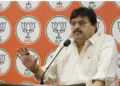
This is where a larger question arises regarding the politics surrounding the CEC and the protest model being adopted by it. The issue is that repeatedly taking to the streets to force an institution to alter its decision, and turning such demonstrations of strength into a pressure mechanism operating parallel to the judicial process, creates a different kind of challenge for democratic institutions. The question is not whether a protest took place or not; the question is whether the purpose of the protest is to shape public discourse or to influence the constitutional decision-making process.
Understanding this distinction is particularly important today because social media and the 24-hour political news cycle have transformed a crowd from merely a number of people gathered on the streets into a potential national narrative. A protest can become a national narrative within a few hours. Cameras, hashtags, slogans and political messaging can create an atmosphere around a judicial matter in which the legal question moves to the background and the political discourse takes centre stage.
This becomes even more important in the case of the judiciary because courts do not contest elections. They do not have political organisations. They do not have machinery for organising public rallies. If the judiciary begins to convey the impression that it decides cases by looking at the strength of the street, both the legal legitimacy of its decisions and its institutional credibility may be affected.
Similarly, if political groups begin to believe that sufficient numbers, sufficient pressure and sufficient political temperature can produce a desired outcome from a constitutional institution, it would not remain a problem confined to one case. It could become a dangerous precedent for every sensitive constitutional dispute in the future. Today it may be the Election Commission; tomorrow it could be another constitutional body. Today the issue may be SIR; tomorrow it could be another legal controversy.
In a democracy, the people are supreme, but the supremacy of the people does not mean that the crowd becomes the judge. The people elect their representatives. Parliament makes laws. The government administers. The Election Commission conducts the electoral process, and the courts interpret the law. Within this constitutional arrangement, the voice of the people is important everywhere, but every institution must take its decisions within the limits of its constitutional authority.