France’s lunch break is losing its cultural grip
June 14, 2026
  • Read Ecopy
  • Circulation
  • Advertise
  • Careers
  • About Us
  • Contact Us
Android AppiPhone AppArattai
Organiser
  • ‌
  • Bharat
    • Assam
    • Bihar
    • Chhattisgarh
    • Jharkhand
    • Maharashtra
    • View All States
  • World
    • Asia
    • Europe
    • North America
    • South America
    • Africa
    • Australia
  • Editorial
  • International
  • Opinion
  • RSS @ 100
  • More
    • Op Sindoor
    • Analysis
    • Sports
    • Defence
    • Politics
    • Business
    • Economy
    • Culture
    • Special Report
    • Sci & Tech
    • Entertainment
    • G20
    • Azadi Ka Amrit Mahotsav
    • Vocal4Local
    • Web Stories
    • Education
    • Employment
    • Books
    • Interviews
    • Travel
    • Law
    • Health
    • Obituary
  • Subscribe
    • Subscribe Print Edition
    • Subscribe Ecopy
    • Read Ecopy
  • ‌
  • Bharat
    • Assam
    • Bihar
    • Chhattisgarh
    • Jharkhand
    • Maharashtra
    • View All States
  • World
    • Asia
    • Europe
    • North America
    • South America
    • Africa
    • Australia
  • Editorial
  • International
  • Opinion
  • RSS @ 100
  • More
    • Op Sindoor
    • Analysis
    • Sports
    • Defence
    • Politics
    • Business
    • Economy
    • Culture
    • Special Report
    • Sci & Tech
    • Entertainment
    • G20
    • Azadi Ka Amrit Mahotsav
    • Vocal4Local
    • Web Stories
    • Education
    • Employment
    • Books
    • Interviews
    • Travel
    • Law
    • Health
    • Obituary
  • Subscribe
    • Subscribe Print Edition
    • Subscribe Ecopy
    • Read Ecopy
Organiser
  • Home
  • Bharat
  • World
  • Operation Sindoor
  • Editorial
  • Analysis
  • Opinion
  • Culture
  • Defence
  • International Edition
  • RSS @ 100
  • Magazine
  • Read Ecopy
Home Bharat

France’s lunch break is losing its cultural grip

For centuries, the French relationship with food has been less about simple nutrition and more about philosophy, community, and the fundamental rhythm of daily life. When UNESCO recognized French gastronomic culture as an intangible cultural heritage in 2010, it merely confirmed what the country had practiced for generations: mealtimes are sacred

Dnyanashri KulkarniDnyanashri Kulkarni
May 24, 2026, 10:00 am IST
in Bharat
Follow on Google News
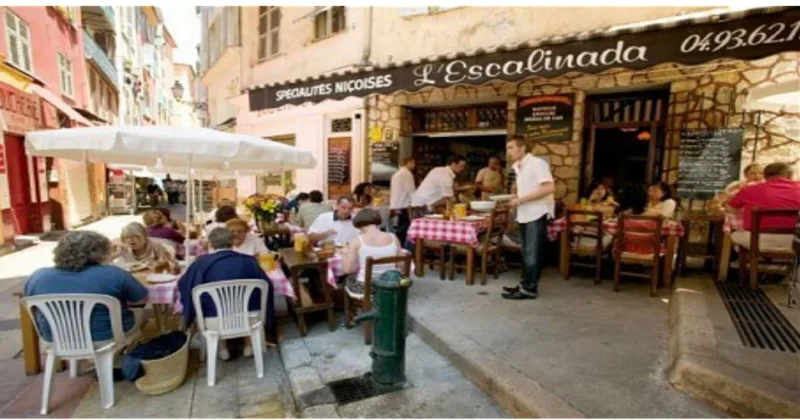
People having lunch

People having lunch

FacebookTwitterWhatsAppTelegramEmail

The French relationship with food is not merely nutritional; it is philosophical, social, and deeply embedded in the rhythms of daily life. Mealtimes structure the day. UNESCO recognised French gastronomic culture as an intangible cultural heritage in 2010, and the recognition felt less like a surprise than a confirmation of something the French had known for centuries. At the heart of this identity lies the lunch break, typically long and shared with colleagues. For decades, France has institutionalized what is commonly known as ‘ticket restaurant’ system, benefitting employer, employee and restaurant industry. However, recently, discussions pertaining to government reform of the meal voucher system grabs attention on evolving generation of younger workers and their preferences pertaining to lunch culture. It raises a pertinent question: Is France’s most cherished lunch ritual quietly dying?

The immediate trigger raising this debate is a policy shift. France’s titres-restaurant system, commonly known as tickets restaurant, provides over five million workers with part-employer, part-employee funded meal vouchers that are tax-exempt for both parties. The scheme was adopted on a British concept and was introduced in France in the late 1960s, designed specifically to push workers toward restaurants rather than canteens, with the broader aim of supporting the restaurant sector while subsidising the cost of eating well at midday. For decades, it functioned more or less as intended.

What has brought change in the system are a series of emergency measures introduced in 2022, against the backdrop of food inflation. It pushed the government to allow vouchers to be used in supermarkets for groceries, including ingredients that require cooking. That exemption has since been extended twice, most recently by the Senate in January 2025, and is now in force until the end of 2026. The government has signalled that a fuller reform is coming, one that would make supermarket use permanent while also extending usage to Sundays and fully digitalising the paper voucher system by February 2027. The government frames this as a pragmatic response to changing work patterns, including the rise of telecommuting and home-cooked lunches. The restaurant lobby frames it rather differently.

Read More: Big Breakthrough in Ladakh Talks: Centre offers Article 371-like protection after high-stakes talks

Independent restaurateurs have been consistent in their objections. Their core argument is that the voucher system was constructed to channel spending toward restaurants, not to subsidise the weekly grocery shop. A study by the Commission nationale des titres-restaurant found that the share of voucher spending going to restaurants fell from 46 percent to 40 percent in the two years following the supermarket extension. Meanwhile, restaurants continue to pay commissions of between five and eight percent to voucher processors such as Edenred and Sodexo, while supermarket chains absorb an increasingly large share of the spending with far lower transaction costs.

The voucher debate is, in many ways, a proxy for a broader and more troubling shift in how French workers actually eat. The three-course weekday lunch, unhurried and taken with colleagues in a proper restaurant, has not disappeared but it has become the exception. According to survey data on French workplace eating habits, the lunch break has grown significantly shorter over the past two decades. A more recent industry survey put the average break at just 47 minutes, with half of workers eating in under 30 minutes. Six in ten now bring a packed lunch from home. Half choose a bakery or a sandwich counter as their primary lunchtime destination.

The institutionalised lunch break has a specific and largely forgotten origin. After the industrial revolution, the extended midday pause was formalised in part as a public health intervention. It was, at the beginning, designed to clear factories and workshops and give workers time to recover from physically and environmentally demanding conditions. It was not a cultural affectation; it was structural policy. However, over generations, it became something more. The two-hour lunch took on social meaning, and France built its urban rhythms around it: shops closing at noon, schools releasing children mid-afternoon, an entire civic architecture shaped by the assumption that the midday meal was inviolable. That architecture still exists in much of provincial France, though in Paris and larger cities, the rhythms have already compressed.

The social dimension of the lunch break is also changing in ways that cannot be attributed to policy alone. A 2024 poll found that only 12 percent of French workers over the age of 49 regularly eat alone at work. Among workers under 25, that figure rises to nearly 29 percent. Solo dining at lunch is becoming a generational norm, driven partly by shifting attitudes toward work, privacy, and digital habits, and partly by a broader reframing of the lunch break as personal decompression time rather than a social obligation. Many younger workers report actively wanting the solitude, using the break to disengage from colleagues as much as from their tasks.

None of this is unique to France. The compression of the lunch break is a documented pattern across Europe and North America, driven by productivity culture, hybrid working, and the structural economics of urban food. What makes France distinctive is not the trend itself but the weight of what is being lost. The lunch culture is not merely a habit; it is an integral part of the French lifestyle. It reveals the kind of lifestyle the new generation is choosing.


 

Topics: FranceUNESCOLunch breakGastronomic culture
ShareTweetSendShareSend
✮ Subscribe Organiser YouTube Channel. ✮
✮ Join Organiser's WhatsApp channel for Nationalist views beyond the news. ✮
Previous News

India’s electrical equipment industry to become a $235 billion giant by 2035: McKinsey Report

Next News

What about Love Jihad?: Delhi HC acquits Qasim in minor Hindu girl abduction case after 22 years says, eloped willingly

Related News

G7 Summit: A strategic opportunity for India to script human-centric AI ecosystem with sovereign models

French President Emmanuel Macron and Prime Minister Narendra Modi(File Photo)

India-France Rafale Deal: Paris backs Make-in-India; Assures tech transfer & weapon integration ahead of PM Modi visit

India heralds Mega Rafale Deal: Writes to France for 114 jets; Impetus for national security & defence indigenisation

(Left) Drainage system discovered at Hampi (Right) Alvar sculptures discovered

Karnataka: ASI excavation in Hampi reveals ancient Vijayanagara drainage system, uncovers rare Jain temple roof remains

France pulls ot its gold reserves from the USA

France pulls out USD 15bn gold from the US; Propels strategic autonomy reflecting trust-deficit on Trump administration

External Affairs Minister Dr. S. Jaishankar meets French President Emmanuel Macron

EAM Jaishankar asserts Global South priorities at G7 Foreign Ministers’ Meet; Holds talks with French President Macron

Load More

Latest News

Police arrested Pastor and the landowner in the case

“Your Shiva & Vishnu won’t help, Jesus will”: Chhattisgarh pastor arrested over conversion bid through ‘Miracle water’

Bangladesh: Anti-Hindu Rally in Dhaka Targets Shri Ram's Image, Radical Groups Demand Demolition of Ram murti

Bangladesh: Radical Muslim groups hold anti-Hindu march; Demand demolition of under-construction murti of Shri Ram

TMC chief and former CM of Bengal Mamata Banerjee

Mamata’s Damage-control Exercise? TMC reshuffle comes as rebel leaders reject Banerjee family’s leadership

West Bengal: Sikh Youth Alleges Conversion Pressure, Assault by Mother Preeti Kaur and Wasim Raza Khan

West Bengal: Sikh Youth accuses mother Preeti Kaur and Lawyer Wasim Raza Khan of pressuring him to convert to Islam

Reaching the Last Person First: The Antyodaya Journey of Twelve Years

Garib Kalyan Yojana: How 12 years of welfare under Modi government reshaped modern India

(Left) Late Swami Lakshmanananda Saraswati(Right) Justice A.S. Naidu

Religious conversion a key factor in Swami Lakshmanananda Saraswati’s murder: Justice Naidu amid missing report row

Raja Towari with Roshni who was a Muslim and got married to him 9 years ago

Exclusive: 9 years after marriage, Raja Tiwari abducted by Muslim in-laws, taken to Mosque for beef & circumcision

Odisha Police arrest cattle smugglers and recover huge amount of jewellery and cash

Odisha Police launch massive multi-district crackdown on cattle smuggling networks; Raids at 19 locations

Delegates at the Niti Aayog meeting

NITI Aayog’s Northeast Development Model: How Modi Govt is transforming landscape of India’s ‘Ashtalakshmi’ States

POJK Boils Over: Thousands return to streets, defying Pakistan’s crackdown

POJK Revolt Intensifies: JAAC strikes back against Pakistan; Thousands gather despite threats and internet shutdown

Load More
  • Privacy
  • Terms
  • Cookie Policy
  • Refund and Cancellation
  • Delivery and Shipping

© Bharat Prakashan (Delhi) Limited.
Tech-enabled by Ananthapuri Technologies

  • Home
  • Search Organiser
  • Bharat
    • Assam
    • Bihar
    • Chhattisgarh
    • Jharkhand
    • Maharashtra
    • View All States
  • World
    • Asia
    • Africa
    • North America
    • South America
    • Europe
    • Australia
  • Editorial
  • Operation Sindoor
  • Opinion
  • Analysis
  • Defence
  • Culture
  • Sports
  • Business
  • RSS @ 100
  • Entertainment
  • More ..
    • Sci & Tech
    • Vocal4Local
    • Special Report
    • Education
    • Employment
    • Books
    • Interviews
    • Travel
    • Health
    • Politics
    • Law
    • Economy
    • Obituary
  • Subscribe Magazine
  • Read Ecopy
  • Advertise
  • Circulation
  • Careers
  • About Us
  • Contact Us
  • Policies & Terms
    • Privacy Policy
    • Cookie Policy
    • Refund and Cancellation
    • Terms of Use

© Bharat Prakashan (Delhi) Limited.
Tech-enabled by Ananthapuri Technologies