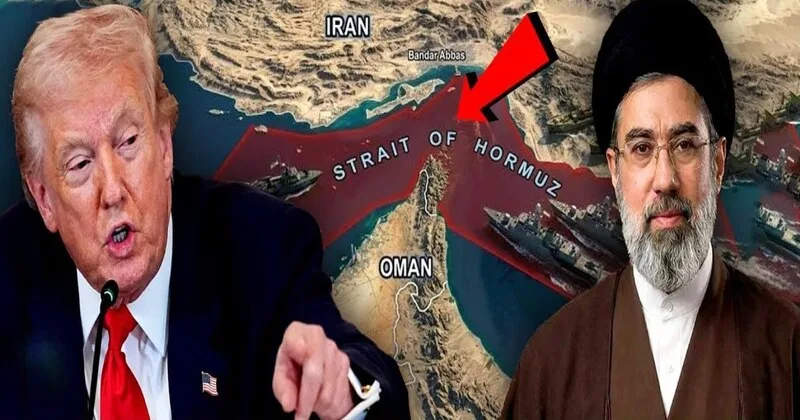
The geopolitical wildfire of West Asia is rigorously stretching its flames with no hint of concrete and persistent end to the conflict, despite several rounds of negotiations, apparently mediated by Pakistan. Lately, the discussions were held between Oman and Iran to reopen the Strait of Hormuz, which is deemed as pivotal for global trade and energy security.
Since the outbreak of the West Asia conflict, the maritime traffic across the Strait of Hormuz has fallen sharply and majority vessels have been violently attacked by the warring parties, causing significant damage to commercial vessels, global seafarers and the world economy, which is dependent on maritime trade. As per the reports, maritime traffic through the Strait of Hormuz has collapsed by 80 to 90 per cent, compared to the pre-conflict era. From an average of 130-140 transhipments per day, the number has dropped to single or minimal double digit from the past few months.
Despite such a steep crisis, the latest talks between Tehran and Muscat have hit a stalemate, as Iran has imposed additional conditions to facilitate safe passage of the vessels via the critical maritime route. Meanwhile, the United States is adamant to these Iranian clauses and reiterates that reopening of the Hormuz is a prerequisite to accomplish further facets of the peace negotiations. As both the parties have hit an impasse, further negotiations have been jeopardized, while the conflict circumnavigating the Strait of Hormuz remains escalating.
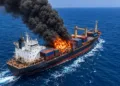
On the other hand, the geopolitical and strategic geometry of West Asia has also been severely fractured and disrupted with multiplying intensity of confrontation. Abu Dhabi accused Iran of targeting one of its vessels. Lately, the UAE Foreign Ministry said that Tehran attacked an oil tanker affiliated to the Abu Dhabi National Oil Company, while transiting the Strait of Hormuz. Meanwhile, the Yemen military is targeting Iran-backed proxy Houthi military establishments in the country.
Conditions of Tehran to de-escalate the Hormuz stand-off
The theocratic regime in Tehran and its solid pillar IRGC has made it clear that a deal with Oman for a new cross-continental shipping arrangement will not be realised until the US accepts broader conditions of Iran. Foreign Minister Abbas Araghchi said that Tehran and Muscat were “very close” on a new arrangement for shipping through the Strait of Hormuz. However, Iranian FM clarified that such an agreement with Oman is not sufficient to reopen the maritime passage and Washington has to accept additional conditions.
Meanwhile, IRGC has also refuted the Iran-Oman deal as the only prerequisite to reopen the Strait of Hormuz. The complete de-escalation and removal of naval blockade is simply and not the impact of Iran-Oman negotiations alone, IRGC reiterated. IRGC Spokesperson Hossein Mohebbi said that the reopening of the waterway was contingent upon the United States accepting Iran’s conditions and has no link to the Iran-Oman shipping arrangement deal.
These conditions of Tehran to reopen the Hormuz entails a wide-range of clauses from lifting US sanctions on Iran, unfreezing assets to compensating damage inflicted during the conflict.
- Washington should stop threatening Iran permanently about sanctions, geopolitical annihilation etc. This implies that Tehran seeks security guarantee against the US intrusion
- Iran demands US to halt military conflict and hostilities permanently against the country and its allies in the region
- Tehran also asserts removal of blockade by the US naval and airforces, should not hinder Iranian shipments and businesses
- Iran demands compensation from the US for the damage inflicted during the conflict. In fact Iranian FM Araghchi has specifically mentioned that US compensation to Iran, is a prerequisite to reopen the Strait of Hormuz
- Iran reiterates complete lifting of US sanctions imposed on the country. These sanctions will help Iran for global economic engagement
- Tehran demands release of the frozen Iranian assets under the US sanctions. For example, the United States and the allied nations have frozen nearly USD 100bn worth of Iranian assets. They are in the form of unpaid oil bills to Iran, forex reserves, commercial funds & assets of the Iranian Central Bank, Iranian digital assets and assets belonging to Iranian state-owned industries, energy entities etc.
- Iran has also imposed a condition that the US should not be involved in the conflicts, negotiations and geopolitics of West Asia.
The IRGC spokesperson has exclaimed that the reopening of the Hormuz Strait is linked to “specific mechanisms and conditions”, which is separate from the ongoing negotiations with Oman. Iran has thus drawn a clear redline between the conflict resolution across Hormuz and the discussions with Oman, which reportedly purely deals with technical and legal aspects of managing the maritime traffic in the maritime chokepoint. As Iran and Oman are the littoral states of the Strait of Hormuz, sitting at the either ends of the waterway, it is critical to regulate and update the norms of the movement of commercial vessels via the Persian gulf.
What are the demands of the US?
The US, on the other hand, has reiterated that lifting of impediments and facilitating free passage of commercial vessels is key to further negotiations and removal of US naval blockade from the Hormuz. A US official told private media platforms that the US actions will continue to be performance-based and tied to Iran’s implementation of its commitments. Thus, US considers Iran-Oman deal to stimulate free passage of vessels in the Hormuz, while Tehran refutes such possibilities until its demands are fulfilled by the former.
This series of attacks, counterattacks and competing claims has been fuelling the conflict and fragile ceasefire has been just a paper over steep fissures. The hard-nosed contestation is causing global repercussions in terms of energy, trade and civilian safety, while the Strait of Hormuz responsible for one-fifth of global oil transhipment remains at the epicentre and the geopolitical geometry of West Asia continues to be profoundly distorted.