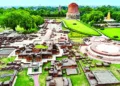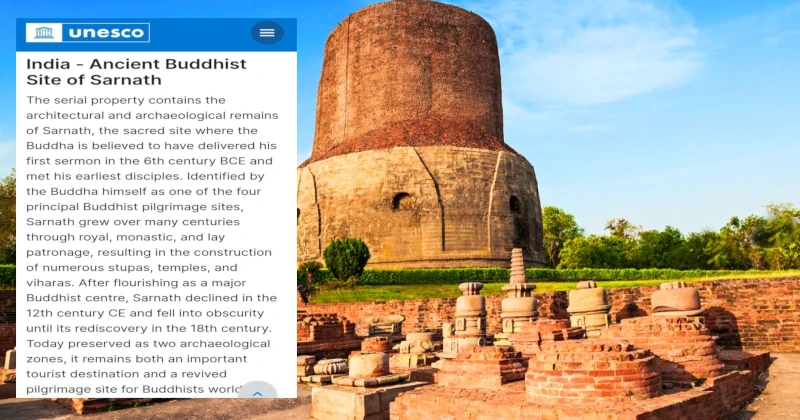
Sarnath, where Mahatma Buddha delivered his first sermon and established the first Buddhist Sangha, has been inscribed on the UNESCO World Heritage List after 28 years on the tentative list
Sarnath, the sacred site where Mahatma Buddha delivered his first sermon, has now been inscribed on the global map. This site holds an important position in Buddhism. According to Buddhist texts, this place was originally known as Rishipatna. It is the exact location where, after attaining enlightenment, Mahatma Buddha preached to his five companions. This event is referred to as Dharmachakra Pravartana (Turning the Wheel of Dharma) in Buddhist scriptures. A Kushan-period inscription from the second century discusses this event.
Mahatma Buddha explained the Four Noble Truths at this very place. It was also here that he taught the Eightfold Path (Ashtangika Marga) to achieve liberation from the miseries of life. Furthermore, Mahatma Buddha advocated following the Middle Path (Madhyam Marga) in life at this sacred spot. Sarnath is the holy place where Yasa, the son of a wealthy father, and his 54 friends became followers of Mahatma Buddha. Here, Mahatma Buddha established the first Sangha, which initially consisted of 60 monks who were sent to various parts of the country to propagate the Dhamma.
In the third century BCE, the emperor Ashoka commissioned several construction works at this sacred site. Ashoka built a 30-meter-high stupa here, known as the Dharmarajika Stupa. He also erected the Ashoka Pillar at this site, topped with lion statues that symbolised his valour. Independent India adopted this Lion Capital as its National Emblem. Another existing monument, the Dhammek Stupa, was also constructed during Ashoka’s reign, according to archaeologists.
During the reign of the Shunga rulers, who have been described as anti-Buddhist in certain historical accounts, stone railings (vedikas) were built around the massive pre-existing stupa during the second and first centuries BCE. This archaeological evidence raises questions about the Buddhist-Hindu conflicts described in history books.
The significance of the sacred site of Sarnath continued during the rule of the Kushan emperors. During the reign of Kanishka, the illustrious ruler of this dynasty, a Buddhist monk named Bala consecrated a statue of Bodhisattva made of red sandstone, along with a massive umbrella. Some monasteries (viharas) were also built in Sarnath during the Kushan period.
The sequence of construction in Sarnath did not stop there. Sarnath remained an important centre of art and architecture during the reign of the imperial Gupta rulers. The existing Dhamekh Stupa was embellished with carved stones during the Gupta period to enhance its beauty. The Chinese traveller Fa-Hien, who visited India during the reign of the great ruler Chandragupta II, recorded that Sarnath housed four stupas and two large monasteries.
In the seventh century CE, during the reign of Emperor Harshavardhana, the Chinese traveller Hiuen Tsang visited India and left a detailed account of Sarnath. According to him, a massive metallic statue of Mahatma Buddha was consecrated in Sarnath, depicting him turning the Wheel of Dharma. He described the presence of a vast monastery and mentioned that more than 1,500 Buddhist monks resided in Sarnath.
Sarnath was not left untouched by the Muslim invasions of India in the eleventh century CE. It appears that the monasteries and stupas located here suffered damage. However, in 1026 CE, two brothers named Sthirapal and Vasantapal undertook reconstruction work at the Dharmarajika Stupa following the destruction.
The twelfth century marked the final century of Sarnath’s grandeur. During this period, Kumaradevi, the queen of the Gahadavala ruler Govindachandra, established a massive monastery here called the Dharmachakra Jina Vihara. Following the Islamic invasions of North India after the twelfth century, this sacred site of Sarnath was lost to history under the weight of these attacks.
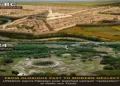
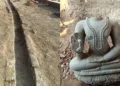
This historical archaeological site, once lost to the wheel of time, was resurrected by the Archaeological Survey of India (ASI) and independent archaeologists. The department conducted archaeological excavations from time to time under figures like Colonel Colin Mackenzie and Alexander Cunningham. As a result of these excavations, numerous votive stupas, monasteries, and Buddhist-Shaivite idols came to light. All these antiquities are safely preserved in the Sarnath Museum.
The Government of India protected the monuments of Sarnath as a national heritage, and it had been on the UNESCO World Heritage tentative list since 1998. After a long wait of 28 years, the inclusion of this sacred and historic archaeological site associated with Mahatma Buddha, who gave the message of peace to the entire world, into the UNESCO World Heritage List is highly praiseworthy.