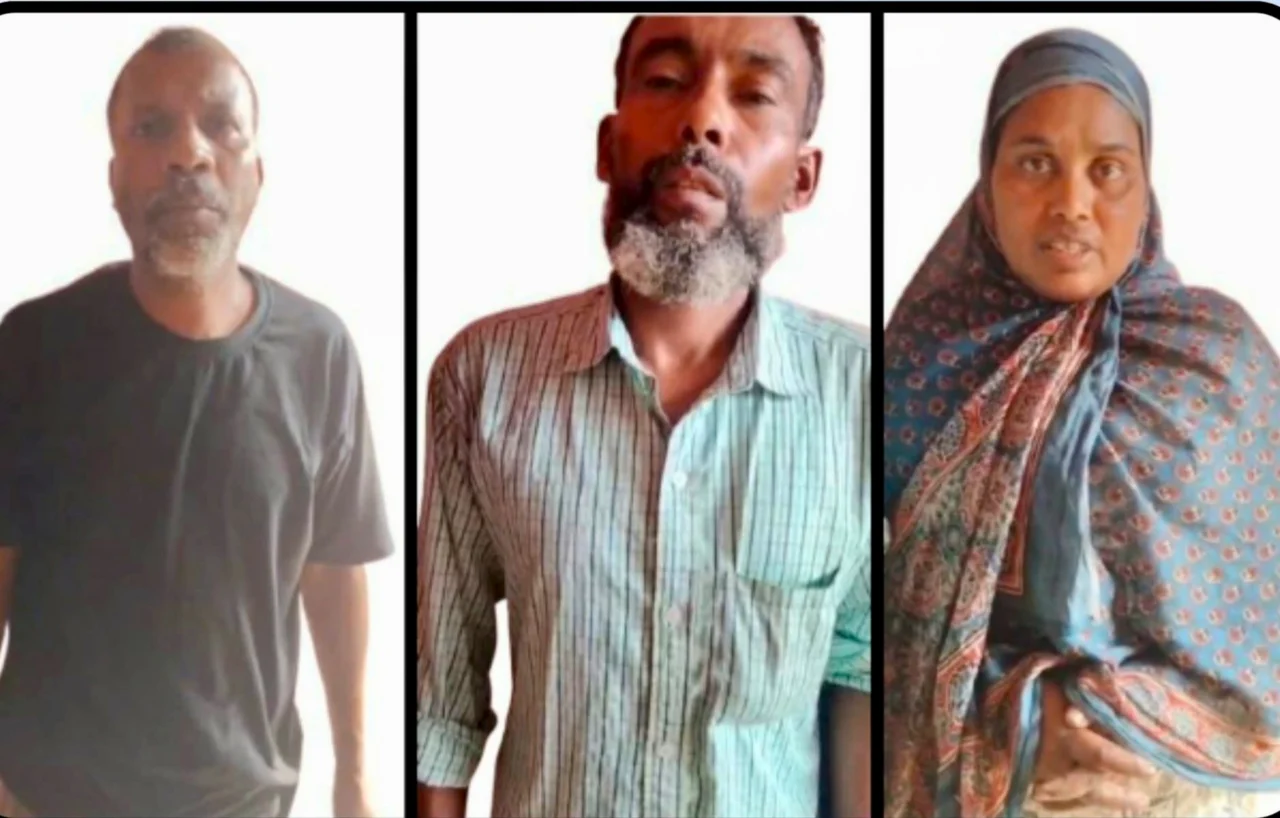
Guwahati: Three Bangladeshi nationals — Reena Akhtar, Mohammad Awal and Mohammad Harun — were arrested on May 20, at the Digar Khal naka checkpoint under the Gumrah area in Cachar district of Assam. Security personnel intercepted the trio during a routine checking operation. It was a routine stop. What it revealed was anything but routine. “It was a routine check and we suspected them after different statements of the three”, said a police official.
The three had entered India illegally in 2012. That is 14 years of living inside this country — working, moving, surviving — entirely off the grid. Police interrogation revealed that the trio had recently travelled all the way from Bengaluru to Badarpur in Assam, boarding the Humsafar Express. From Badarpur, the plan was to cross into Meghalaya and exit India through the Umkiang border route — with the help of a broker. The broker network is now the focus of active police investigation.
Why Meghalaya — and why now
This is the question that cuts to the heart of the matter. For 15 years under the Trinamool Congress government in West Bengal, the Bengal border was the preferred highway for Bangladeshi infiltrators — in both directions. Porous, politically convenient, and largely uncontested, it served as a revolving door. Infiltrators walked in. Infiltrators walked out. That door has now slammed shut.
With BJP governments now firmly in place in West Bengal, Assam and Tripura — all three states that share a border with Bangladesh — the BSF is operating in a fundamentally different political environment. There is no longer any pressure to look away. The jawans on the ground know that the state governments behind them want results, not restraint. Reena Akhtar, Mohammad Awal and Mohammad Harun are a direct consequence of that awareness. They did not attempt to cross back through Bengal. They travelled across the width of India — from Bengaluru to Barak Valley — to find an alternative exit through Meghalaya’s hilly, forested terrain, where surveillance infrastructure is thinner. It is a significant tactical shift — and one that security agencies are watching closely.
The Bengaluru thread
This is the second major infiltration case in days to carry a Bengaluru connection. Earlier on 18th May, Mohammed Zakir — a Bangladeshi infiltrator from Barisal who had married a Hindu Assamese girl under a false Hindu identity — was arrested in Darrang district after it emerged that he too had been working in Bengaluru, having acquired forged Aadhaar and PAN cards from West Bengal.
The pattern is becoming impossible to ignore. Bangladeshi infiltrators enter through West Bengal, embed themselves in metro cities like Bengaluru, build lives, acquire documents, and remain invisible for years — sometimes decades. It is only when the political climate changes, or when a cover is accidentally blown, that the system catches them. In both cases this week, it was Assam that caught them — not the cities where they lived for years.
Police in Cachar are now actively working to identify and arrest the brokers who arranged the Umkiang crossing. If the network is properly dismantled, it could expose a far wider operation — one that has likely been quietly rerouting infiltrators through Meghalaya’s border for some time now. Fourteen years in India. Caught at a naka in Cachar on a May 19 morning, trying to disappear back across a hill border.The net, it appears, is finally closing.