The West Bengal government has cleared the transfer of seven major highway corridors to central agencies, paving the way for the revival of several delayed road infrastructure projects across the state. The decision is expected to significantly improve border connectivity, trade movement, tourism infrastructure and transport access in both south and north Bengal.
According to an official statement issued from the Chief Secretary’s office, the state government has granted in-principle approval for the handover of important national highway stretches to the National Highways Authority of India and the National Highways and Infrastructure Development Corporation Ltd.
The projects had reportedly remained stuck for several months because the concerned highway stretches continued to remain under the control of the national highway wing of the state Public Works Department (PWD). Central agencies had repeatedly sought formal transfer of these roads in order to begin pending expansion and modernisation work.
Officials said the lack of administrative clearance had become a major hurdle for projects considered strategically important for interstate movement, border trade and regional connectivity.
The state government noted in its statement that development work on these highway stretches had stalled in the absence of formal transfer approvals. With the latest clearance, NHAI and NHIDCL can now proceed with construction and upgradation projects without further delay.
Key Bangladesh Border Corridor Handed Over to NHAI
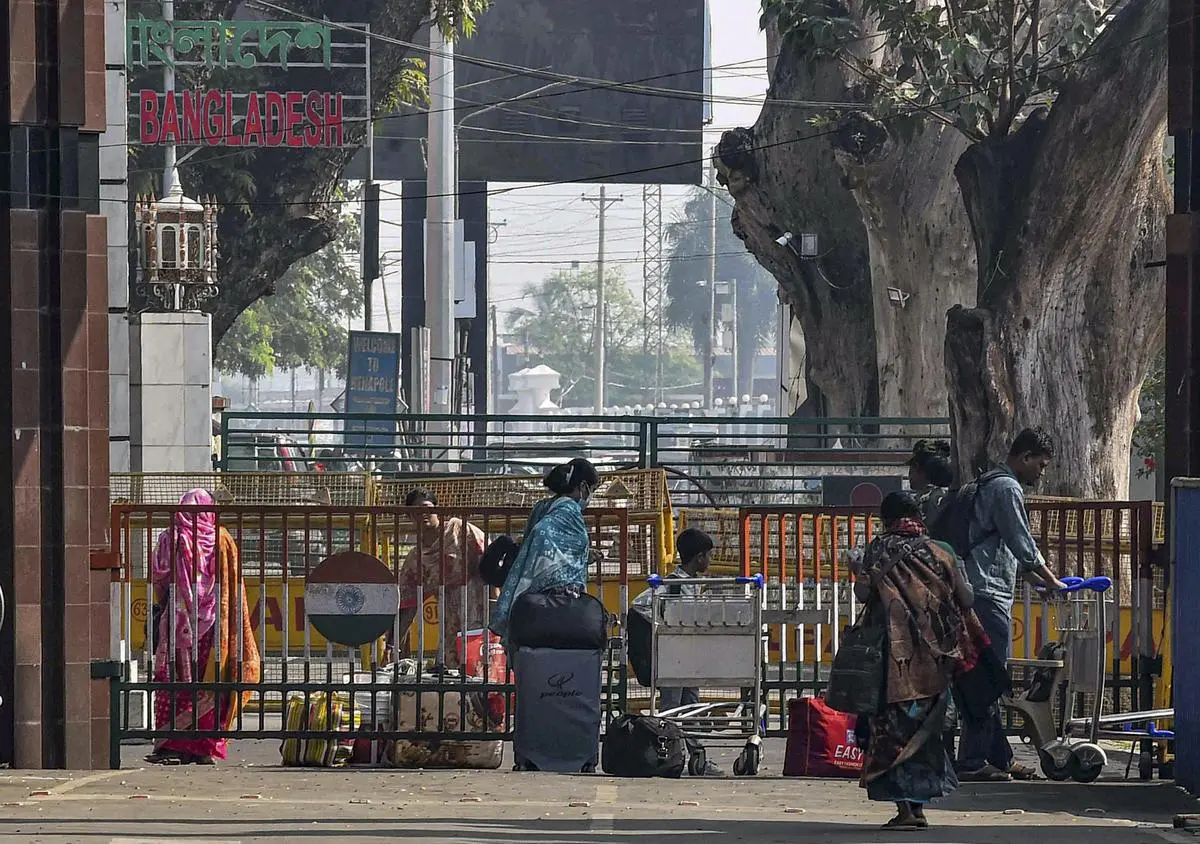
One of the most significant highway stretches transferred to the National Highways Authority of India is the 329.6-kilometre-long NH-312 corridor. The route connects several important districts and towns including Jangipur, Omarpur, Krishnagar, Bongaon and Basirhat before reaching Ghojadanga near the India-Bangladesh border.
The corridor is considered strategically important because it links multiple commercial and border regions in south Bengal. Improved highway infrastructure along this route is expected to boost cargo movement, cross-border trade and regional economic activity.
Apart from NH-312, the Centre will also take over stretches of NH-31 connecting the Bihar-West Bengal border to Gazole as well as portions of NH-33 extending toward Farakka. These routes are critical for movement of goods, passenger transport and interstate connectivity across eastern India.
NHIDCL to Handle Strategic North Bengal and Hill Routes
The National Highways and Infrastructure Development Corporation Ltd will take over several strategically important stretches in north Bengal and the Himalayan region.
These include the Sevoke-Kalimpong-Sikkim border route along NH-10, which serves as a major lifeline connecting Sikkim with the rest of India. The route is considered highly sensitive from both economic and strategic perspectives because it supports civilian traffic, tourism and movement toward border regions.
NHIDCL will also handle the Hasimara-Jaigaon corridor near the Bhutan border, the Changrabandha border route and the Siliguri-Darjeeling hill road. These roads are important not only for tourism but also for trade, military logistics and connectivity in the strategically sensitive Siliguri Corridor region, often referred to as the “Chicken’s Neck” connecting mainland India to the Northeast.
Delayed Projects Expected to Gain Momentum
Officials believe the transfer could finally accelerate several delayed infrastructure projects that had remained stalled due to administrative complications between the state and central authorities.
The Centre had reportedly been pushing for direct control of these highways in order to carry out widening, strengthening and modernisation work through centrally managed contracts and agencies.
Road projects in north Bengal, particularly hill and border areas, often face delays due to land acquisition challenges, difficult terrain, weather-related disruptions and coordination issues between agencies. The latest decision is expected to reduce bureaucratic hurdles and streamline execution.
Infrastructure experts say improved road networks in these regions could help reduce travel time, improve logistics efficiency and strengthen regional trade connectivity with neighbouring countries including Bangladesh and Bhutan.
Strategic Importance Beyond Infrastructure
Beyond road construction, the transfer of these highway corridors carries wider strategic importance for India’s eastern and northeastern connectivity network.
The Bay of Bengal region, the Bangladesh border belt and the Siliguri Corridor have become increasingly important in India’s larger connectivity and security framework. Better highways in these areas are expected to support trade routes, tourism circuits, military mobility and cross-border economic integration.
The NH-10 route toward Sikkim is especially important because it serves as one of the primary access roads to the Himalayan state. Similarly, the Jaigaon and Changrabandha corridors play a major role in trade and transit movement toward Bhutan and Bangladesh respectively.
Officials also believe upgraded infrastructure in north Bengal could strengthen tourism in Darjeeling, Kalimpong and adjoining hill regions, which often suffer from road congestion and poor connectivity during peak tourist seasons and monsoons.
Centre-State Coordination Key to Execution
The decision also reflects improving coordination between the state and central governments on major infrastructure projects after prolonged delays.
While the projects had technically been designated as national highway works, implementation remained affected because the state PWD continued to retain administrative control over the road stretches.
With the transfer process now approved in principle, officials expect survey work, tendering and construction activities to accelerate in the coming months.
The road upgrades are likely to become part of India’s broader infrastructure expansion strategy focused on border connectivity, regional economic integration and transport modernisation.