The amended Nari Shakti Vandan Adhiniyam was debated in the Parliament from April 16-18. The historic decision of Modi 3.0 NDA government to implement 33 per cent women reservation for the Lok Sabha and Assembly elections at the earliest available opportunity is indeed a major milestone in India’s democracy. The bill was defeated as it could not acquire 2/3rd majority in Lok Sabha as an impact of the negative politics of the opposition.
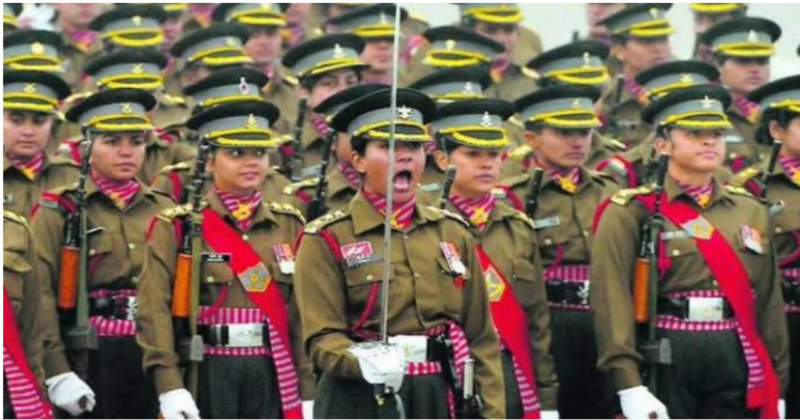
However, under PM Modi, a large number of decisions to empower the women have been taken in the last 12 years. From the military perspective, the decision to grant Permanent Commission to women officers in the year 2020 was one of the most challenging one for the PM Modi government.
Prior to the year 2020, women officers were granted Short Service Commission for a period of 10 years, which could be extended till 14 years of service. Supreme Court of India granted permanent commission to women officers in a landmark verdict dated February 17, 2020. Indian Army quickly went about implementing the Supreme Court order. I was posted in the Army Headquarters New Delhi as a Major General then and it was my charter to work out the modalities of granting permanent commission to the women officers.
By the end of March 2020, the country was in the grip of COVID-19 pandemic and countrywide lockdown was imposed. I had the additional responsibility of managing the COVID Cell of the Indian Army. Even with a limited staff, we in the Army Headquarters continued with the necessary groundwork to implement the grant of permanent commission for the women officers. It was sometime in May 2020 that I got a chance to present the modalities of grant of permanent commission to women officers to Rajnath Singh, the Raksha Mantri. It is to the credit of Raksha Mantri that he directed his ministry officials to quickly grant all the necessary sanctions.
The most challenging part for me was to get the government sanction for additional 400 Colonel rank vacancies for the women officers. The male officers undergo a selection board for getting promoted to the rank of Colonel, after 15 years of service. There were a large number of women officers who had already crossed 15 years of service at that point of time. Normally, grant of additional vacancies of Colonels and above is a time-consuming process, because the decision has financial implications. Such a decision is scrutinised by the Ministry of Defence in consultation with the Ministry of Finance. In the past, many such decisions have taken more than two years to fructify.
But not this time around. We prepared a detailed case file after obtaining the approval of the Chief of the Army Staff (COAS). The file was monitored by my staff at every level. All the queries of the ministry were promptly replied to. The additional Colonel rank vacancies were sanctioned by the Ministry of Defence in less than two months. PM Modi was regularly updated on the progress to grant permanent commission to the women officers. After necessary spadework, the Ministry of Defence issued the formal Government Sanction Letter for grant of PC to women officers on 23 July 2020.
As compared to Indian Navy and Indian Air Force, the service conditions in the Indian Army are more tough. Indian Army is not only deployed on the borders but also is actively employed in Counter-Terrorist operations in Jammu & Kashmir and India’s North East. The physical hardships, isolation and hygiene conditions, particularly in the field areas test both physical and mental endurance. Now after getting approved for promotion to the rank of Colonel, the women officers had to command units which have 100 per cent male soldiers. It is to the credit of the women officers that they have commanded male troops with their professional competence and dedication. Necessary handholding for a smooth transition of command was facilitated by the senior leadership of the Army.
As luck would have it, I was posted as Commandant Officers Training Academy, Chennai in October 2020 on getting promoted. OTA Chennai at that point of time was the only academy that trained women cadets for the grant of short service commission. Now that permanent commission for women officers was implemented, I had the onerous responsibility to train women cadets alongside their male cadets under similar conditions. Such training was introduced for the first time in OTA Chennai and it was called Integrated Model of Training. The training standards of women cadets were gradually raised so as bridge the gap between the male and female cadets to the extent feasible. I am happy to state that the women cadets rose to the occasion, achieved higher standards of training. In the later years, women cadets have even topped the order of merit in the Academy.
The experience of women officers proving their mettle during the challenging combat conditions including during Operation Sindoor in May last year has been very positive. Therefore, the empowerment of women leaders by granting them 33 per cent seats in the Parliament and the state assemblies is indeed most appropriate. Such pathbreaking law is going to provide the necessary leadership role to the women who already have demolished many existing perceptions and myths. PM Modi has often talked about bringing one lakh young people with no family background into Indian politics. A lot of such fresh blood of women representatives may also come from the people with military background, particularly with the backing of Nari Shakti Vandan Adhiniyam.