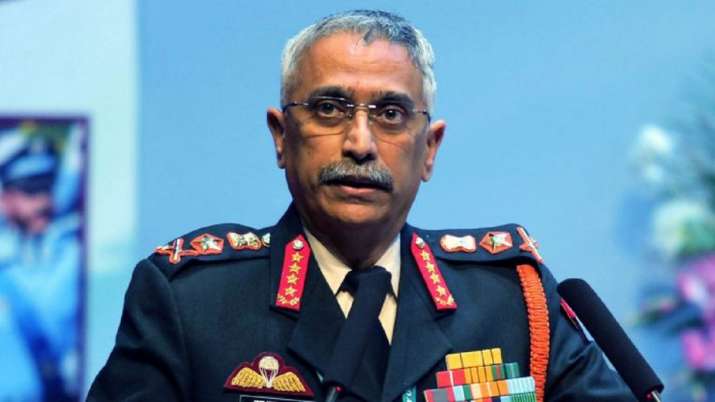
Former Chief of Army Staff Manoj Mukund Naravane has once again stood by his assertion that India did not cede any territory to China during the 2020 standoff along the Line of Actual Control (LAC) in eastern Ladakh.
Speaking amid growing political controversy, General Naravane clarified that his position has remained unchanged. “I had said earlier that there was no loss of territory, and I stand by that statement even today,” he said, responding to questions triggered by debates around his unpublished memoir.
The 2020 crisis, which marked one of the most serious military confrontations between India and China in decades, included violent clashes in the Galwan Valley and prolonged troop deployments across multiple friction points.
Memoir Row Sparks Political Storm
The controversy gained momentum after excerpts from Naravane’s unpublished memoir, Four Stars of Destiny, were cited by opposition leaders, particularly Rahul Gandhi, during the Budget Session in Parliament.
Rahul Gandhi attempted to quote portions of the book while speaking on the President’s Address, suggesting that the contents hinted at a more complex ground reality than what has been officially stated. Congress leaders have since questioned whether India may have suffered territorial setbacks during the standoff.
However, Naravane has pushed back against such interpretations, indicating that selective reading or premature conclusions from an unpublished manuscript could lead to misrepresentation.
Civil-Military Decision Making Explained
Addressing another key point of criticism, General Naravane rejected claims that the political leadership had left the Army to handle the crisis independently.
He explained that India’s military operations function within a well-defined institutional framework, with strategic decisions taken by the Cabinet Committee on Security, chaired by the Prime Minister.
“The political leadership does not interfere directly in military affairs,” Naravane said, emphasising that such an approach reflects trust in military leadership rather than absence of oversight.
His remarks sought to counter narratives suggesting a vacuum in decision-making during the high-stakes border crisis.
Keeping the Military Apolitical
In a significant intervention, Naravane stressed the importance of maintaining the apolitical character of the armed forces. He described the Indian military as an institution that must remain insulated from political contestation.
“The armed forces are totally apolitical as an organisation,” he noted, while acknowledging that individuals within the forces, like any citizens, retain their democratic rights, including voting.
This statement comes at a time when the military’s role and statements by former officers are increasingly being drawn into political debates.
Public Trust and National Interest
Despite the ongoing controversy, Naravane expressed confidence that the respect and trust enjoyed by the armed forces among the Indian public remain intact.
He downplayed the impact of the current debate, suggesting that isolated controversies cannot overshadow the broader credibility of the institution.
Offering a measured appeal, he said that citizens are free to interpret events and narratives in their own way but must do so with the “overall national interest in mind.”
Memoir Awaiting Clearance
Naravane’s memoir, which chronicles his nearly four-decade-long military career, including his tenure during the Ladakh crisis, is yet to be published as it awaits necessary government clearance.
The book is expected to provide deeper insights into the strategic, operational, and political dimensions of the 2020 standoff once it is officially released.
Until then, the debate surrounding its contents continues to fuel political and public discourse, with competing narratives shaping perceptions of one of the most consequential military confrontations in recent Indian history.