Bengaluru: Even as the debate over women’s reservation resurfaces at the national level, data from Karnataka paints a stark picture—women’s representation in the state’s political landscape continues to remain below 10 per cent, exposing deep structural imbalances in electoral politics.
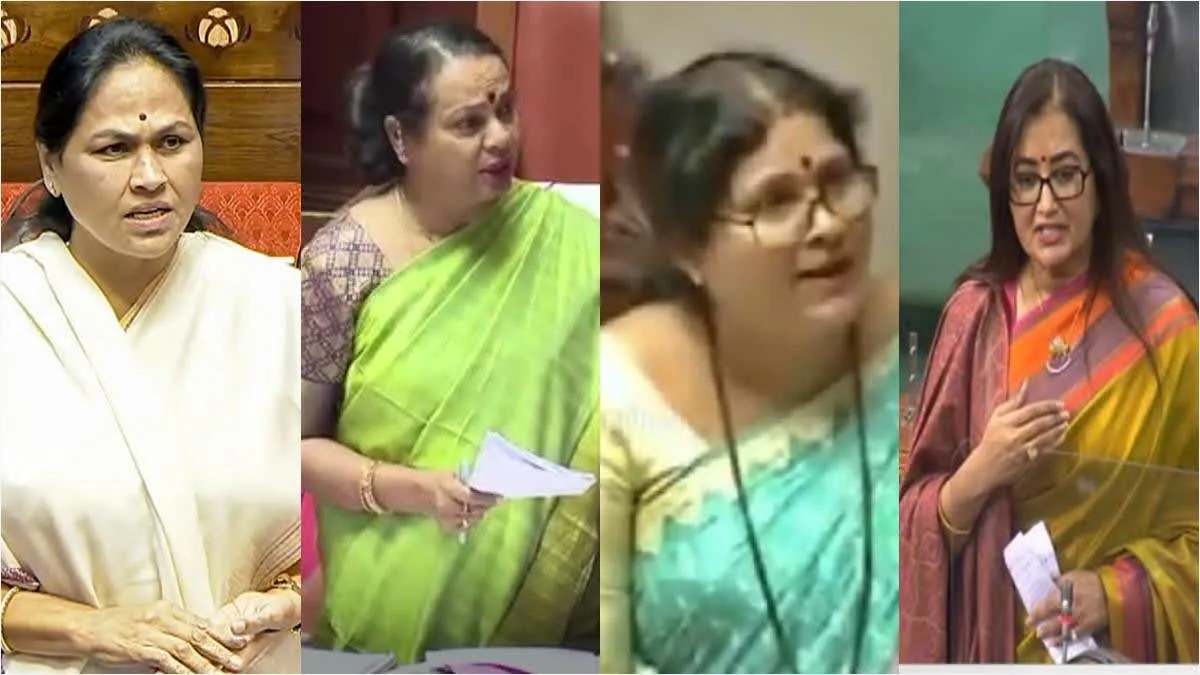
The failure of the proposed 33 per cent women’s reservation in Parliament has once again shifted focus to the ground reality in states like Karnataka, where women remain significantly underrepresented across legislative bodies. Despite producing prominent leaders such as Nirmala Sitharaman, Shobha Karandlaje, Margaret Alva and Sumalatha Ambareesh, the overall participation of women in electoral politics remains minimal.
Assembly representation shows persistent gap
In the 224-member Karnataka Legislative Assembly, women currently account for less than 10 per cent of the total strength. Historical data reveals that this is not a recent trend but a long-standing issue. Representation peaked in 1962 at around 8.65 per cent, but declined sharply in subsequent decades.
The lowest point was recorded in 1983 when only two women were elected, bringing representation down to just 0.89 per cent. Even in recent years, the numbers have shown only marginal improvement—rising to 3.57 per cent in 2018 and 4.46 per cent in 2023. Over seven decades, the average representation has hovered around 3.8 per cent, indicating a persistent gender imbalance.
Lok sabha presence remains limited
A similar pattern is visible in Karnataka’s representation in the Lok Sabha. Since 1962, women MPs from the state have rarely crossed double digits in percentage terms. The highest representation was recorded in 1991 and again in 2024, with three women MPs accounting for around 10.71 per cent.
However, there have also been years such as 1980 and 1998 when no woman from Karnataka was elected to the Lok Sabha. While recent elections have seen a slight uptick, experts argue that the growth remains inconsistent and insufficient.
Role of political parties under scrutiny
Political analysts point out that women’s representation is not merely a function of voter support but is largely dependent on candidate selection by political parties. Major parties such as the Indian National Congress and the Bharatiya Janata Party dominate candidate selection and their willingness to field women candidates directly influences outcomes. Despite repeated promises and policy discussions, the number of tickets given to women candidates remains limited, often confined to select constituencies.
Notable women leaders but limited numbers
Karnataka has produced several influential women leaders over the decades. Pioneers like Sarojini Mahishi and Basava Rajeshwari paved the way for women in parliamentary politics. In recent years, leaders like Priyanka Jarkiholi and Prabha Mallikarjun reflect gradual diversification. However, these individual successes have not translated into broader systemic change.
Structural barriers persist
Experts cite multiple barriers to women’s political participation, including lack of financial resources, limited access to party networks, societal norms and safety concerns. These challenges often discourage women from entering electoral politics or sustaining long-term careers. Additionally, the absence of internal party quotas and structured mentorship systems further compounds the issue.
Reservation seen as potential game changer
With the proposed 33 per cent reservation for women in legislative bodies yet to be implemented, many believe it could significantly alter the political landscape. If enforced, Karnataka could witness a substantial rise in women representatives across Assembly, Lok Sabha, and local bodies. Policy experts argue that reservation would not only improve numerical representation but also influence governance priorities by bringing gender-sensitive issues to the forefront.
Slow progress, long road ahead
While there has been incremental progress in recent years, Karnataka’s overall performance in ensuring women’s political participation remains modest. The data underscores a broader national trend where symbolic representation exists, but substantive inclusion is still lacking.
As debates on gender equity in politics continue, Karnataka stands at a critical juncture—where policy intent, political will and structural reforms must converge to ensure that women are not just participants, but equal stakeholders in governance.