Democracy does not provide shelter to vulgarians and freedom of expression cannot be a means to pollute our public discourse. The reason why constitutional democracy prevails in India is that people are aware that rights are inextricably tied to duties. The recent instances of young agitators being alleged to have used foul and offensive language signify not the manifestation of democratic freedom but an unfortunate downfall of civic morality. People can raise their voice against the government, disapprove of its decisions and even oppose any policies with all their strength. However, as soon as politics takes the form of gutter language, it is democracy that suffers.
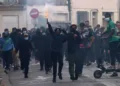
This assertion of their being kids requires close consideration. Being young explains their immaturity but cannot provide any excuse for intentional bad behaviour. A civilised country cannot accept any violent actions by its members only because the culprit is young. Intentional abandonment of ethics, use of offensive language in public, and celebration of such actions as a revolution make these people go from democracy to intentional bad actions. Passion cannot be used as a justification for intentionally destructive actions against the democratic system. Society has the full right to educate the youth, but a lack of accountability transforms this education into entitlement rather than citizenship.
Even more worrying is the increasing inclination to mythologise all actions carried out under the pretext of protest. This pernicious approach postulates that once one holds a placard and participates in a demonstration, all that person says and does immediately becomes sanctified by moral righteousness. Protesting is not virtuous simply because it is loud, passionate and aggressive. In a democracy, legitimacy is achieved by virtue of self-control, rationality and constitutional values, not violence, intimidation or theatrical anger. Those who consciously choose to replace arguments with obscenities prove nothing about their intellectual superiority. The failure of the latter always translates into the triumph of the former.
Political parties, especially those in opposition, need to face up to their own contribution honestly, without selective appeals to democratic values. Opposition is essential in democracy, but the careless political mobilisation that may indirectly lend legitimacy to abuses is extremely irresponsible. No political entity should gain temporary political gains in such an environment of hostility and social tension. Encouraging a culture in which public abuse is tolerated today merely because it targets a political rival is a shortsighted strategy that ultimately damages every democratic institution. Those who sow the seeds of political anarchy should not be surprised when they later become its victims.
Democratic leadership demands restraint, not opportunism. Predictably, there will be attempts to explain this behaviour by referring to examples from the past when people supporting different political parties had been using equally indecent language. These kinds of defences must be outrightly rejected. Indecent behaviour does not receive sanctification simply because it occurs repeatedly. One instance of indecency cannot cleanse another one. Progress towards civilisation takes place through the denial of bad precedents and not through their multiplication. Vulgarity was not permissible before; and it is not now, irrespective of the speaker, the target or even the political party that would benefit from it.
Each protest movement must also protect itself from turning into a convenient tool for political purposes. The stage of a public protest set up based on constitutional rights must not be used as a platform manipulated by political parties, ideological organisations or pressure groups in pursuit of their political gains. Once a protest movement gets tainted by political considerations, it loses its moral autonomy and credibility. This means that true protesters need to set certain standards for themselves and be prepared to refuse to use aggressive slogans without delay, preventing anyone from taking control of the movement. Neutrality does not mean weakness; rather, it is quite the opposite.
Constitutional rights do not constitute absolute power for citizens to flout constitutional morality. The constitutional right to freedom of expression is upheld because it serves to advance democratic values – not because it facilitates the defilement of democratic values. Protesters who assume that the rights granted to them by the constitution provide immunity from criticism have failed to comprehend the very constitution they uphold. No democracy has ever provided any form of immunity to criticism based on the fact that the person criticising is a protester. When there are any legitimate doubts regarding the motives, methods, organisation and behaviour of protesters, the protest groups must respond to those concerns.
Indian democracy cannot afford a culture where abuse becomes a symbol of courage and where vulgarity gets mistaken for political awareness. What this country needs are citizens who can question the powers that be on the strength of their arguments, their beliefs and their commitment to the constitution—what it doesn’t need is those citizens who choose to use obscenities in place of argument. The weaknesses of democracies include not just the authoritarian elements but also the reckless acceptance of indecent behaviour in the public domain.
If the standards of citizenship keep declining on account of political passion, then the result would be not democracy but the degradation of public life, where reason is drowned in provocations. The choice facing each one of us is clear-cut. We either choose to defend a democracy based on constitutional morality and restraints and responsible opposition or we choose to remain passive witnesses to the rise of a new political culture where abuse becomes the norm, accountability is optional and anarchy pretends to be activism.