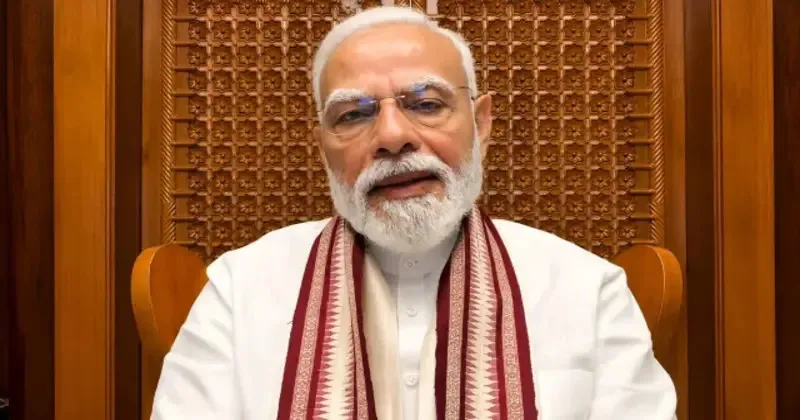
Political leaders are often judged by the battles they win. Yet history suggests that the most enduring statesmen are remembered not merely for their victories, but for their ability to decide which battles are worth fighting and which are better abandoned. It is in this distinction that Prime Minister Narendra Modi’s political style becomes particularly intriguing. While supporters celebrate his decisiveness and critics portray him as an uncompromising strongman, both narratives overlook what may be his defining characteristic: an extraordinary willingness to retreat tactically to preserve strategic dominance.
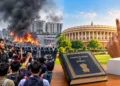
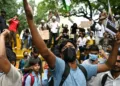
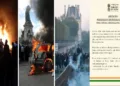
Recent political developments once again demonstrate this pattern. The resignation of India’s education minister following weeks of nationwide student protests appeared, on the surface, to be a significant setback for the government. Many interpreted the episode as evidence that public pressure had forced the Prime Minister into a rare climbdown. Yet a closer examination reveals something rather different. The resignation neutralised a rapidly escalating crisis while leaving the government’s broader political authority untouched. One minister departed, but the administration remained firmly in command of the national agenda.
This is not an isolated incident. It reflects a recurring political doctrine that has shaped Modi’s leadership over the past decade: concede the minimum necessary to protect the maximum possible. The same logic has surfaced repeatedly throughout his tenure. The repeal of the controversial farm laws in 2021 came after one of the largest and longest-running protest movements in independent India’s history. For many observers, it represented a dramatic defeat for a government that had built its reputation on unwavering resolve.
Yet the reversal was announced on Guru Nanak Jayanti, a symbolic gesture that transformed a policy retreat into an act of reconciliation. More importantly, while the legislation disappeared, the government’s long-term objective of agricultural reform was never abandoned. The method changed; the destination did not.
Following the 2024 general election, PM Modi faced another unexpected challenge. For the first time in ten years, the Bharatiya Janata Party required coalition partners to govern. Conventional wisdom suggested that a leader accustomed to commanding parliamentary majorities would struggle with compromise. Instead, PM Modi adapted almost immediately. Key ministries were allocated to allies, coalition demands were accommodated, and the National Democratic Alliance presented a united front within days of the election results.
Again, critics described this as weakness. In reality, it demonstrated something else entirely: political elasticity.
Strong leaders are often imagined as immovable figures who refuse to bend under pressure. Yet democratic politics rarely rewards rigidity. Governments operate within constantly shifting public opinion, economic realities, judicial oversight, coalition dynamics and international developments. Leaders who cannot adapt frequently become prisoners of their own rhetoric.
Modi appears to understand this better than most.
His political career has consistently reflected an unusual distinction between objectives and instruments. Objectives remain remarkably stable. The pursuit of economic development, national security, administrative centralisation, India’s global stature and political continuity has remained broadly consistent throughout his premiership. The instruments used to achieve those objectives, however, are highly flexible.
This distinction explains why tactical reversals seldom translate into strategic defeats.
Perhaps this adaptability also explains why predictions of Modi’s political decline have repeatedly proven premature. Since 2014, commentators have forecast that demonetisation, economic slowdowns, the COVID-19 crisis, farmer protests, coalition politics or electoral setbacks would fundamentally weaken his position. Yet each episode has ended in much the same way: the immediate controversy subsides while Modi remains politically dominant.
Part of this resilience stems from communication.
Unlike many previous Indian Prime Ministers who relied heavily upon traditional media, PM Modi built a direct relationship with citizens through social media, digital platforms and programmes such as Mann Ki Baat. This communication model allows him to define political narratives without depending entirely upon conventional gatekeepers. Supporters see him not simply as the head of government but as Pradhan Sevak, the chief servant of the nation, a carefully cultivated identity that blends authority with accessibility.
This image has proven politically valuable because it softens the perception of authority without diminishing its effectiveness.
The same strategic thinking extends beyond domestic politics.
India’s foreign policy under PM Modi has frequently been described as one of “strategic autonomy.” During the Russia-Ukraine conflict, India maintained long-standing relations with Moscow while simultaneously strengthening ties with the United States and Europe. PM Modi visited Kyiv without abandoning India’s partnership with Russia. Critics accused the government of ambiguity; supporters praised diplomatic independence. Regardless of one’s interpretation, the underlying principle remained consistent: avoid becoming trapped by binary choices.
Similarly, India’s G20 presidency showcased New Delhi as a leading voice of the Global South while simultaneously reinforcing India’s image as an emerging global power. These initiatives were not merely diplomatic exercises; they strengthened India’s international credibility while reinforcing domestic political legitimacy.
In each case, flexibility became an instrument of strength rather than uncertainty.
Political philosophy offers an interesting framework for understanding this style of leadership.
More than five centuries ago, Niccolò Machiavelli argued that successful rulers should possess virtu not moral virtue in the conventional sense, but the capacity to adapt effectively to changing circumstances. The ruler who survives, Machiavelli suggested, is not necessarily the most principled in method but the most disciplined in pursuing enduring objectives while adjusting tactics to suit reality.
Viewed through this lens, PM Modi’s political conduct appears less like inconsistency and more like calculated adaptability. Of course, acknowledging this strategic competence does not require ignoring legitimate concerns.
Independent democratic indices have raised serious questions regarding civil liberties, press freedom and institutional independence in India during the Modi years. Critics argue that increasing centralisation of power, pressure on sections of the media and tensions with civil society organisations have narrowed democratic space. These concerns deserve careful attention rather than partisan dismissal.
Yet even here, the political picture remains more complex than simplistic labels suggest.
India continues to conduct fiercely contested elections. Opposition parties govern several major states. Judicial institutions have, on multiple occasions, constrained executive decisions. Parliamentary politics remains highly competitive despite the BJP’s electoral dominance. These realities coexist with concerns about democratic quality, producing a political landscape that defies easy categorisation.
Supporters therefore interpret PM Modi’s governance as evidence of decisive leadership within a functioning democracy, while critics view the same developments as signs of democratic erosion. Both perspectives contain elements of truth, but neither fully captures the broader political phenomenon.
What distinguishes PM Modi is not merely ideology but political management.
His instinct consistently favours preserving governing capacity above symbolic victories. Rather than defending every policy to the bitter end, he appears willing to sacrifice policies, ministers or temporary positions if doing so protects larger political objectives. This willingness to retreat selectively has prevented numerous crises from evolving into existential threats.
Many governments collapse because they mistake stubbornness for strength.
History offers countless examples of leaders whose refusal to compromise transformed manageable controversies into irreversible political disasters. By contrast, Modi has repeatedly demonstrated that selective retreat can sometimes reinforce authority rather than diminish it.
This lesson extends beyond India.
Modern democracies operate within fragmented societies, rapid information cycles and increasingly volatile public opinion. Political capital can evaporate quickly when governments fail to recognise changing circumstances. In such an environment, adaptability may prove more valuable than ideological rigidity.
PM Modi’s leadership appears well suited to this political era.
That does not mean every decision has been correct, nor does it imply that every criticism is unfounded. Democratic leadership should always remain subject to scrutiny, accountability and institutional checks. Strategic flexibility should never become an excuse for weakening democratic safeguards or avoiding difficult questions.
Nevertheless, reducing PM Narendra Modi to the stereotype of a rigid strongman obscures a far more interesting reality.
His greatest political asset may not be uncompromising determination but disciplined adaptability. He understands that governing a nation as vast and diverse as India requires distinguishing between tactical concessions and strategic surrender. He rarely appears emotionally attached to individual ministers, particular policies or temporary political positions. Instead, his focus remains fixed on preserving the broader trajectory of his government.
In chess, experienced players occasionally sacrifice a knight or bishop not because they have miscalculated but because they have already anticipated the position several moves ahead. The immediate loss creates a larger strategic advantage.
PM Modi’s politics often resembles that kind of calculation precisely.
Whether confronted by mass protests, coalition negotiations, electoral surprises or international uncertainty, he repeatedly demonstrates a willingness to lose the smaller contest to secure the larger one.
His critics frequently interpret these moments as evidence of weakness. His supporters celebrate them as proof of political mastery.
The truth may lie somewhere between the two.
PM Narendra Modi’s defining strength is not that he never retreats. It is that he retreats on his own terms, at moments of his choosing, while ensuring that the centre of political gravity never shifts away from him. In an age when many leaders mistake inflexibility for conviction, PM Modi has quietly built an alternative model of political survival, one where bending is not breaking, concession is not capitulation and losing small becomes the surest way of continuing to win big.