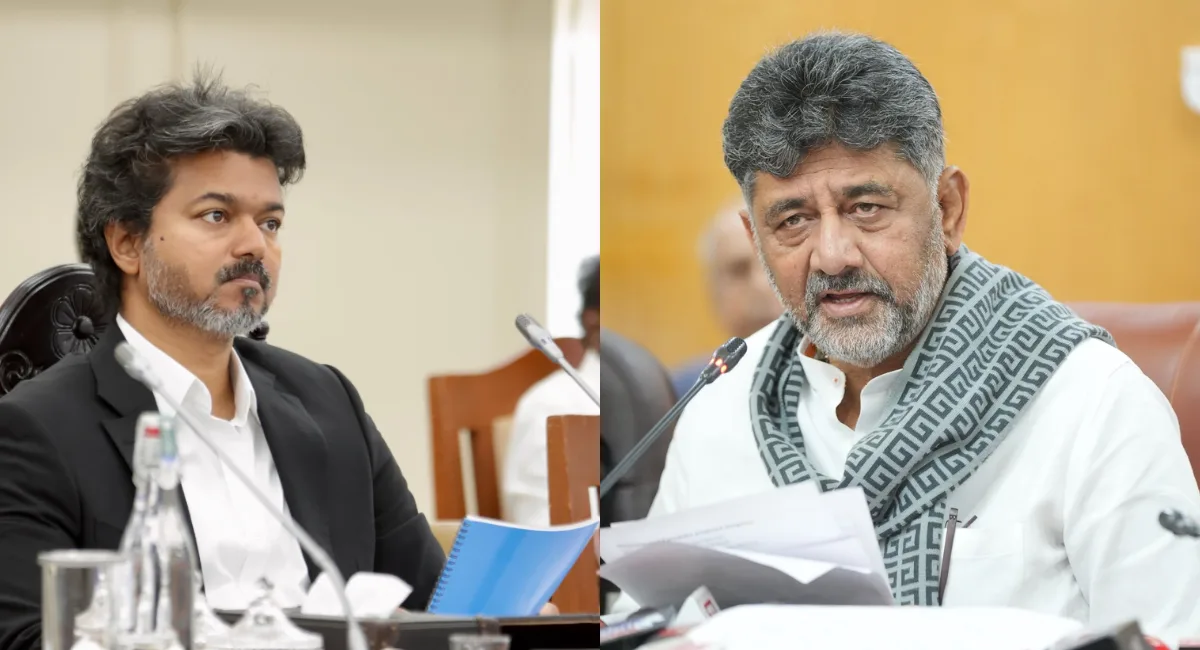
In the wake of the tense situation, with farmer groups and opposition leaders strongly objecting to the visit and the proposed bilateral talks, Karnataka Chief Minister D. K. Shivakumar asked his Tamil Nadu counterpart, C. Joseph Vijay, to defer his planned visit to Bengaluru. He cited the rising protests over the Cauvery water dispute as the reason for postponing the proposed visit.
On July 31, Tamil Nadu Law Minister R. Nirmal Kumar said the State government was exploring all options to resolve the water-sharing dispute and prevent Karnataka from constructing the Mekedatu dam.
He said, “We will approach the Supreme Court to get Tamil Nadu’s due share of Cauvery water. We have finalised a 13-member delegation of ministers and officials to accompany Chief Minister Vijay to Bengaluru.”
In another development, the Cauvery Water Management Authority (CWMA) directed Karnataka to release water to Tamil Nadu at the rate of 3,500 cusecs a day for 15 days from July 29. For Cauvery delta farmers in Tamil Nadu, Cauvery water is the lifeline for irrigation.
Every year, on June 12, the shutters of the Mettur Dam are opened to release water for the delta basin. However, this year, due to insufficient storage in the Mettur Dam and the lack of considerable inflow from Karnataka, farmers could not take up Kuruvai crop cultivation. Only those with pump sets managed to cultivate crops that are expected to be harvested in early October.
With Kuruvai cultivation being curtailed across most parts of Nagapattinam, Thanjavur, Mayiladuthurai, Tiruvarur and Tiruchy, delta farmers urged the State government to extend all the benefits under the Kuruvai Special Package Scheme to Samba cultivation so that those unable to cultivate Kuruvai are not deprived of assistance.
Tamil Nadu farmers, who have been organising protests since July 31, condemned the Karnataka government for failing to release water despite the CWMA’s directions. They termed Karnataka’s actions unconstitutional and urged the Central government to ensure the release of water.
It is learnt that, as of July 27, the cultivation coverage stood at 3.87 lakh acres compared to 5.05 lakh acres on the corresponding day last year. This year, paddy cultivation during the Kuruvai season has declined by more than one lakh acres compared to the previous year. Thanjavur topped the list with approximately 1.29 lakh acres, followed by Mayiladuthurai (97,000 acres) and Tiruvarur (88,700 acres).
The Tamil Nadu Kaveri Farmers Association led a protest by farmers and agricultural workers in a dry paddy field at Periyakuruvadi village in Tiruvarur district. The Tamil Nadu Farmers Protection Association said the non-opening of the Mettur Dam had left thousands of farmers without irrigation water during the crucial sowing period.
It said, “As most farmers are not able to take up Kuruvai cultivation and benefit from the Kuruvai Special Package Scheme, the State government should extend its benefits to Samba cultivation.”
In Karnataka, farmers threatened to lay siege to Kempegowda International Airport in Bengaluru and the proposed venue for the talks if Chief Minister Vijay arrived in Karnataka to press for Cauvery water release.
Karnataka Chief Minister D. K. Shivakumar said the meeting, now deferred, which was intended to discuss a range of inter-State issues, would be held only after the situation improves. He added that his government would decide its next course of action after the August 2 all-party meeting and consultations with legal experts.
AIADMK general secretary Edappadi K. Palaniswami, in a statement, demanded that an all-party meeting be convened immediately to discuss issues affecting Tamil Nadu farmers and the Mekedatu project.
He also questioned the State government’s silence over the Union Minister’s recent statement on the Mekedatu project and Karnataka Chief Minister D. K. Shivakumar’s refusal to release water despite the CWMA order.
The former Chief Minister said, “If a dam is built at Mekedatu, the Cauvery delta, Tamil Nadu’s breadbasket, will turn into a desert besides affecting drinking water supply to more than 30 districts.” Tamil Nadu BJP said that the CWMA had clearly assessed the present availability of water.
PMK president Anbumani Ramadoss said Karnataka had decided to challenge the CWMA order directing it to release water to Tamil Nadu and had convened an all-party meeting on August 2. He questioned how the proposed talks between Tamil Nadu and Karnataka could yield any positive outcome for Tamil Nadu under such circumstances.
Meanwhile, Union Minister of State for Environment, Forest and Climate Change Kirti Vardhan Singh told the Rajya Sabha on July 31 that the Centre had not received any proposal seeking forest clearance for the Mekedatu project.
He said, “The concurrence of the Ministry of Jal Shakti and the CWMA on the detailed project report is still awaited. No proposal for granting forest clearance under the Van (Sanrakshan Evam Samvardhan) Adhiniyam, 1980 has been received.”
His reply strengthened Tamil Nadu’s position, as Union Jal Shakti Minister Raj Bhushan Choudhary had earlier informed Parliament that the Supreme Court’s 2018 final verdict did not mandate Karnataka to obtain consent from lower riparian States, including Tamil Nadu, before constructing structures across the river within its territory. His remarks had triggered a backlash in Tamil Nadu.