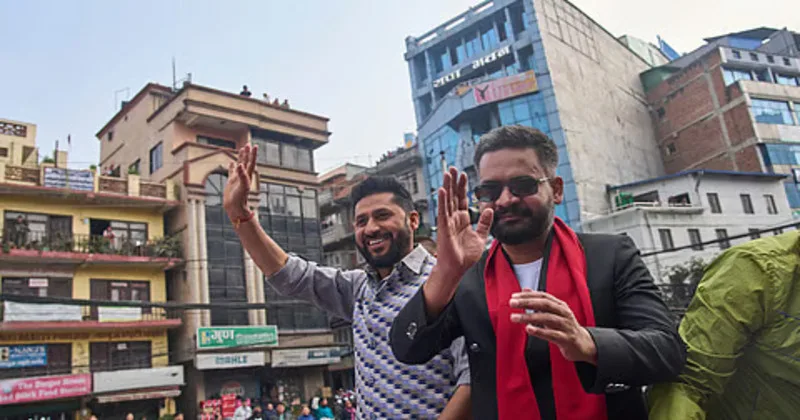
Nepal stands at a familiar crossroads—caught between the promise of reform and the weight of its own complexity. The rise of the Rastriya Swatantra Party(RSP), with nearly two thirds in the 275 members House of Representative and its ambitious 100-point roadmap, has injected fresh energy into a system long seen as stagnant. With bold commitments to digital governance, anti-corruption and rapid economic transformation, the RSP represents a new generation’s impatience with incrementalism.
But beneath the optimism lies a deeper and more consequential question: can a technocratic governance model succeed in a society shaped less by formal systems than by deeply embedded cultural practices? The answer will determine not only the fate of the RSP’s agenda, but the broader trajectory of Nepal’s state-building project.
At its core, the RSP’s roadmap reflects a modern, technocratic vision of governance. It emphasises a “digital by default” state, streamlined bureaucracy, measurable performance indicators and centralised oversight. These ideas draw inspiration from successful governance models in countries where institutions are strong and compliance is high.
Society calls the shots
Nepal, however, operates on a fundamentally different logic. Here, society—not the state—is the primary driver of outcomes. Formal rules exist, but they are often mediated through informal networks of kinship, community and political affiliation. Trust is not institutional but relational. Access to services frequently depends not only on eligibility, but on connections—what is colloquially known as the “afno manche” system.
This is where the first major tension emerges. The RSP’s digital governance push assumes a population ready to interact with an efficient, rules-based state. Yet for many Nepalis, especially outside urban centres, the state is not experienced as a neutral service provider but as a distant, often unreliable entity. Informal intermediaries—local leaders, brokers or party networks—fill this gap, acting as both facilitators and gatekeepers.
Replacing these systems with purely digital interfaces risks more than administrative disruption. It risks excluding those who rely on informal mechanisms as a form of social insurance. In this context where institutions are not fully trusted, digitisation without social adaptation can inadvertently deepen inequality.
Implementing anti-corruption agenda
The same complexity applies to the RSP’s anti-corruption agenda. Few would dispute the need to tackle corruption, which has long distorted resource allocation and undermined public trust. The party’s commitment to asset investigations and zero tolerance reflects a strong moral and political stance.
Yet corruption in Nepal is not simply a matter of individual misconduct. It is embedded within a broader patronage economy that sustains political financing, bureaucratic functioning and even social obligations. Informal payments and favours, while problematic, often serve as mechanisms through which the system continues to operate in the absence of strong institutional capacity.
An abrupt dismantling of these networks, without viable alternatives, could produce unintended consequences. Administrative paralysis, elite resistance and quiet non-compliance are all likely outcomes. The challenge, therefore, is not just to eliminate corruption, but to understand and gradually transform the structures that sustain it.
A similar pattern is visible in the RSP’s approach to bureaucratic reform. Proposals to depoliticise the civil service, ban party-affiliated unions and enforce performance accountability are, in principle, sound. However, they underestimate the resilience of Nepal’s institutional culture.
The bureaucracy has historically outlasted political transitions, adapting to new leadership while maintaining its internal logic. It is risk-averse, status-conscious and deeply embedded in networks of influence. Reforming such a system requires more than directives; it demands careful sequencing, incentives and coalition-building within the state itself.
Attempting to impose rapid, top-down change risks triggering bureaucratic inertia or subtle resistance. In Nepal, reform is rarely achieved through confrontation alone; it is negotiated, absorbed, and gradually internalised.
The economic ambitions of the RSP—most notably the goal of building a $100 billion economy within five to seven years—further illustrate the gap between vision and structural reality. Nepal’s economy is constrained not by a lack of ideas, but by limited implementation capacity. Chronic underutilisation of budgets, a weak industrial base, dependence on remittances and entrenched syndicates all present formidable challenges.
Ambitious targets can inspire, but without realistic sequencing, they can also overwhelm administrative systems and erode credibility. Nepal’s history is replete with plans that failed not due to flawed intent, but due to overextension.
Centralisation presents another critical faultline. The RSP’s emphasis on strong prime ministerial oversight and centralised monitoring aims to accelerate decision-making and ensure accountability. Yet Nepal’s federal structure, however imperfect, reflects the country’s deep social and geographic diversity.
Over-centralisation may yield short-term gains in efficiency, but it risks undermining local ownership and political legitimacy. In a country where identity and representation matter deeply, governance cannot be sustained through control alone.
Perhaps the most underappreciated dimension of the RSP’s roadmap lies in its interaction with Nepal’s cultural and religious fabric. While the party has avoided overt religious polarisation, its governance model implicitly assumes a degree of social neutrality that does not fully exist.
In Nepal, cultural practices—rooted in Hinduism but deeply interwoven with Buddhism and indigenous traditions—shape everyday life. Festivals, rituals, and community hierarchies are not peripheral; they are central to social cohesion. Policies that overlook these dynamics, even unintentionally, can encounter resistance that is subtle but powerful.
Change in Nepal is rarely revolutionary. It is evolutionary, negotiated through layers of tradition and adaptation. Attempts to accelerate this process without cultural alignment risk backlash—not necessarily in the form of protests, but through non-compliance and disengagement.
This does not mean the RSP’s vision is misguided. On the contrary, its emphasis on accountability, efficiency, and service delivery addresses real and urgent problems. Its appeal reflects a growing demand for a state that works. But the path to such a state cannot be purely technocratic.
Policy Recommendations: Aligning reform with Nepal’s civilizational reality
For the RSP’s roadmap to succeed, it must embed a parallel strategy of cultural governance—ensuring reform strengthens, rather than erodes, the social foundations of the state.
1. Prevent: Managing cultural disruption
Reform must avoid cultural dislocation. Digital governance should adopt hybrid models, combining technology with local assisted access, integrating community intermediaries rather than eliminating them. Nepal must also avoid politicizing religion; its stability rests on a non-ideological religious balance. Both majoritarianism and disconnected secularism risk disruption.
Development planning should include cultural impact assessments to protect local traditions amid infrastructure expansion. Social cohesion must be actively managed, with caste and identity policies focused on inclusion and reconciliation, not polarization.
2. Protect: Strengthening Cultural Foundations
Cultural institutions should be treated as strategic assets. Sites such as Pashupatinath Temple and Janaki Mandir anchor national continuity and require professional governance without political capture. The guthi system should be reformed through transparency and digitisation—not dismantled—given its role in sustaining community life.
Festivals like Dashain and Tihar should be recognised as national assets and supported locally as instruments of social integration. Nepal’s linguistic and cultural diversity must be preserved through multilingual governance and localised education.
3. Promote: Leveraging culture as strategic capital
Beyond preservation, culture must be leveraged strategically. Cultural diplomacy—through sites like Lumbini and Muktinath Mandir—offers high-impact global engagement. Domestically, integrating culture into economic strategy—festival economies, crafts and cultural professions—can generate livelihoods while reinforcing identity.
Education should link modern curricula with civilisational knowledge to avoid cultural detachment. Finally, Nepal must articulate an inclusive national narrative—moving beyond the “Hindu vs secular” binary toward a civilisational mosaic rooted in diversity and continuity.
Reform must be rooted
The ultimate test for the RSP is not whether it can design better policies, but whether it can adapt those policies to Nepal’s civilisational context. The success of its 100-point plan will not be determined by the ambition of its vision alone, but by its capacity to align reform with the deeper logic of how Nepal actually functions.
Nepal does not lack plans. It lacks alignment between plans and reality. Governance in Nepal does not operate in a vacuum of rules and systems. It is mediated through culture, relationships and deeply embedded patterns of trust. Any reform that overlooks this reality risks resistance—not always visible, but decisive in its impact. Technocratic efficiency, however well-designed, cannot substitute for social legitimacy.
The central challenge, therefore, is not whether Nepal should modernise, but how it does so. Rapid, top-down transformation may promise speed, but without cultural alignment it invites fragility. Durable reform must be incremental, adaptive, and negotiated—blending formal institutions with informal practices rather than attempting to displace them outright. Digital systems must coexist with human intermediaries; anti-corruption efforts must be sequenced to avoid systemic disruption; and state authority must be exercised in ways that reinforce, rather than undermine, social cohesion.
For the RSP, this demands a strategic recalibration: from a purely technocratic project to a hybrid model of governance that integrates efficiency with cultural intelligence. A successful reform agenda will not attempt to replace tradition with modernity. It will integrate the two—building a state that is efficient but also rooted; modern but also meaningful.
Nepal’s strength lies not in replicating external models, but in harnessing its own civilisational depth. Culture is not a constraint to reform—it is its foundation. In Nepal, identity is not defended through ideology but sustained through practice. Any reform that ignores this risks weakening the very foundation upon which the state depends.
The path forward is therefore clear, if demanding. Reform must be rooted in reality, not abstraction. Nepal does not fail for lack of ideas. It fails when ideas ignore the society they are meant to serve. Only by engaging its people as they are—not as they are imagined to be—can the RSP build a state that is both modern and enduring.