Maoist Mukt Bharat: Immediate Security Concerns
June 6, 2026
  • Read Ecopy
  • Circulation
  • Advertise
  • Careers
  • About Us
  • Contact Us
Android AppiPhone AppArattai
Organiser
  • ‌
  • Bharat
    • Assam
    • Bihar
    • Chhattisgarh
    • Jharkhand
    • Maharashtra
    • View All States
  • World
    • Asia
    • Europe
    • North America
    • South America
    • Africa
    • Australia
  • Editorial
  • International
  • Opinion
  • RSS @ 100
  • More
    • Op Sindoor
    • Analysis
    • Sports
    • Defence
    • Politics
    • Business
    • Economy
    • Culture
    • Special Report
    • Sci & Tech
    • Entertainment
    • G20
    • Azadi Ka Amrit Mahotsav
    • Vocal4Local
    • Web Stories
    • Education
    • Employment
    • Books
    • Interviews
    • Travel
    • Law
    • Health
    • Obituary
  • Subscribe
    • Subscribe Print Edition
    • Subscribe Ecopy
    • Read Ecopy
  • ‌
  • Bharat
    • Assam
    • Bihar
    • Chhattisgarh
    • Jharkhand
    • Maharashtra
    • View All States
  • World
    • Asia
    • Europe
    • North America
    • South America
    • Africa
    • Australia
  • Editorial
  • International
  • Opinion
  • RSS @ 100
  • More
    • Op Sindoor
    • Analysis
    • Sports
    • Defence
    • Politics
    • Business
    • Economy
    • Culture
    • Special Report
    • Sci & Tech
    • Entertainment
    • G20
    • Azadi Ka Amrit Mahotsav
    • Vocal4Local
    • Web Stories
    • Education
    • Employment
    • Books
    • Interviews
    • Travel
    • Law
    • Health
    • Obituary
  • Subscribe
    • Subscribe Print Edition
    • Subscribe Ecopy
    • Read Ecopy
Organiser
  • Home
  • Bharat
  • World
  • Operation Sindoor
  • Editorial
  • Analysis
  • Opinion
  • Culture
  • Defence
  • International Edition
  • RSS @ 100
  • Magazine
  • Read Ecopy
Home Bharat

Historic Victory for India: How strategic governance and security forces eliminated Maoism after 59 years

 India has officially declared itself free of Maoism as Home Minister Amit Shah announced the successful neutralisation of Left Wing Extremism on March 30, 2026. While this marks a historic victory in India’s internal security, certain immediate threats and security challenges remain

Lt Gen M K DasLt Gen M K Das
Apr 1, 2026, 08:00 pm IST
in Bharat
Follow on Google News
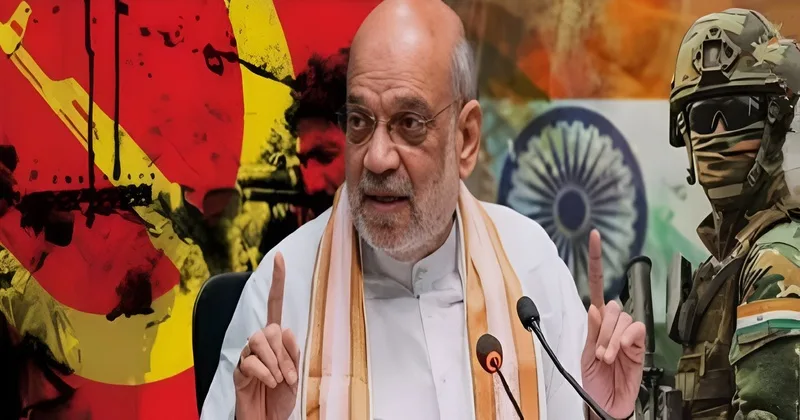
Home Minister Amit Shah

Home Minister Amit Shah

FacebookTwitterWhatsAppTelegramEmail

New Delhi: Amit Shah, India’s Home Minister, announced on the floor of the Lok Sabha on 30 March 2026 that Maoism has been eliminated from Bharat. Fulfilling his pledge to end Red terrorism by 31 March 2026, Shah has achieved what is widely considered one of the most challenging internal security milestones in post-independence India. Having first made this commitment on 24 August 2024, the Home Minister’s success has drawn comparisons to Sardar Vallabhbhai Patel’s historic integration of over 565 princely states at the time of Partition in 1947. Analysts say this achievement places Shah among the most effective Home Ministers in India’s history. He is also credited with the landmark abrogation of Article 370 in Jammu & Kashmir in August 2019.

Prime Minister Narendra Modi gave Home Minister Amit Shah full freedom to design an aggressive and time-bound strategy against Red terrorism. After assuming office in 2019 under the Modi 2.0 government, Shah implemented decisive measures to end Maoism. The Central Armed Police Force (CAPF), state police, commando units, and intelligence agencies were equipped with high-tech tools, and logistics in remote interiors were significantly strengthened. Security forces steadily penetrated Maoist strongholds, operating with urgency and purpose once the deadline was announced, with the backing of the Prime Minister. Following this campaign, 706 Maoists were killed, 2,218 arrested, and 4,839 cadre members—including prominent Maoist leaders—surrendered.

To assess the success of the security forces, these are impressive figures in a short time. But according to intelligence reports, a handful of cadres in states like Jharkhand, Chhattisgarh, Odisha, Telangana, and Maharashtra are still active. Some prominent Maoist leaders, like Ganapathi and Mishir Besra, remain elusive. Therefore, some immediate security concerns in the near future are feasible. While the ideology of Red terrorism stands defeated in India, the Modi government deserves credit for extending good governance to the Maoist strongholds liberated in the last decade. There should be further impetus for rapid development in the Maoism-affected areas, which have suffered economically and socially.

From the remnant Maoists, the most obvious threat would be to undermine the government’s claim that India is Maoist Mukt Bharat and embarrass the Modi government. To do so, Maoists may target security forces in a spectacular ambush, similar to attacks before 2014. They may also target VIP convoys or public meetings addressed by prominent leaders. Security forces and state/district administrations must strictly enforce protocols and follow SOPs rigorously. It is recommended that operations in Maoism-affected areas maintain momentum for the next three months, i.e., until 30 June 2026. States with no active Maoist cadres should also remain vigilant.

Also Read: Language Without Borders: How the Brahuis carry Tamil and Telugu culture into the northwest

Another security concern is the detection and neutralisation of land mines and IEDs laid by Maoists to deter the movement of security forces. Demining operations are time-consuming and risky, and local populations should be restricted from entering suspected areas until they are fully cleared. Additionally, Maoists are believed to have hidden relatively new and automatic weapons in safe havens, while many surrendered with older, low-quality arms. Such tactics are similar to those used by insurgent groups in India’s Northeast. High-quality hidden weapons may also find their way to Jammu & Kashmir or Manipur, making continued combing and search operations critical.

Identifying the support base of Maoists, particularly in rural areas, is another priority. These overground workers, known as Rural Party Committee (RPC) members, number in the thousands across various states. Weaning them away from Red terrorism ideology and integrating them into society is a major challenge for security forces and local administration. Quick, visible development in rural and remote areas is essential to demonstrate government commitment. NGOs can also play a valuable role in supporting civil administration.

Finally, the threat from Urban Maoists is likely to surface more prominently. Remnant leadership may attempt to propagate Red terrorism ideology in small towns and cities that have yet to see much development. Left-leaning groups may encourage unemployed youth to join them. Intelligence agencies must remain vigilant to prevent any such attempts. In opposition-ruled states, local administrations may not always act proactively, making strong coordination between the Centre and states imperative before Maoism can be considered fully eradicated.

Post-independence, the near-elimination of Maoism in March 2026—after nearly 59 years of impacting India’s internal security—is a historic milestone. Prime Minister Narendra Modi and Home Minister Amit Shah deserve credit for their steadfast approach in tackling this menace with clear deadlines. While some immediate security concerns remain, India now has reason to celebrate the end of Red terrorism and Maoism on its soil with cautious optimism and continued dedicated governance.




Topics: Amit ShahLeft Wing ExtremismModi governmentinternal securityNaxal Mukt BharatLWE EliminationNaxal Threat
ShareTweetSendShareSend
✮ Subscribe Organiser YouTube Channel. ✮
✮ Join Organiser's WhatsApp channel for Nationalist views beyond the news. ✮
Previous News

UP: Gym trainer Shehzad drugged, raped Hindu nursing student; Mukarram tracked victim, both arrested

Next News

West Bengal Election 2026: CAA, SIR, infiltration, jobs and corruption emerge as key battleground issues

Related News

Bharat Taxi emerges as World's largest mobility cooperative with over 35 lakh users, 6 lakh drivers

How Bharat Taxi is transforming India’s ride-hailing sector with a zero-commission cooperative model for drivers

Union Home Minister Amit Shah & UP CM Yogi Adityanath distributed appointment letters to 60,244 police recruits in Lucknow

Uttar Pradesh: How recruitment reforms are transforming education through teacher appointments

A representative image

Ayushman Bharat Crosses 90 Cr ABHA Accounts: How Modi govt is building the world’s largest digital health ecosystem

Union Home Minister Amit Shah

Infiltrators should return to their countries, those who voluntarily go back will not face any legal action: Amit Shah

Prime Minister Narendra Modi with representatives of the Janjati Suraksha
Manch

PM Modi meets Janjati Suraksha Manch in Delhi, discusses tribal empowerment, development and cultural identity

Freedom fighter Vinayak Damodar Savarkar

PM Modi remembers Veer Savarkar on birth anniversary, says “his courage & patriotism will always inspire people”

Load More

Latest News

The Porumamilla inscription and the ancient science behind a reservoir that survived 650 years

India’s 655-Year-Old Water Policy: The Porumamilla inscription that turned stone into a manual of hydrology

India’s Permanent Representative to the United Nations Ambassador Harish Parvathaneni

India slams Pakistan at UNSC for peddling false narratives on Jammu & Kashmir

Keralam: Pathanamthitta temple property occupied beyond lease period reclaimed by devotees

A series of high-level engagements signals New Delhi's growing focus on building interoperable security networks across the Indo-Pacific

India strengthens Indo-Pacific security architecture with new defence and maritime partnerships

Prime Minister Narendra Modi

“Makes every Indian proud”: PM Modi hails India’s 7.7 per cent GDP growth in FY 2025-26

Once known for maoist violence, Minpa now leads healthcare revolution with telemedicine services in Sukma

From Maoist Stronghold to Healthcare Hub: How Chhattisgarh’s Minpa is transforming through telemedicine & development

Dr Surendra Jain, Joint General secretary, VHP

VHP Demands Audit of Waqf Properties Amid Encroachment Claims: “Land should go to rightful owner,” says Surendra Jain

A Special NIA Court has framed charges against banned PFI and 20 office bearers, including E. Abubakar and O.M.A. Salam, under UAPA and IPC

PFI Terror Case: Special NIA court charges Abubakar, Salam & others for alleged conspiracy to wage war against India

Prime Minister Narendra Modi with women during an event (Old image used for representative purposes)

The Nari Shakti Decade: How 12 years of policy reforms under Modi govt transformed lives of women in Bharat

Ritabrata Banerjee, expelled by Mamata Banerjee from TMC, has been appointed as the Leader of the Opposition in Bengal assembly.

TMC House Divided: Mamata’s party battles Itself as LoP row exposes deepening cracks after BJP’s big blow

Load More
  • Privacy
  • Terms
  • Cookie Policy
  • Refund and Cancellation
  • Delivery and Shipping

© Bharat Prakashan (Delhi) Limited.
Tech-enabled by Ananthapuri Technologies

  • Home
  • Search Organiser
  • Bharat
    • Assam
    • Bihar
    • Chhattisgarh
    • Jharkhand
    • Maharashtra
    • View All States
  • World
    • Asia
    • Africa
    • North America
    • South America
    • Europe
    • Australia
  • Editorial
  • Operation Sindoor
  • Opinion
  • Analysis
  • Defence
  • Culture
  • Sports
  • Business
  • RSS @ 100
  • Entertainment
  • More ..
    • Sci & Tech
    • Vocal4Local
    • Special Report
    • Education
    • Employment
    • Books
    • Interviews
    • Travel
    • Health
    • Politics
    • Law
    • Economy
    • Obituary
  • Subscribe Magazine
  • Read Ecopy
  • Advertise
  • Circulation
  • Careers
  • About Us
  • Contact Us
  • Policies & Terms
    • Privacy Policy
    • Cookie Policy
    • Refund and Cancellation
    • Terms of Use

© Bharat Prakashan (Delhi) Limited.
Tech-enabled by Ananthapuri Technologies