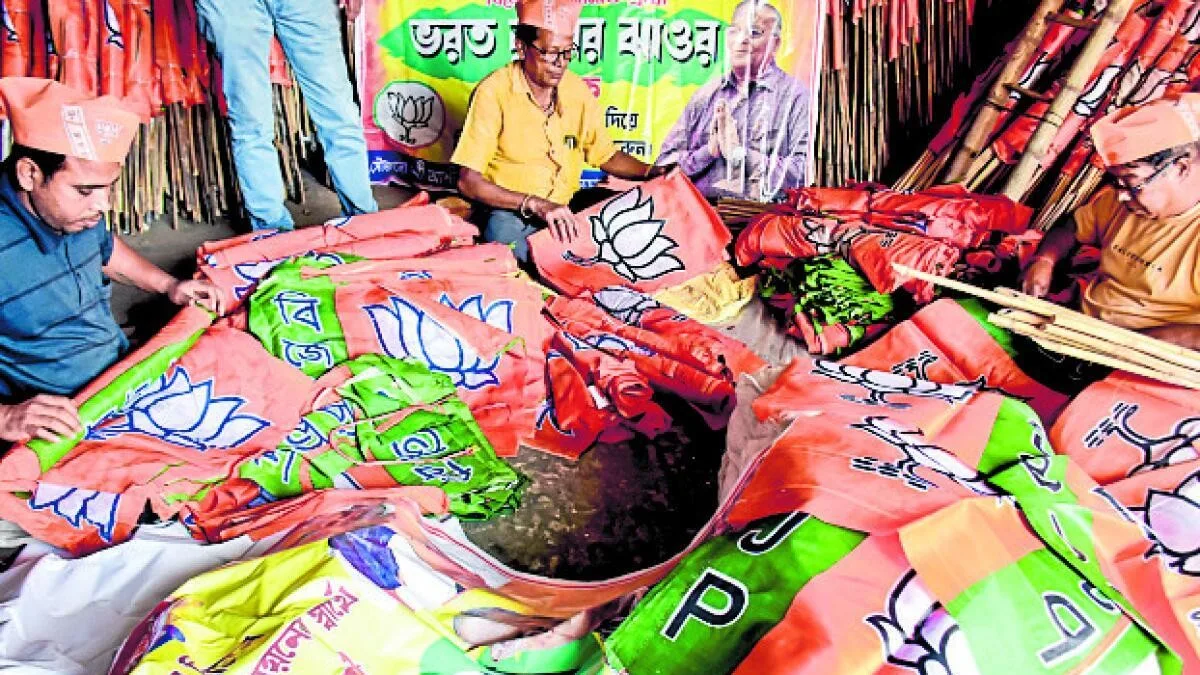
The upcoming West Bengal Assembly Elections 2026 is shaping up to be a multi-dimensional political contest, where issues of identity, governance, welfare delivery, and economic aspirations are all competing for voter attention. With Mamata Banerjee seeking to retain power and the Bharatiya Janata Party intensifying its challenge, the electoral narrative has expanded far beyond traditional campaign themes.
Voters across urban and rural constituencies are increasingly evaluating both ideological positions and everyday governance outcomes, making this election one of the most closely watched political contests in recent times.
Debates around the Citizenship Amendment Act (CAA) and Special Intensive Revision (SIR) of voter lists have emerged as major flashpoints. While the BJP maintains that such exercises are necessary to identify illegal migrants, the ruling All India Trinamool Congress (TMC) alleges that genuine voters are being unfairly excluded.
Employment remains a central concern, particularly among the youth. Questions surrounding industrial growth, lack of private-sector jobs, and migration of skilled labour are dominating political discourse.
Opposition parties have consistently flagged economic stagnation and limited investment as key governance failures, while the ruling government highlights its efforts to boost development.
Corruption, especially linked to recruitment irregularities such as the school jobs scam, has become a major electoral issue. It combines concerns over unemployment with questions about institutional transparency.
The BJP has made corruption a central campaign theme, targeting the state government over alleged administrative lapses.
Welfare schemes and direct benefit transfers continue to play a decisive role in shaping voter preferences. These schemes have created a strong support base, particularly among women and economically weaker sections.
Women voters, in particular, are emerging as a crucial electoral bloc, influencing campaign strategies across constituencies.
Incidents of crimes against women and broader law-and-order concerns have intensified public debate. Opposition parties have raised questions over governance, while the state government has highlighted its policing reforms and safety initiatives.
Religion and identity continue to influence electoral narratives in several regions. Both major parties have accused each other of fostering communal divisions, making polarisation a recurring feature of campaign rhetoric.
Regional identity remains a powerful political tool. The TMC is expected to emphasise Bengali pride and sub-nationalism, while the BJP seeks to expand its support base beyond traditional strongholds by countering the “outsider” narrative.
Illegal infiltration from Bangladesh and concerns over demographic changes are likely to remain key talking points. The BJP frames the issue as one of national security and economic impact, while the TMC counters these claims politically.
The Matua community continues to be a significant electoral force in several constituencies. Citizenship status and documentation concerns are expected to heavily influence voting patterns within this group, making it a crucial factor in the electoral calculus.
After more than a decade in power, the ruling government faces anti-incumbency pressures, particularly in urban areas. Concerns over governance, corruption, and employment are more pronounced in cities and may impact closely contested seats.
In regions like Darjeeling, voters are balancing long-standing identity demands with everyday issues such as infrastructure, tourism, and employment, reflecting the layered nature of electoral priorities.
The 2026 West Bengal election is unlikely to be decided by a single dominant issue. Instead, it represents a complex contest where voters are weighing identity concerns alongside governance performance, welfare benefits, and economic opportunities.
As competing political narratives intensify, the election is shaping into a broader battle between continuity and change, one where voter choices will be driven as much by lived realities as by ideological positioning.