Strategic Defiance: India vs Trump’s coercive diplomacy
June 24, 2026
  • Read Ecopy
  • Circulation
  • Advertise
  • Careers
  • About Us
  • Contact Us
Android AppiPhone AppArattai
Organiser
  • ‌
  • Bharat
    • Assam
    • Bihar
    • Chhattisgarh
    • Jharkhand
    • Maharashtra
    • View All States
  • World
    • Asia
    • Europe
    • North America
    • South America
    • Africa
    • Australia
  • Editorial
  • International
  • Opinion
  • RSS @ 100
  • More
    • Op Sindoor
    • Analysis
    • Sports
    • Defence
    • Politics
    • Business
    • Economy
    • Culture
    • Special Report
    • Sci & Tech
    • Entertainment
    • G20
    • Azadi Ka Amrit Mahotsav
    • Vocal4Local
    • Web Stories
    • Education
    • Employment
    • Books
    • Interviews
    • Travel
    • Law
    • Health
    • Obituary
  • Subscribe
    • Subscribe Print Edition
    • Subscribe Ecopy
    • Read Ecopy
  • ‌
  • Bharat
    • Assam
    • Bihar
    • Chhattisgarh
    • Jharkhand
    • Maharashtra
    • View All States
  • World
    • Asia
    • Europe
    • North America
    • South America
    • Africa
    • Australia
  • Editorial
  • International
  • Opinion
  • RSS @ 100
  • More
    • Op Sindoor
    • Analysis
    • Sports
    • Defence
    • Politics
    • Business
    • Economy
    • Culture
    • Special Report
    • Sci & Tech
    • Entertainment
    • G20
    • Azadi Ka Amrit Mahotsav
    • Vocal4Local
    • Web Stories
    • Education
    • Employment
    • Books
    • Interviews
    • Travel
    • Law
    • Health
    • Obituary
  • Subscribe
    • Subscribe Print Edition
    • Subscribe Ecopy
    • Read Ecopy
Organiser
  • Home
  • Bharat
  • World
  • Operation Sindoor
  • Editorial
  • Analysis
  • Opinion
  • Culture
  • Defence
  • International Edition
  • RSS @ 100
  • Magazine
  • Read Ecopy
Home Bharat

Strategic Defiance: How India’s calculated restraint and market diversification neutralised Trump’s coercive diplomacy

US President Donald Trump’s unpredictable diplomacy and coercive trade tactics have unsettled even America’s closest allies. Amid this global uncertainty, India has responded with restraint and strategic patience, quietly protecting its interests without being drawn into open confrontation

Dr Vishnu AravindDr Vishnu Aravind
Jan 22, 2026, 11:00 am IST
in Bharat, USA, World, International Edition
Follow on Google News
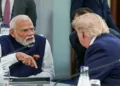
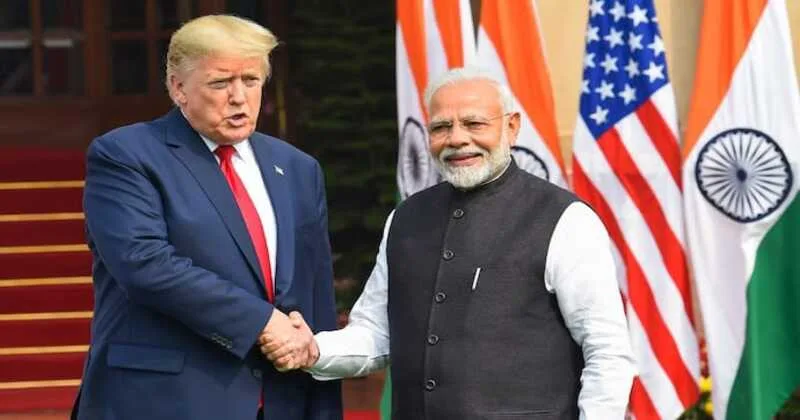
US President Donald Trump with Prime Minister Narendra Modi

US President Donald Trump with Prime Minister Narendra Modi

FacebookTwitterWhatsAppTelegramEmail

US President Donald Trump’s tendency to act and behave unpredictably has created deep uncertainty even among America’s closest allies. Governments across Europe and beyond have struggled to anticipate Washington’s next move, often finding themselves reacting rather than shaping events. Yet amid this volatility, India has managed to secure its own position through restraint, patience, and careful diplomacy. Despite repeated provocations from Trump and senior members of his administration on issues ranging from trade agreements to Russian oil, India has surprised the United States with its strategic composure and diplomatic discipline.

While European countries and Britain remain resentful of Trump’s tough economic and tariff policies, Prime Minister Narendra Modi’s restraint and foresight have allowed India to navigate the turbulence more effectively than many US allies. Even as Trump imposed sweeping tariffs on several countries, India avoided being drawn into a direct confrontation from the very beginning. This cautious approach became particularly visible when Trump imposed a 50 per cent tariff on India, including penalties linked to India’s continued purchase of Russian oil. Despite this sharp economic reaction, neither Prime Minister Modi nor senior Indian ministers engaged in a war of words with the US president. Instead, India continued patient diplomatic engagement, even as American officials used unusually harsh language in public, accusing India of enabling Moscow and labelling its cheap oil purchases as “blood money”.

At the heart of the dispute lay Trump’s effort to force India into signing a trade agreement on US terms. Despite repeated pressure, India refused to rush into any deal that would give the United States the upper hand or damage India’s sensitive agricultural and dairy sectors. US Commerce Secretary Howard Lutnick later revealed that Trump’s strategy of threatening tariffs to extract concessions had failed. Lutnick disclosed that even a partial trade agreement collapsed because Prime Minister Modi refused to speak directly to Trump on the matter.

India’s wariness of Trump’s tactics had already deepened during the India-Pakistan crisis. Trump broke basic diplomatic norms when he publicly claimed that he had personally ended Operation Sindoor against Pakistan-sponsored terrorism. In May 2025, Trump asserted that he had stopped the conflict by threatening both countries with tariffs. This claim alarmed New Delhi. India realised that Trump was willing to use trade relations as a blunt political weapon to advance his own interests, even at the cost of distorting facts. India responded firmly but cautiously. It insisted that the ceasefire had been achieved through direct contact between the two countries, without American mediation. Despite Trump’s repeated assertions, India did not alter its official position. At the same time, it avoided directly provoking the US president. Pakistan, by contrast, quickly welcomed Trump’s claim, using it to obscure its own strategic setbacks. India countered this by releasing credible information and sticking to its version of events.

Tensions escalated further after a phone call between Trump and Prime Minister Modi on June 17. During this conversation, Modi directly told Trump that the United States had played no role in the ceasefire. India also declined to support Trump’s ambition for the Nobel Peace Prize. The consequences were swift. Weeks later, Trump imposed the 50 per cent tariff on India, including a 25 per cent levy related to Russian oil imports.

Also Read: Misinformation about Manikarnika continues: How old images and false claims sparked a political firestorm in Kashi

Pakistan, in contrast, faced only a 19 per cent tariff. These moves marked a visible cooling of ties between Washington and New Delhi. Trump began loosening the strategic relationship that previous US presidents had carefully nurtured as a counterweight to China. Yet even in the face of this pressure, India chose patience over confrontation. Neither Modi nor his ministers responded with inflammatory rhetoric. This was despite Trump’s advisers issuing fresh accusations almost daily, portraying India as the Kremlin’s “laundry” and condemning its energy purchases in moral terms. Paradoxically, Trump himself continued to publicly praise Modi, describing him as a “true”, “dear” and “best friend”. India recognised this as a deliberate strategy and refused to be drawn into it. New Delhi maintained a strategic balance: it did not rush into signing a partisan trade deal under coercion, nor did it abandon its Russian oil imports.

At the same time, India adjusted its communication strategy. It began issuing official statements first after every interaction with the US president, ensuring that India’s version of events reached the public before Trump could reinterpret conversations through social media. This shift became evident after the September 17 phone call, when India released a detailed official account that placed Trump on the defensive.

Domestically, India strengthened its economic and policy frameworks to counter US pressure. Internationally, it improved relations with Russia and China while signalling clearly that it had alternatives beyond the West. This diversification was not merely symbolic. Despite delays in the US trade deal, India secured major agreements with other partners. It concluded trade agreements with Britain, Oman and New Zealand, and accelerated negotiations with the European Union.

If the EU–India trade agreement is finalised, it would become the largest trade pact in the world, economically connecting more than two billion people and significantly strengthening India’s position in the global market. At the same time, India expanded its engagement with Latin American countries, the Gulf region and nations across the Indian Ocean.

While European countries are still trying to understand and adapt to Trump’s policies, political observers believe that India recognised the risks months earlier and prepared its defence accordingly. Instead of reacting emotionally, India confronted Trump diplomatically, avoided unnecessary disputes, protected its core economic interests and quietly expanded its strategic options.

In an era marked by volatility and coercive diplomacy, India’s approach has demonstrated that restraint, consistency and strategic patience can sometimes be more effective than confrontation.



Topics: Strategic RestraintCoercive Trade PoliciesNarendra Modi Leadershipindia us relationsEconomic SovereigntyGlobal Trade DiversificationDonald Trump Diplomacy
ShareTweetSendShareSend
✮ Subscribe Organiser YouTube Channel. ✮
✮ Join Organiser's WhatsApp channel for Nationalist views beyond the news. ✮
Previous News

Bhargavastra Breakthrough: India joins elite counter-Drone powers with Homegrown system

Next News

Kalyan Magazine Turns 100: Amit Shah lauds Gita Press for promoting Sanatan Dharma and running on a non-profit mission

Related News

Prime Minister Narendra Modi with US President Donald Trump

A Handshake, Not a Hug: Why PM Modi must assert India’s strategic red lines in his crucial meeting with Trump

Happy customers are buying Indian mangoes in Seattle

From Gujarat Orchards to Seattle Shelves: How ‘Mango Diplomacy’ is sweetening India-US ties through Kesar Mangoes

US Ambassador to India Sergio Gor

US Envoy Sergio Gor hails “big things ahead” in India-US nuclear energy partnership

Trump administration praises New Delhi over Bengal election win while reviving fake mediation claim on Operation Sindoor

Trump’s Diplomatic Double Game: Congratulates PM Modi on Bengal, pushing Pakistan’s narrative on ‘Operation Sindoor’

RSS Sarkaryavah Dattatreya Hosabale

“We are not establishing any new Hindu nation,” RSS Sarkaryavah Dattatreya Hosabale, in an NPR interview

Foreign Ministry Spokesperson Randhir Jaiswal

India and US advance trade talks targeting $500B by 2030, with focus on balanced and mutually beneficial agreement

Load More

Latest News

President Droupadi Murmu confers the Padma Shri on former civil servant R.V.S. Mani on June 23, 2026.

Former MHA official RVS Mani honoured with Padma Shri for contributions to internal security

Tamil Nadu: Temple funds only for temple property; TVK govt concedes before Madras High Court

Keralam’s former Industries Secretary, Mohammed Haneesh IAS (Right Side)

Keralam Cashew Scam: Former Industries Secretary Md Haneesh apologises before High Court after contempt proceedings

Tamil Nadu: Assembly Speaker directs all bureaucrats to strictly follow warrant of precedence after Mayor-MLA row

Kamakhya Mandir

Kamakhya Mandir’s Ambubachi Mela: The ancient tradition that honours the menstruation of mother Earth

Amazon in dock for mocking Hindu Gods

Amazon File: From Ganesha to Aryabhata-Has Amazon India become a platform for Anti-Hindu narratives?

The West Bengal Budget 2026–27 aims to drive growth through infrastructure, industry, innovation and welfare

Reimagining Bengal: How the West Bengal Budget 2026–27 seeks to balance growth, welfare & economic transformation

Pratiraksha is Gujarat Police's Aadhaar-based verification platform designed to identify illegal workers and prevent identity fraud in industrial sectors

Pratiraksha: How Gujarat police uses Aadhaar verification to secure industrial workforce against identity fraud

Israel-Iran crisis has highlighted not only shifting dynamics of West Asia but also growing confidence of India's foreign policy

India, Israel and the rise of strategic autonomy in an era of global geopolitical realignment

Saleem and Jaleel arrested in forced religious conversion case

Karnataka Conversion Case: Forced conversion of Hindu woman and minor son sparks outrage; Saleem and Jaleel arrested

Load More
  • Privacy
  • Terms
  • Cookie Policy
  • Refund and Cancellation
  • Delivery and Shipping

© Bharat Prakashan (Delhi) Limited.
Tech-enabled by Ananthapuri Technologies

  • Home
  • Search Organiser
  • Bharat
    • Assam
    • Bihar
    • Chhattisgarh
    • Jharkhand
    • Maharashtra
    • View All States
  • World
    • Asia
    • Africa
    • North America
    • South America
    • Europe
    • Australia
  • Editorial
  • Operation Sindoor
  • Opinion
  • Analysis
  • Defence
  • Culture
  • Sports
  • Business
  • RSS @ 100
  • Entertainment
  • More ..
    • Sci & Tech
    • Vocal4Local
    • Special Report
    • Education
    • Employment
    • Books
    • Interviews
    • Travel
    • Health
    • Politics
    • Law
    • Economy
    • Obituary
  • Subscribe Magazine
  • Read Ecopy
  • Advertise
  • Circulation
  • Careers
  • About Us
  • Contact Us
  • Policies & Terms
    • Privacy Policy
    • Cookie Policy
    • Refund and Cancellation
    • Terms of Use

© Bharat Prakashan (Delhi) Limited.
Tech-enabled by Ananthapuri Technologies