DELHI: Navin Chawla’s elevation to the Election Commission under the Congress-led UPA remains one of the most controversial chapters in the history of India’s poll panel. The Justice J.C. Shah Commission had severely criticised his conduct during the Emergency, while years later a sitting Chief Election Commissioner recommended his removal over allegations of partisan conduct, only for the UPA government to reject the recommendation and clear Chawla’s path to the top electoral post.
That history is worth revisiting as Congress and Rahul Gandhi repeatedly question the credibility of the Election Commission and allege that Indian elections have been compromised. The question is not whether every present-day allegation about electoral rolls is right or wrong. It is whether Congress has applied the same standard of institutional credibility to the Election Commission when it was in power.
The Chawla chapter Congress cannot wish away
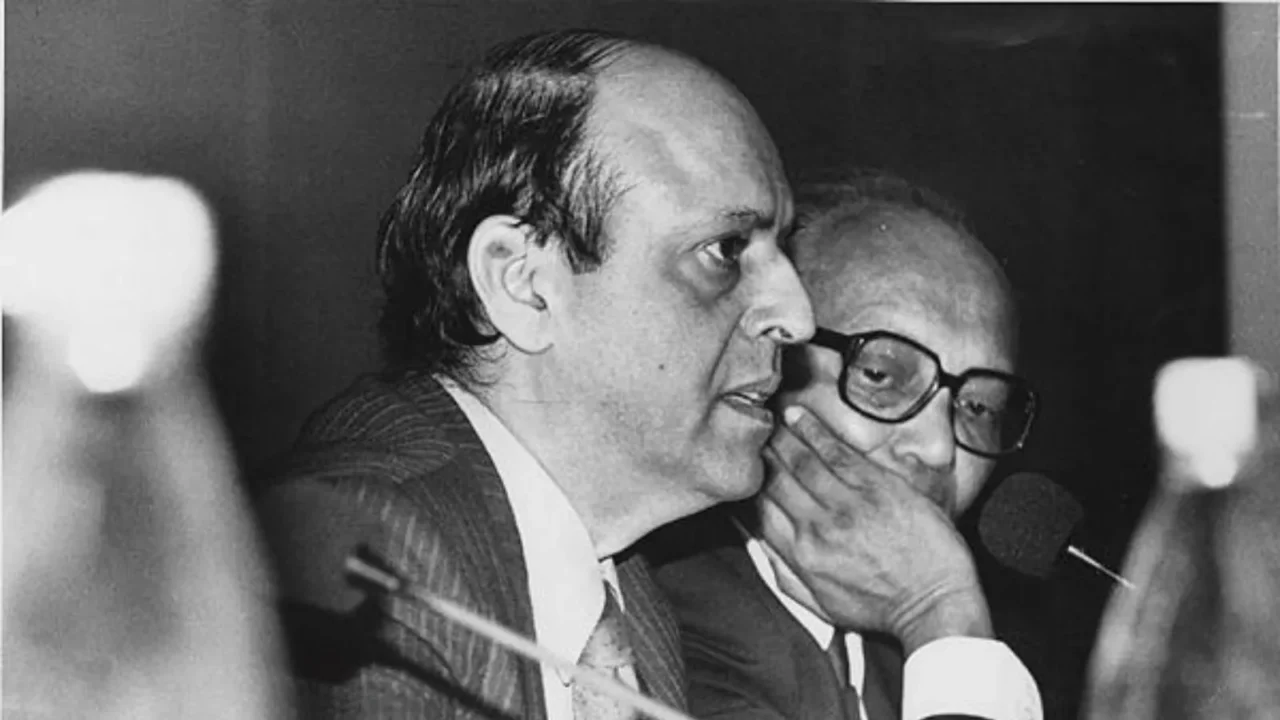
Navin Bratt Chawla, a 1969-batch IAS officer, became an Election Commissioner in May 2005 and subsequently took over as Chief Election Commissioner on April 21, 2009. He served until July 2010 and oversaw four of the five phases of the 2009 Lok Sabha election.
His later career also included work on social causes and an authorised biography of Mother Teresa. But the controversy surrounding his appointment to the Election Commission had nothing to do with those activities.
It centred on his record during the Emergency, financial links involving trusts associated with him and his wife, and, eventually, an extraordinary confrontation inside the Election Commission itself.
In January 2009, then CEC N Gopalaswami recommended Chawla’s removal, alleging partisan conduct. The UPA government rejected the recommendation. Two months later, Chawla became CEC.
Several reports recorded the controversy in unusually stark terms. The Indian Express reported that Gopalaswami’s 93-page recommendation contained a dozen allegations concerning Chawla’s conduct.
The sequence is central to understanding why Chawla’s appointment continues to be cited in debates about political influence and the Election Commission.
What the Shah Commission actually said
The Emergency lasted from June 1975 to March 1977. After the Janata Party came to power, the government established the Shah Commission of Inquiry under former Chief Justice J.C. Shah to examine abuses committed during the Emergency.
Chawla was then secretary to Delhi Lieutenant Governor Kishan Chand.
The Commission’s findings concerning Chawla and two other officials, P.S. Bhinder and K.S. Bajwa, were severe. In its interim report, the Commission said the three officers had exercised enormous power because of their access to the Prime Minister’s house. It described their approach to citizens’ problems as “authoritarian and callous” and said they had grossly misused their positions and abused their powers. The Commission concluded that they had rendered themselves unfit for public office requiring “fair play and consideration for others.”
The report also recorded that Chawla exercised what it called “extra-statutory control” over jail matters despite having no formal position in the jail hierarchy. It said he sent instructions concerning matters including the treatment of detainees.
The record is particularly striking because the office he would eventually occupy was not an ordinary administrative position. The Chief Election Commissioner is entrusted with supervising elections, an institution whose credibility depends heavily on public confidence in impartiality.
From Emergency controversy to constitutional office
The question that naturally followed was what happened to Chawla after the Shah Commission report.
The answer was that his career continued.
After Indira Gandhi returned to power in 1980, Chawla continued to rise through the bureaucracy. He eventually became Secretary in the Ministry of Information and Broadcasting. In May 2005, the Manmohan Singh-led UPA government appointed him as an Election Commissioner. Contemporary reporting records that an NDA memorandum signed by 205 MPs was subsequently submitted to President A.P.J. Abdul Kalam seeking his removal.
The opposition’s concerns were not limited to the Emergency-era findings.
Questions were also raised over funds provided through MPLADS to trusts associated with Chawla and his wife. The Times of India reported that the trusts received funds from several Congress MPs, including A.A. Khan, R.P. Goenka, A.R. Kidwai, Ambika Soni and Karan Singh. The 2006 NDA memorandum cited these financial links as part of its objections to Chawla’s continuation as Election Commissioner.
Chawla defended the donations as being connected with charitable and educational work and maintained that the funds had been received before he joined the Election Commission.
There was therefore a legitimate public debate over propriety and potential conflict of interest. It is important, however, not to turn those allegations into a claim that a quid pro quo was established. No public document cited here establishes that Congress appointed Chawla in exchange for the earlier donations or that the donations bought his appointment.
The issue is the pattern of circumstances and the political judgment exercised by the government.
Then came the 2009 Election Commission crisis
The most extraordinary part of the story came four years after Chawla entered the Election Commission.
CEC N. Gopalaswami recommended that Chawla be removed from the Commission, alleging partisan conduct in favour of the Congress. His 93-page recommendation reportedly contained a dozen allegations. The Indian Express, which obtained the document, reported that Gopalaswami had cited several instances in which he believed Chawla had acted in a manner favourable to the ruling party.
The controversy became public just weeks before the 2009 general election.
The UPA government rejected Gopalaswami’s recommendation. President Pratibha Patil accepted the government’s advice, clearing the way for Chawla to succeed Gopalaswami when the latter retired on April 20.
And that is where the political optics became particularly difficult.
The sitting CEC had recommended the removal of another Election Commissioner on grounds that included alleged partisanship. The government rejected that recommendation. The same Election Commissioner then became CEC and took charge of most of the forthcoming Lok Sabha election.
The Indian Express reported at the time that Chawla would take charge on April 20 and oversee the election after Gopalaswami’s retirement.
There was, however, an important constitutional dispute over Gopalaswami’s recommendation. The government argued that the CEC did not have the authority to recommend an Election Commissioner’s removal on his own initiative and that the allegations lacked merit. That procedural and legal disagreement must be acknowledged. It does not, however, erase the fact that the recommendation was formally made and rejected.
The question of political proximity
This is where Congress’s present rhetoric about electoral institutions meets its own historical record.
Today, Congress leaders repeatedly question the Election Commission’s neutrality. In September 2026, the party and Rahul Gandhi escalated their campaign against CEC Gyanesh Kumar, demanding his resignation and alleging electoral manipulation. Congress has described its concerns as a defence of democracy and the integrity of the vote. Recent Congress resolutions have also demanded action against the CEC and changes to the ongoing electoral-roll revision process.
But the Chawla episode raises an uncomfortable historical question: What standard did Congress apply when it itself controlled the government appointing members of the Election Commission?
The answer is visible in the record.
A man whose Emergency-era conduct had been severely criticised by the Shah Commission was appointed Election Commissioner by the UPA. An opposition memorandum signed by 205 MPs seeking his removal did not result in his removal. Then the sitting CEC recommended his removal in 2009. The UPA government rejected that recommendation. Chawla subsequently became CEC.
That is not an allegation. It is the chronology.
Was Chawla actually “rewarded” by Congress?
The Shah Commission’s findings were severe. Chawla nonetheless continued his career and eventually reached the Election Commission. Congress-led governments subsequently appointed him to the constitutional body. Congress MPs had provided funds to trusts associated with him and his wife, according to contemporary reports. An opposition memorandum signed by 205 MPs sought his removal. And when the sitting CEC later recommended his removal, the UPA government rejected that recommendation before Chawla became CEC.
That record allows a legitimate question to be asked without alleging a secret deal: Did Congress apply the same institutional standard to Chawla that it now demands from Election Commissioners appointed under governments led by its political opponents?
The Emergency legacy makes the contradiction sharper
Congress has frequently invoked the Emergency as a historical warning about the destruction of democratic institutions. Its leaders have also repeatedly presented themselves as defenders of constitutional democracy.
That makes the Chawla episode particularly uncomfortable.
The Shah Commission was created precisely to investigate what happened when political power overwhelmed normal administrative safeguards. Its report criticised Chawla’s conduct in extraordinarily strong language.
Yet decades later, the Congress-led government placed him in an institution specifically responsible for protecting the integrity of elections.
If Congress now argues that the credibility of an Election Commissioner can be fatally compromised by questions about political proximity, then its own decision to appoint Chawla and subsequently defend his continuation despite Gopalaswami’s recommendation deserves scrutiny by precisely that standard.
The 2009 election and the politics of credibility
Chawla became CEC as the 2009 Lok Sabha election was approaching. He supervised four of its five phases.
The election result was accepted as constitutionally valid and Congress returned to power.
There is no basis in the material reviewed here to claim that Chawla manipulated the 2009 election or that Congress won because of his appointment. Such a claim would require evidence that is not presented in the record above.
But the institutional question remains.
If a government appoints an official despite serious historical criticism, rejects a formal recommendation for his removal from the sitting CEC, and then allows that official to become CEC before a general election, it cannot later pretend that questions about political appointments to the Election Commission are somehow unprecedented.
That is the part of the history that deserves public examination.
Today’s “Vote Chori” politics
The Congress position today is dramatically different.
Rahul Gandhi and other Congress leaders have alleged that electoral rolls and election processes have been manipulated. The Election Commission has rejected those allegations and has defended its procedures. Congress has continued to press for investigations and changes to electoral-roll processes.
The present controversy should therefore be tested through evidence, electoral rolls, statutory procedures, affidavits, complaints, judicial scrutiny and official records not simply through political claims from either side.
But the same evidentiary standard should apply retrospectively.
If Congress wants every Election Commissioner to be judged by questions of neutrality, it should also answer questions about its own record in appointing and defending Navin Chawla.
A credibility test Congress must answer
The Chawla episode is not proof that every present allegation made by Congress about elections is false. Nor is it proof that every decision of the Election Commission today is beyond criticism.
It establishes something narrower but important.
Congress has a history of defending the institutional legitimacy of an Election Commission it itself helped shape, even amid serious controversy over one of its members.
The record includes a Shah Commission indictment, financial-propriety questions, a 205-MP removal memorandum, a sitting CEC’s recommendation for removal and the subsequent elevation of the same official to CEC after the government rejected that recommendation. (The Times of India)
That history does not settle today’s arguments over electoral rolls. It does, however, make one question unavoidable: If Congress believes political proximity can destroy the credibility of an Election Commission today, why did that principle not carry the same weight when the UPA government appointed and defended Navin Chawla?