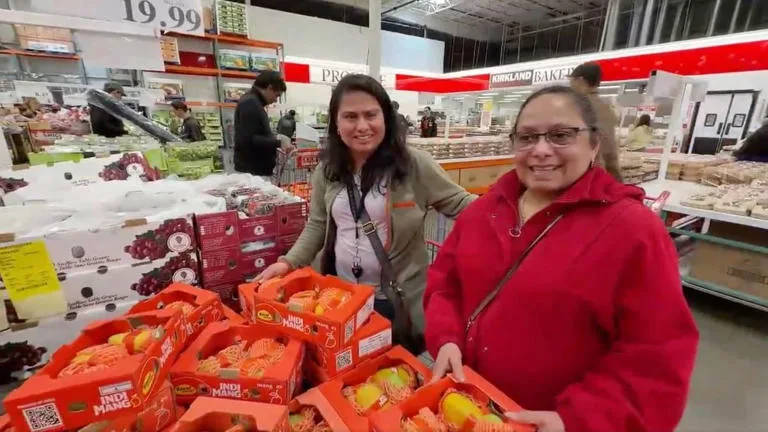
For thousands of Indians living in the United States, the arrival of mango season is more than a culinary event, it is an emotional connection to home. This summer, that connection has become even stronger as premium Indian Kesar mangoes begin appearing across grocery stores and retail chains in Seattle, in what diplomats are calling a new chapter of “mango diplomacy” between India and the United States.
The Consulate General of India in Seattle recently highlighted the development through a special feature on Fox 13 News’ popular morning programme “Good Day Seattle,” introducing American viewers to the rich history, cultural significance, and global popularity of Indian mangoes.
The segment showcased iconic Indian varieties such as Kesar, Alphonso, Dasheri, Chausa, and Langra, while also tracing the diplomatic and trade efforts that helped bring the fruit from Indian orchards to American supermarket shelves.
Speaking during the programme, Consul General of India in Seattle Prakash Gupta described mangoes as deeply tied to Indian emotions, family bonds, and summer memories.
“Families bond over mangoes. That’s why they are so special to us,” Gupta said, reflecting on how mango season in India often becomes a time for gatherings, shared meals, and nostalgia.
For many in the Indian diaspora, especially first-generation immigrants, the arrival of authentic Indian mangoes carries an emotional value far beyond their commercial worth. The smell, sweetness, and taste of varieties like Kesar and Alphonso often remind families of childhood summers spent under scorching heat, roadside fruit stalls, and afternoons shared with relatives back home.
The growing popularity of Indian mangoes in America also reflects how food has become an important cultural bridge between the two nations. Gupta referred to this phenomenon as “mango diplomacy,” recalling a memorable anecdote involving former US President George W. Bush.
“In 2006, President George W. Bush visited India, tasted an Alphonso mango and said, ‘What a hell of a fruit,’” Gupta recalled during the discussion.
The remark drew laughter on the programme but also highlighted how Indian mangoes have long served as informal ambassadors of Indian culture globally.
Indian mangoes officially entered the US market in 2007 after years of negotiations over agricultural import standards and irradiation protocols. Since then, demand has steadily grown, particularly in cities with large South Asian communities.
Last year, the Indian Consulate in Seattle organised a large promotional event aimed at introducing local distributors, retailers, and residents to premium Indian mango varieties. The outreach campaign reportedly helped build partnerships with suppliers and major retail outlets across the Greater Seattle region.
As a result, Indian mangoes are now expected to become widely available not only in Indian grocery stores but also in mainstream American retail chains.
According to Gupta, Costco outlets in Seattle, Kirkland, and Redmond were likely to begin stocking Indian mangoes by the end of the weekend, significantly expanding access to the fruit beyond the Indian community.
The development has generated excitement among Indian-origin families in Washington state, many of whom often wait eagerly each year for mango imports from India.
Social media posts from residents have already begun celebrating the arrival of Kesar mangoes, with many calling it the “real beginning of summer.”
Indian Mango Magic is becoming Global soft power 🇮🇳🥭
Seattle stores sold out Kesar mangoes within hours as demand for premium Indian Alphonso & Kesar surges across America.
India’s mango exports to the US jumped 130% in a year, while GI-tagged Indian mangoes now dominate the… https://t.co/e7x1U0XAV2 pic.twitter.com/s2WdHNYSWy
— India First Post (@ifpost47) May 17, 2026
Local American consumers, too, are increasingly developing a taste for Indian mangoes, which are often regarded as sweeter, richer, and more aromatic than many other varieties available internationally.
India remains the world’s largest producer of mangoes, contributing nearly half of global mango production with an annual output estimated between 20 and 26 million tonnes. Mango cultivation supports millions of farmers, traders, transporters, and exporters across the country, particularly in states such as Gujarat, Maharashtra, Uttar Pradesh, Bihar, and Andhra Pradesh.
The arrival of Kesar mangoes in Seattle may appear like a small trade story on the surface, but for many it represents something far deeper, a reminder that culture often travels through food long before it enters diplomacy or politics. From orchards in Gujarat to supermarket shelves in Seattle, the journey of the mango has become a story of migration, memory, and the growing warmth between India and the United States.