Washington: Countries, including India, are yet to take a decision on whether to join US President Donald Trump’s much-hyped “Board of Peace” initiative, which is being projected by Washington as a new mechanism for the reconstruction of Gaza and the resolution of global conflicts. Senior officials have confirmed that India has received a formal invitation to join the initiative, but stressed that no commitment has been made so far.
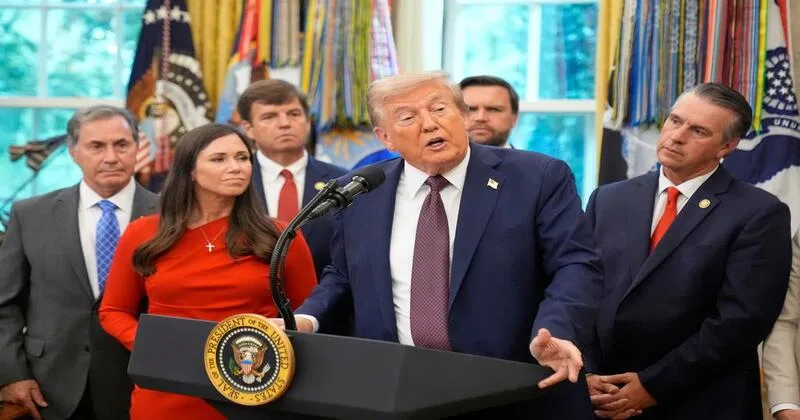
According to the reports, the proposal is still under consideration of government because it spans a wide range of political and security issues that go far beyond Gaza. Sensitive matters, including the Kashmir issue. New Delhi is wary that accepting the framework could open the door for other countries to raise or interfere in what India considers its strictly internal affairs. India remains committed to the two-state solution and supports all credible initiatives aimed at achieving peace and stability in West Asia. However, any multilateral framework must respect established international norms and the sovereignty of all states involved. Last weekend, Trump reportedly sent letters to the leaders of around 60 countries, inviting them to join what he has grandly labelled the “Board of Peace.”
The proposed body promises what the White House calls a “new and bold approach” to bringing lasting peace to Gaza and resolving conflicts around the world. Critics, however, see it as yet another attempt by Trump to project himself as a global peacemaker and rebrand his international image. The draft document circulated by Washington describes the Board of Peace as a mechanism that would also elevate the stature of the US President as a central figure in global diplomacy, a claim that has raised eyebrows in diplomatic circles.
India has multiple concerns about the plan’s broader implications. If the initiative is accepted and gains traction, there is a real possibility that countries hostile to India could use the forum to internationalise the Kashmir issue. Trump’s repeated claims that a ceasefire was imposed to end a four-day conflict between India and Pakistan in May 2025 have already caused considerable irritation in New Delhi, as India has firmly denied any third-party mediation.
France, meanwhile, is reportedly not inclined to respond positively to the invitation either. In an unofficial response, French officials were quoted as saying: “This is not limited to the Gaza framework alone. It goes beyond that. It raises important issues regarding the principles and structure of the United Nations.” Paris appears concerned that Trump’s initiative undermines established multilateral institutions and could weaken the credibility of the UN system.
The European Union, Russia, Belarus and Thailand are among the countries that have acknowledged receiving the invitation to join the Board of Peace. Canada has indicated that it is, in principle, open to Trump’s proposal, though even Ottawa has not made any binding commitment. Despite the mixed and cautious responses, the White House announced last week that an executive board has already been formed to implement the so-called vision of the Board of Peace.
The members of this executive committee include US Secretary of State Marco Rubio, former British Prime Minister Tony Blair, US Special Representative for the Middle East Steve Witkoff, Trump’s son-in-law Jared Kushner and World Bank President Ajay Banga. The inclusion of Trump’s close political allies and family members has further fuelled criticism that the initiative is driven more by personal ambition and political branding than by genuine multilateral consensus.
So far, most countries have responded cautiously to Trump’s invitation, reflecting widespread scepticism about Washington’s intentions. Trump has portrayed the Board of Peace as a mechanism for resolving global conflicts, but many diplomats see it as an overreach that duplicates or sidelines existing international institutions. In the draft document sent to about sixty countries, the Board is described as “an international organization that seeks to bring stability, restore reliable and legitimate governance, and ensure long-term peace in regions in conflict or at risk of conflict.” The document was accompanied by a formal invitation to join the initiative.
The UN Security Council, for its part, has already approved the creation of a peace council to end the war in Gaza and oversee reconstruction efforts. This UN-mandated body is expected to function until 2027. However, the US has indicated that Trump’s Board of Peace will continue beyond that timeframe, reinforcing concerns that it is being positioned as a rival or alternative to the United Nations. Critics have warned that this could fragment international peace efforts and weaken global governance. European diplomats have reportedly dubbed it “Trump’s United Nations,” according to international media reports.
Israel has also expressed opposition to the committee formed by the US President to discuss future steps in Gaza. The objection is specifically to the 11-member “Gaza Executive Board” created under the Board of Peace framework. Prime Minister Benjamin Netanyahu’s office said that the advisory committee on Gaza affairs was formed without any consultation with Israel. Netanyahu has reportedly instructed the Israeli Foreign Minister to raise the issue directly with the US Secretary of State, highlighting growing unease even among Washington’s closest allies about Trump’s unilateral and headline-driven approach to diplomacy.