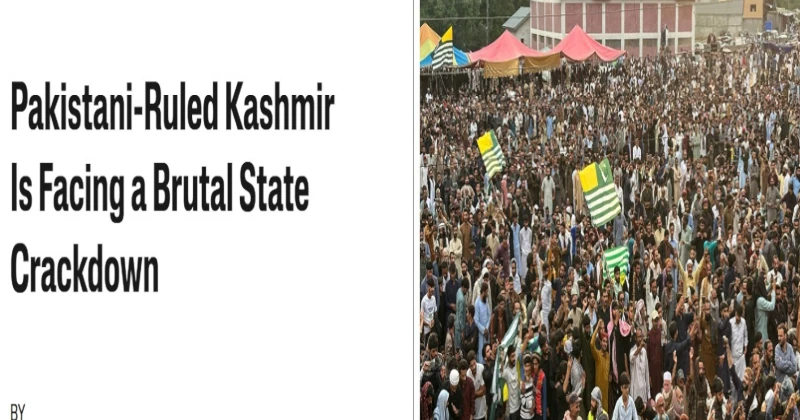
Pakistan, having spent decades putting India in the dock on the Kashmir issue, now finds itself besieged by questions regarding human rights and democracy in the territory it occupies. The crucial difference this time is that the allegations do not originate from India; instead, a detailed analytical report published from the US has presented a picture of Pakistan-Occupied J&K (PoJK) to the world that starkly contradicts Islamabad’s official claims.
Indeed, this report arrives at a time when the international community’s attention has been drawn to the months-long public agitation, internet shutdowns, communication restrictions and the use of force against protesters in PoJK. For years, Pakistan held a special place in US strategic priorities. From the Cold War era through the Afghanistan war and counter-terrorism operations, relations between Washington and Islamabad witnessed many ups and downs, yet Pakistan frequently enjoyed Western support.
India and many other nations observed how the US often adopted a relatively lenient stance toward Pakistan’s perspective on issues like Kashmir. Against this backdrop, the report published in the US-based magazine “Jacobin” holds particular significance, as it raises serious questions, for the first time, about the actual state of democracy and human rights within PoJK.
Illusory Autonomy or Actual Control?
The key conclusion of the report titled “Pakistani-Ruled Kashmir Is Facing a Brutal State Crackdown”- authored by Umair Khurshid, Farooq Sulehria and Harris Qadeer- is that while PoJK may be portrayed as an autonomous political entity, real power remains concentrated in the hands of Islamabad and Pakistan’s military-political establishment.
The report asserts that the local administration possesses limited authority, with the majority of critical decisions being made under the influence of Pakistan’s federal government. According to the report, this is precisely why any demand by the local population for greater democratic rights, economic justice or political participation is met with repression rather than dialogue.
Elections Also Under Scrutiny
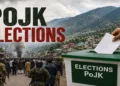
The report also raises serious questions regarding the electoral system in PoJK. It alleges that Islamabad influences the formation of governments favourable to itself through reserved seats and the political structure. If these allegations are true, they cast serious doubt on the credibility of the model of democracy that Pakistan has been projecting on international platforms.
From Economic Crisis to Public Uprising
The current movement is not merely a protest against electricity bills or the rising cost of living. The groundwork for this was laid in 2023, when widespread public protests erupted in PoK against soaring inflation, a flour shortage, hiked electricity tariffs, and rising fuel prices. At that time, Pakistan was compelled by public pressure to grant some economic concessions, yet the discontent did not subside. A new phase of the movement began on June 5, 2026, described in reports as the most extensive mass movement seen in decades.
The protesters state that they seek not just affordable electricity or relief packages, but genuine control over their political and economic future. According to reports, internet services across the region were shut down as the movement intensified, and mobile communication was also disrupted. These restrictions on communication limited the flow of information to the outside world, measures often taken by governments seeking to contain protests.
Rawalakot Becomes a Symbol of the Struggle
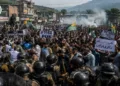
Reports claim that on July 27, security forces opened fire on thousands of unarmed protesters marching towards Rawalakot. Violence continued at various locations on July 28 and 29 as well. According to reports, over 45 people lost their lives between June 5 and the end of July, though protesters claim the actual death toll could be higher. Hundreds of people are also reported to have been injured.
The Role of the Joint Awami Action Committee
Reports indicate that the Joint Awami Action Committee is leading the movement. Its key demands include reduced electricity tariffs, relief from inflation, rights over local resources, transparent administration and greater political autonomy. The report alleges that administrative repression was prioritised over serious dialogue regarding these demands.
History Offers Clues
Discontent in PoJK is nothing new. For years, protests have been registered over issues such as the exploitation of resources, limited constitutional rights, political interference, the unequal distribution of benefits from hydroelectric projects and a lack of local representation. Numerous human rights organisations have repeatedly expressed concerns regarding restrictions on freedom of expression and political activities, although Pakistan has consistently denied these allegations.
Signs of a Shifting International Discourse
This report by “Jacobin” does more than describe the situation in PoJK; it signals a potential shift in international discourse. If a serious debate regarding the democratic framework, human rights and administrative system of Pakistan-administered Kashmir begins in the West, long-established political narratives concerning the Kashmir issue could come under re-examination.
Pakistan, which seeks to claim the moral high ground on global platforms regarding Kashmir, now faces the challenge of providing satisfactory answers regarding democratic rights, civil liberties and political participation within the territory it controls. After all, when the people of a region demand control over their own political future, economic justice and democratic dignity, mere constitutional terminology cannot prove the existence of genuine autonomy; this is the message that this report, published from American soil, seeks to convey to the world.
A Seven-Decade Crisis of Repression, Human Rights Violations-Democratic Rights in PoJK and Gilgit-Baltistan
The history of PoJK and Gilgit-Baltistan is not merely one of a territorial dispute; it is also a history of persistent curbs on the democratic rights, freedom of expression, and human rights of the millions of people living there. Since Pakistan’s formation in 1947, the military, paramilitary forces and security agencies have played a dominant role in these regions.
Due to limited access for international media and independent human rights organisations, comprehensive and official documentation of events in the area has not been possible. Nevertheless, available historical records, reports from human rights organisations and documents from local civil society groups indicate that widespread repression, arbitrary arrests, political interference and acts of violence have been reported in the region for decades.
1947: The Tragedy of Mirpur and Muzaffarabad
Many historians regard the tribal invasion of Jammu and Kashmir in October 1947 as part of a Pakistan-backed military campaign. During this period, widespread violence erupted in several areas, including Mirpur, Muzaffarabad, Kotli, and Bhimber. According to various historical sources, thousands of Hindu and Sikh civilians were killed, a large number of women were abducted, and extensive looting took place. The massacre of Hindus in Mirpur, in particular, is counted among the region’s most severe humanitarian crises.
Estimates of the death toll vary across studies, generally ranging between 20,000 and 30,000. This event permanently altered the region’s demographics and social fabric; indeed, a massacre of Hindus on such a massive scale occurred here.
1988: Communal Violence in Gilgit-Baltistan
Widespread communal violence broke out in Gilgit-Baltistan in May 1988. Numerous independent studies and human rights reports document that hundreds of homes were torched and a large number of civilians were killed during this violence. While figures regarding the death toll vary across sources, several local organisations also reported that many individuals went missing. Although accounts regarding the nature of the incident and the responsibility for it differ, it is widely acknowledged as one of the most severe episodes of communal violence in the region’s history; non-Muslims were specifically targeted, while the Pakistan Army also inflicted brutal atrocities upon the local Muslim population.
1992: Demand for ‘Azad Kashmir’ and Firing
An incident of firing by Pakistani security forces was recorded in February 1992. According to various reports, several protesters died, and a large number of people were arrested during this action; the reported death toll varies across different sources.
Rising Public Discontent in Recent Years
In recent years, widespread protests have taken place in Pakistan-occupied Jammu and Kashmir regarding inflation, the power crisis, the taxation system, resource distribution and the role of the army in the local administration. Movements led by the Joint Awami Action Committee (JAAC), in particular, have drawn regional and international attention. Local organisations and human rights activists have alleged that measures such as the use of force against protesters, arbitrary arrests and internet restrictions were employed.
A close examination of Pakistan-occupied Jammu and Kashmir and Gilgit-Baltistan reveals that, spanning the violence of 1947, the communal incidents of 1988, the firing in 1992, questions raised over relief operations following the 2005 earthquake and the suppression of civil movements in recent years, more than one lakh (100,000) people have either been killed or subjected to enforced disappearance in the region.