Why India’s Siliguri corridor needs Integrated Theatre command
August 5, 2026
  • Read Ecopy
  • Circulation
  • Advertise
  • Careers
  • About Us
  • Contact Us
Android AppiPhone AppArattai
Organiser
  • ‌
  • Bharat
    • Assam
    • Bihar
    • Chhattisgarh
    • Jharkhand
    • Maharashtra
    • View All States
  • World
    • Asia
    • Europe
    • North America
    • South America
    • Africa
    • Australia
  • Editorial
  • International
  • Opinion
  • RSS @ 100
  • More
    • Op Sindoor
    • Analysis
    • Sports
    • Defence
    • Politics
    • Business
    • Economy
    • Culture
    • Special Report
    • Sci & Tech
    • Entertainment
    • G20
    • Azadi Ka Amrit Mahotsav
    • Vocal4Local
    • Web Stories
    • Education
    • Employment
    • Books
    • Interviews
    • Travel
    • Law
    • Health
    • Obituary
  • Subscribe
    • Subscribe Print Edition
    • Subscribe Ecopy
    • Read Ecopy
  • ‌
  • Bharat
    • Assam
    • Bihar
    • Chhattisgarh
    • Jharkhand
    • Maharashtra
    • View All States
  • World
    • Asia
    • Europe
    • North America
    • South America
    • Africa
    • Australia
  • Editorial
  • International
  • Opinion
  • RSS @ 100
  • More
    • Op Sindoor
    • Analysis
    • Sports
    • Defence
    • Politics
    • Business
    • Economy
    • Culture
    • Special Report
    • Sci & Tech
    • Entertainment
    • G20
    • Azadi Ka Amrit Mahotsav
    • Vocal4Local
    • Web Stories
    • Education
    • Employment
    • Books
    • Interviews
    • Travel
    • Law
    • Health
    • Obituary
  • Subscribe
    • Subscribe Print Edition
    • Subscribe Ecopy
    • Read Ecopy
Organiser
  • Home
  • Bharat
  • World
  • Operation Sindoor
  • Editorial
  • Analysis
  • Opinion
  • Culture
  • Defence
  • International Edition
  • RSS @ 100
  • Magazine
  • Read Ecopy
Home World Europe

India’s Siliguri corridor demands integrated theatre command architecture

In an era where geography alone no longer guarantees security, the focus is steadily shifting toward how effectively nations organise, synchronise, and command their military assets

Vipul TamhaneVipul Tamhane
Dec 31, 2025, 09:00 pm IST
inEurope, USA, World, Opinion
Follow on Google News
Facebook
Twitter
WhatsAppTelegramEmail

What recently occurred in Poland carries implications beyond Europe. The moment its Integrated Battle Command System reached full function marks a shift. This development comes amid unresolved concerns about regional security in India. Attention turns to the Siliguri Corridor, a narrow stretch of terrain with outsized strategic importance. Connectivity here defines stability across northeast India. Any disruption threatens national cohesion. Warsaw’s advancement reveals gaps in current defensive postures elsewhere. Systems integration is no longer optional; it has become foundational. Awareness is growing that geography alone does not guarantee safety. Preparedness now depends on a seamless command architecture. Silent progress in Central Europe signals the urgency of recalibrating in South Asia.

Ahead of schedule, Poland’s defence ministry confirmed full operational status for its WISŁA system, powered by IBCS architecture. Beyond hardware activation, this moment signals a bigger change in military planning across vulnerable territories. When considering India’s position, stretched thin near the Siliguri chokepoint, the implications become clear without emphasis on urgency. Strategic exposure demands new logic; legacy methods fall short when threats emerge from multiple directions simultaneously.

Also Read: ‘A divine festival’: PM Modi hails Ram Lalla Pran Pratishtha anniversary as fulfilment of a 500-year old believe

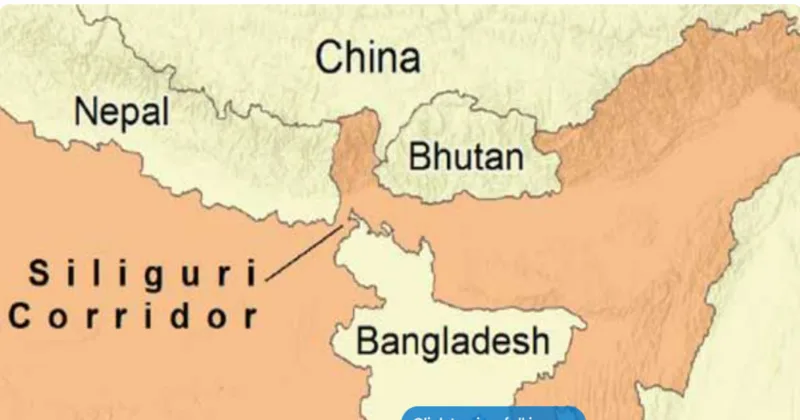
Stretching just 20 to 27 kilometres wide at its tightest, this passage lies wedged among Nepal, Bangladesh, Bhutan, and China – India’s key geographic exposure. Known informally as the “Chicken’s Neck,” it links the country’s mainland to seven northeastern regions, accounting for about eight per cent of the national area. More than 45 million people live there. Should control falter here, separation follows. The region detaches entirely.

What Poland’s WISŁA initiative shows is how interconnected defence systems function in practice. Connected at multiple points, sensors feed information to launch mechanisms, which are guided by central command nodes that operate as a single, responsive unit. Using fused inputs from multiple detection sources, two IBCS-linked batteries enable responses to air targets, including aircraft, flying munitions, and missiles following curved paths. Tracking happens instantly, interception follows closely, all made possible by shared data that reduces uncertainty and expands operational clarity.

Existence here depends on integration; desire has no place. Threats emerge from several directions: troops stationed along the northern frontier, uncertain alignments at the tri-junction of three nations near Doklam, and distant partnerships that gain strength through coordination. Should a unified operational framework take shape within this landscape, stability may hold; without it, collapse follows. This terrain demands more than adaptation; it reveals necessity.

A shift away from India’s present military design, built around distinct service branches, reveals gaps in cohesion needed for today’s combat environments. Years after the idea emerged, joint operational theatres remain unrealised, exposing weak points in areas such as the Siliguri Corridor. There, timing and cross-branch alignment can determine mission success or failure. While individual forces retain strength, their separation slows decision pathways under pressure.

One key point is clear: Poland’s becoming the first non-US NATO member to deploy IBCS underscores the seamless integration of joint operations. Real-time sharing of alerts and tracking details among partners now strengthens collective readiness across borders. When considering India’s northeastern flank, unified command structures may enable smoother coordination among high-altitude ground units, air squadrons stationed at Hasimara and Bagdogra, and newer tools such as satellite monitoring and digital protection systems.

Eight further Patriot systems will form part of Poland’s upcoming WISŁA expansion, aiming at nationwide coverage. In contrast, securing India’s Siliguri Corridor requires capabilities beyond aerial protection, including synchronised operations on land, in airspace, and across digital networks. Mountainous terrain complicates deployment, as roads and supply routes remain sparse. Infrastructure gaps constrain operations more severely here than in central Europe.

Defence along the corridor depends less on hardware and instead hinges on structural shifts in leadership design. Unified oversight might emerge through a standalone regional command setup. When timing becomes critical, response intervals shorten under such models. Delays from service-to-service handoffs diminish when jurisdictions do not overlap. Authority pathways grow distinct precisely when confusion tends to spread.

Poland focuses on cross-industry collaboration and technology sharing, which aligns with India’s self-reliance goals. Over time, Polish firms have moved into deeper involvement, handling repairs, assembling systems, and producing products locally to strengthen domestic capabilities. Should India establish a coordinated defence posture in its northeastern region, local production and mastery of advanced techniques should form the core. The shift toward autonomy strengthens when expertise remains within national boundaries.

It is unwise to ignore the role of strategic signals. Poland’s deployment of IBCS makes clear what NATO can do defensively on its eastern flank. In much the same way, a unified theatre command near the Siliguri Corridor would convey strength. Such arrangements show more than readiness; they reflect structured ability. What matters here is not just equipment but how forces are arranged. Potential rivals may reconsider when faced with organised deterrence. Clarity emerges through coordination, not announcements. The infrastructure speaks before any statement does.

With growing consensus among defence analysts about cross-domain coordination in contemporary conflict, New Delhi’s prolonged hesitation on establishing theatre commands stands out as notably outdated. Given its distinct geopolitical weight and layered security challenges, the Siliguri Corridor emerges as a critical priority, possibly the strongest rationale, for launching India’s inaugural unified operational structure.

What Poland demonstrates stands beyond theory; execution proves possible. For India, the real issue shifts from necessity to delay: how extended a pause remains viable. (Disclaimer: Views expressed by the author are personal…. Already the Government is working on it)


Topics: PolandSiliguri CorridorNon-US NATO memberIBCS
Share
Tweet
SendShareSend
✮ Subscribe Organiser YouTube Channel. ✮
✮ Join Organiser's WhatsApp channel for Nationalist views beyond the news. ✮
Previous News

How the economic reforms of 2025 rewired taxes, jobs and growth for Bharat

Next News

Tamil Nadu: Migrant worker from West Bengal beaten to death near Coimbatore days after Odisha man was brutally attacked

Related News

Border Security Force (BSF) officials inspect the Single Row Fencing (SRF) at a Border Out Post area (India-Bangladesh border)

Infiltration and Border Management: Saving the Siliguri corridor

Suvendu Adhikari government aims for border security

Strengthening Siliguri for National Security: West Bengal govt gives 75 hectares to BSF for border fencing

West Bengal Elections: Sheikh Hasina's Congratulations, BJP's eastern wall- Remaking of South Asia's complex border

West Bengal Elections: Sheikh Hasina’s Congratulations, BJP’s eastern wall- Remaking of South Asia’s complex border

PIB dismissed rumors regarding the creation of a new Union Territory on the Bihar-Bengal border near the Siliguri corridor

No plan for new Union Territory near Siliguri corridor: PIB debunks viral social media claim

Assam CM Himanta Biswa Sarma at the signing in ceremony of MoUs with the AAI

Govt planning infrastructure development near Siliguri Corridor; Assam signs MoU with AA1 for 5 Greenfield airports

(L to R) Lok Sabha Speaker Om Birla with newly elected Bangladesh PM Tarique Rehman

Bangladesh General Elections: Time to reset

Load More

Latest News

Tamil Nadu Finance Minister N. Marie Wilson presented the first Budget of the TVK government in Assembly on August 5, 2026

Tamil Nadu: TVK’s first Budget projects Rs 16,000 crore additional revenue, announces welfare push

India’s global crackdown on fugitives has intensified, with 274 offenders brought back from 36 countries since 2019 (AI generated image)

From Vijay Mallya to Tahawwur Rana: India’s global pursuit of fugitives brings 274 offenders back from 36 countries

SDPI National General Secretary Riyaz Parangipete

Karnataka Hate Speech Case: SDPI’s Riyaz Parangipete convicted in 11-year-old case, PFI links back in focus

Press breifing by Adilabad SP Akhil Mahajan, IPS

Telangana: Bangladeshi nationals arrested in Adilabad; police expose cross-border burglary network active since 2015

India’s laws allow police to use proportionate force against unlawful assemblies, subject to legal safeguards

Use of Force by Police: Understanding the law beyond the controversy

I.I.M.U.N. founder Rishabh Shah (Left), RSS Sarsanghchalak Dr Mohan Bhagwat (Right)

‘Not the first time’: RSS Sarsanghchalak Dr Bhagwat returns to I.I.M.U.N. to engage with Gen Z & Gen Alpha in Mumbai

Varanasi is set to welcome a spectacular cricket stadium blending modern sports infrastructure with Kashi’s timeless spiritual identity (AI generated image)

Varanasi: Bhagwan Shiva-inspired cricket stadium set to blend Kashi’s spiritual heritage with modern sporting grandeur

Prabodh Jnana Kendra successfully concluded its National Research Conference-cum-Camp

Greater Noida: National Research Conference 2026 brings together scholars to explore Bharat’s civilisational thought

Dr Manmohan Vaidya, Member of the Akhil Bharatiya Karyakarini of the RSS during an interaction programme with young doctors on the theme "Role of Youth in the Reawakening of the Nation"

Bharat’s ‘Swa’ is rooted in spirituality, which binds society together: Dr Manmohan Vaidya

Pakistan Tightens Media Censorship: Foreign Journalists Need NOC to Report Beyond Major Cities (This image is generated by AI)

Pakistan moves to silence global media after PoJK crackdown: NOCs mandatory for foreign journalists

Load More
  • Privacy
  • Terms
  • Cookie Policy
  • Refund and Cancellation
  • Delivery and Shipping

© Bharat Prakashan (Delhi) Limited.
Tech-enabled by Ananthapuri Technologies

  • Home
  • Search Organiser
  • Bharat
    • Assam
    • Bihar
    • Chhattisgarh
    • Jharkhand
    • Maharashtra
    • View All States
  • World
    • Asia
    • Africa
    • North America
    • South America
    • Europe
    • Australia
  • Editorial
  • Operation Sindoor
  • Opinion
  • Analysis
  • Defence
  • Culture
  • Sports
  • Business
  • RSS @ 100
  • Entertainment
  • More ..
    • Sci & Tech
    • Vocal4Local
    • Special Report
    • Education
    • Employment
    • Books
    • Interviews
    • Travel
    • Health
    • Politics
    • Law
    • Economy
    • Obituary
  • Subscribe Magazine
  • Read Ecopy
  • Advertise
  • Circulation
  • Careers
  • About Us
  • Contact Us
  • Policies & Terms
    • Privacy Policy
    • Cookie Policy
    • Refund and Cancellation
    • Terms of Use

© Bharat Prakashan (Delhi) Limited.
Tech-enabled by Ananthapuri Technologies