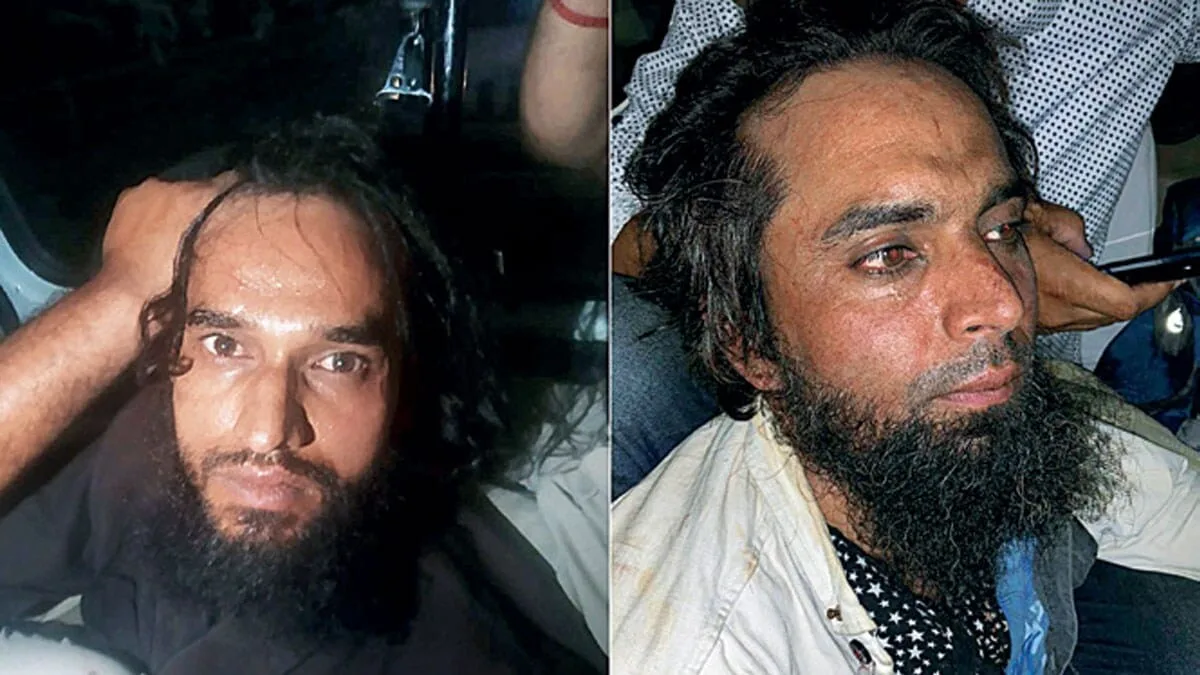
UDAIPUR: The Rajasthan High Court has denied bail to five accused in the 2022 murder of Udaipur tailor Kanhaiya Lal Teli, observing that the gravity of the offence, their roles in the larger criminal conspiracy and the nature of the terrorist act do not warrant granting them bail.
🚨 BIG BREAKING
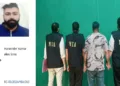
Rajasthan HC has DISMISSED the BAIL pleas of 5 accused in the Kanhaiya Lal murder case: Wasim Ali, Muslim Khan, Mohsin Khan, Mohammad Mohsin & Asif Hussain.
Upholding the NIA court’s order, the bench cited grave UAPA charges and REFUSED relief. pic.twitter.com/4r49n8Pitz
— Megh Updates 🚨™ (@MeghUpdates) October 4, 2026
A Bench comprising Chief Justice Sanjay Agrawal and Justice Sameer Jain rejected the bail applications of Wasim Ali, 34, Muslim Khan, 43, Mohsin Khan, 27, Mohammad Mohsin, 34, and Asif Hussain, 25.
The court quoted a poem by Ramdhari Singh Dinkar on tolerance and highlighted the constitutional responsibility attached to judicial office. “The seat of a judge is surrounded by an invisible, yet crushing weight, the weight to protect the rights of the citizens and people of this country which are enshrined under the Constitution of India,” the Bench observed.
The High Court said the case involved an offence that was not merely directed against an individual but had implications for the broader security and psychological well-being of the nation. “The paradigm of bail shifts entirely when the crime in question is not aimed at an individual, but at the very soul of the nation,” the Bench said.
It further observed that terrorism is not limited to physical violence but can constitute a calculated attempt to create fear and undermine the rule of law. “Terrorism is not merely an assault on a physical body; it is a calculated, theatrical assault on the psychological sovereignty of the country,” the court said, adding that its ultimate objective was to replace the “Rule of Law” with the “Rule of Fear”.
Kanhaiya Lal was killed in June 2022
On June 28, 2022, Mohammed Riyaz Attari and Ghouse Mohammad entered Kanhaiya Lal’s shop in Udaipur posing as customers and hacked him to death. The murder followed a social media post shared by Kanhaiya Lal in support of then BJP spokesperson Nupur Sharma, who had been suspended by the party over controversial remarks about the Prophet during a television debate.
The National Investigation Agency (NIA) subsequently investigated the case and filed a charge sheet. The trial court framed charges against the five accused in 2024. They have remained in judicial custody since their arrests in the days and weeks following the murder. The accused had earlier approached the Special Court for bail, but their pleas were rejected in October and November 2024.
Senior counsel Raja Thakare, appearing for the NIA, argued that the five accused had played an “active, indispensable, and integral role” in the crime. Relying on Supreme Court precedent, the NIA submitted that a court is not required to conduct a mini-trial or meticulously weigh evidence while deciding a bail application. Instead, it must examine whether the material collected by the investigating agency provides reasonable grounds to believe that the allegations are prima facie true.
The High Court noted that the Unlawful Activities (Prevention) Act (UAPA) imposes a statutory restriction on granting bail where, after examining the charge sheet, the court finds reasonable grounds for believing that the accusations are prima facie true. The court observed that the NIA had completed a detailed investigation and filed its charge sheet, while the trial court had already framed charges against the five accused.
“This establishes that upon a prima facie evaluation, there exists sufficient material to proceed against the appellants,” the Bench said, holding that the applicable test laid down by the Supreme Court was satisfied at this stage.