Prime Minister of the United Kingdom, Keir Starmer, rightly stated in April 2025 that globalisation has failed. He said, “The world has changed; globalisation is over, and we are now in a new era.” This statement reflects the reality of today’s global order. It shows that the importance of the World Trade Organization (WTO) has been steadily declining in recent years. Once the cornerstone of global trade governance, the WTO now struggles with stalled negotiations, ineffective dispute settlement mechanisms, and rising trade protectionism. Major powers like the United States and China increasingly pursue bilateral and regional trade agreements, bypassing the WTO framework. Moreover, emerging issues like digital trade, climate change, and supply chain security remain largely unaddressed. As globalisation slows and economic nationalism grows, the WTO’s relevance in shaping world trade is diminishing.
BRICS in the New Global Order
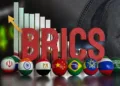
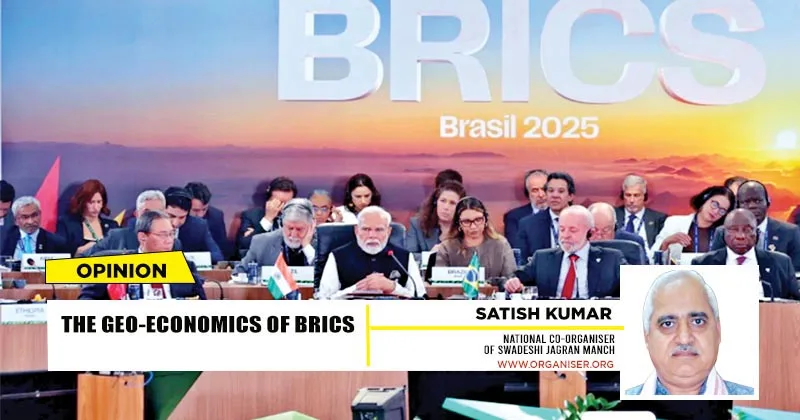
BRICS, an intergovernmental organisation formed in 2009, is a group of emerging economies with immense geo-economic potential. These countries have risen to become key players in the global order. The BRICS economy has now surpassed that of the G7. In 2024, the combined GDP of BRICS countries stood at 28.5 trillion dollars, accounting for 36 per cent of the global total. Unfortunately, US President Donald Trump perceives BRICS as a threat to the United States, leading him to make several confrontational statements. This stems from his desire for continued US dominance, an idea that history has proven unsustainable. His discontent particularly revolves around BRICS’ plans to introduce a new currency or promote alternatives to the US dollar as the global reserve currency.
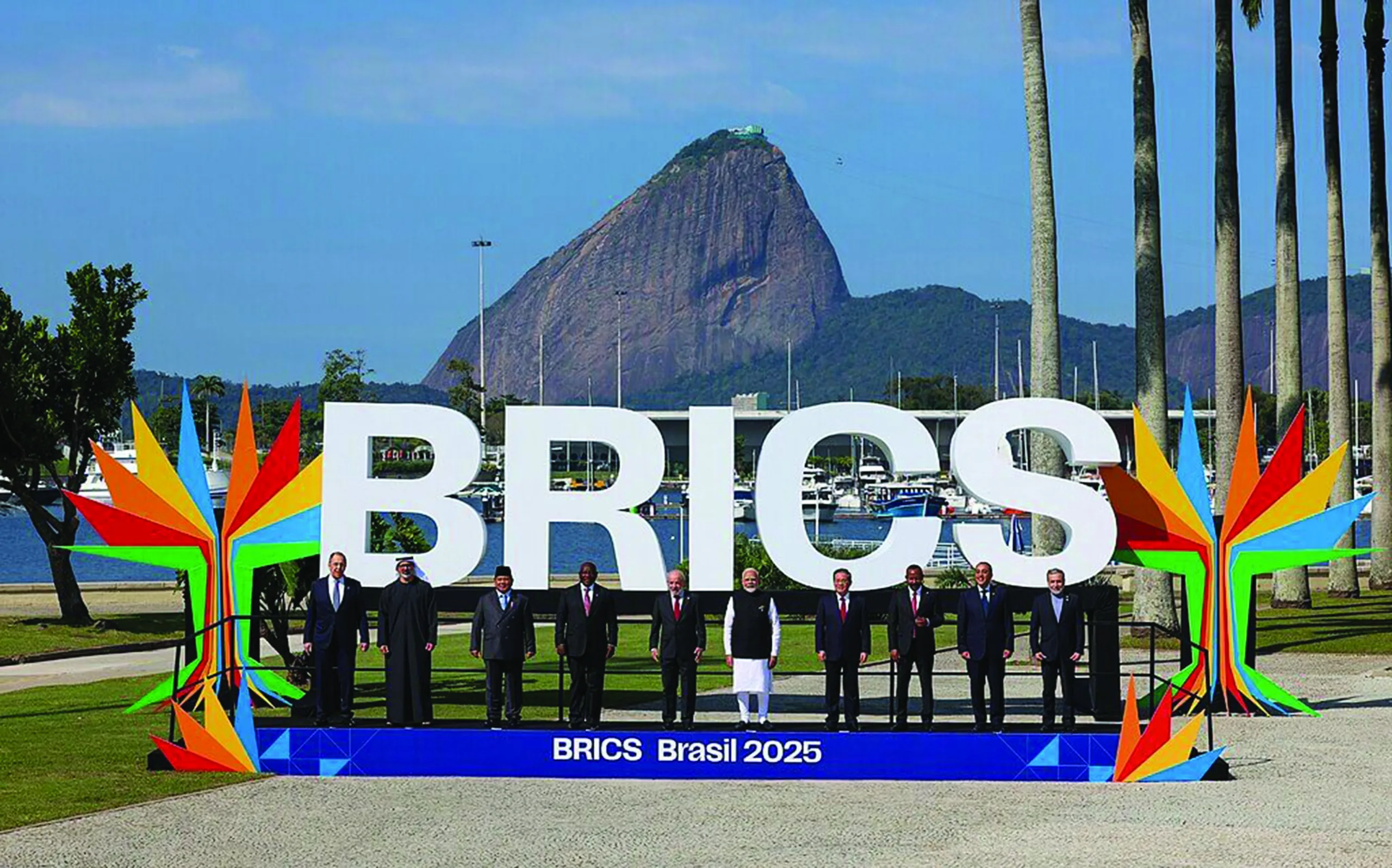
President Trump has even warned BRICS nations that the US would impose 100 per cent tariffs from November 30 if they attempt to create or promote such a currency. This response highlights Washington’s growing insecurity. The expansion of BRICS into BRICS Plus now includes Brazil, Russia, India, China, South Africa, Egypt, Ethiopia, Iran, Saudi Arabia, the United Arab Emirates, and Indonesia. This has made the forum even more relevant and influential in shaping the global order.
In today’s world, bilateral and multilateral pacts are far more viable and practical. They provide essential frameworks for cooperation on issues that transcend national borders such as climate change, security, and trade. These pacts are increasingly relevant because they help address transnational challenges, facilitate global trade and investment, enhance security and stability, promote economic interdependence, and establish international norms and standards. Bharat, in particular, favours bilateral and multilateral engagements especially bilateral ones. Globalisation has become an outdated concept, as every country now seeks to become self-reliant or Atmanirbhar, a sentiment echoed by Prime Minister of UK. The Swadeshi philosophy aligns perfectly with this approach.
According to the Swadeshi thought, trade and international relations should be based on a ‘win-win’ framework for all parties involved. Many world leaders now endorse this view, including Prime Minister of UK and US President Donald Trump both of whom have acknowledged the limitations of unrestrained globalisation. President Trump’s Make America Great Again (MAGA) platform prioritises domestic interests and economic protectionism over the principles of Liberalisation, Privatisation, and Globalisation (LPG). This approach represents a modern form of economic nationalism and parallels Bharat’s historical Swadeshi movement, which emphasised self-reliance and the use of domestically produced goods.
This global shift validates the timeless relevance of Swadeshi thought as propagated by Rashtrarishi Dattopant Thengadi Ji. Today, every major country including Canada and members of the G8 emphasises self-reliance. Similarly, during the October 20–23 meeting of the Chinese Communist Party (CCP), the call for an economy based on self-reliance, particularly in technology, was strongly reiterated and made a top priority for the 15th Five-Year Plan (2026–2030). Thus, in the present world, bilateral pacts are the most practical and effective instruments of trade.
The WTO has been almost inactive in the field of trade for the last three years, which means it has lost much of its relevance, especially after Donald Trump’s second tenure as President of the United States. Several experts widely agree that the WTO is facing significant challenges and that its effectiveness has greatly diminished. Currently, the WTO’s key features and present condition include a dysfunctional dispute settlement system, a shift towards unilateralism and bilateral deals, increased tariffs, policy uncertainty, stalled negotiations, and a struggle to remain relevant through resilience and adaptation.
Bharat’s Perspective: Vasudhaiva Kutumbakam
A healthy form of competition, one that ensures a ‘win-win’ situation for all is the ideal foundation for the world’s future. In Swadeshi philosophy, this principle is expressed through Vasudhaiva Kutumbakam, The world is one family. As Thengadi Ji observed, “The West says the world is a market and everyone has the right to exploit it, while Bharat says the world is a family where everyone has the right to live”. This statement beautifully captures the distinction between Swadeshi and Western worldviews.
The Bharatiya philosophy promotes the welfare of all, not merely of Bharat, while Western thought tends to prioritise the interests of specific nations, communities, or races. Vasudhaiva Kutumbakam embodies a holistic and inclusive global outlook, where the entire world is seen as a family rather than a collection of competitors.
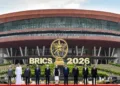
The next BRICS Summit will be hosted by Bharat in 2026, under Bharat’s chairmanship. In August 2025, Bharat and China agreed to support each other in hosting successful diplomatic events such as BRICS. The subsequent summit, in 2027, will be held in China.
BRICS has emerged as a symbol of a multipolar world order, challenging long-standing Western dominance. For Bharat, BRICS is not just a coalition but a strategic platform to redefine its global role and strengthen its influence in international governance. In an era resembling a new Cold War between the US and China, Bharat stands out as a balancing power demonstrating diplomatic maturity and strategic autonomy. Through BRICS, Bharat amplifies the voice of the Global South and advocates for reform in global financial institutions such as the IMF and the World Bank. Bharat’s vision of Vasudhaiva Kutumbakam brings cooperation, stability, and inclusiveness to BRICS. At the same time, the organisation presents an opportunity for the US if Washington chooses to see it not as a threat but as a bridge for dialogue.
The key challenge for the US is to avoid the error of viewing BRICS as an anti-Western bloc. Unlike Russia or China, Bharat can act as a bridge between the West and the Global South. Thus, BRICS offers Bharat the chance to assume a position of genuine global leadership serving both as a competitor and a partner to the US. Ultimately, BRICS represents a mechanism for power balance. For Bharat, it is a path to global prominence; for the US, if it recognises the moment in time and it can be a platform for cooperation rather than competition.