What should have been a routine administrative process has turned into a full-blown political storm in West Bengal. The Election Commission of India’s (ECI) decision to launch a Special Intensive Revision (SIR) of electoral rolls from November 4 to December 4 has prompted sharp resistance from the Trinamool Congress (TMC), which has branded it as an “NRC in disguise.”
The SIR, meant to verify, clean, and update voter rolls, is part of the Election Commission’s nationwide initiative to ensure that only eligible citizens remain on the electoral lists. But in politically volatile West Bengal, the exercise has reopened old wounds tied to citizenship debates, identity verification, and fears of disenfranchisement that have haunted the state since the CAA-NRC protests of 2019-20.
What is the SIR?
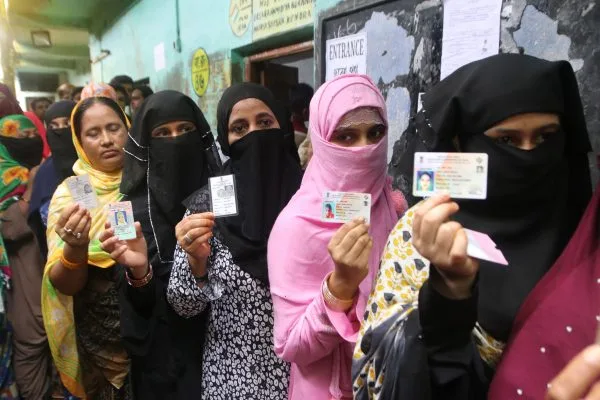
The Special Intensive Revision is an exhaustive verification exercise where Booth Level Officers (BLOs) visit households to confirm voter identities, delete names of the deceased or relocated, and add new eligible voters. Political parties can appoint Booth Level Agents (BLAs) to monitor the process and ensure transparency.
According to West Bengal Chief Electoral Officer Manoj Agarwal, the state’s SIR will cover 7.6 crore voters across all districts. “We saw how SIR was conducted in Bihar for 7.79 crore voters and without machine-readable data; we have everything in West Bengal. Why can’t we complete the exercise in the given period?” Agarwal said.
He added that a mobile app would be deployed to allow parties and voters to track verification progress, and assured that state police forces would be adequate to maintain law and order. “There is no need for central forces,” he said.
Why Bengal’s reaction is different
While several states are conducting the SIR without incident, West Bengal’s response has been uniquely charged and political. The ruling TMC claims the BJP is using the process to “manipulate voter lists under the pretext of identifying illegal infiltrators.”
TMC spokesperson Kunal Ghosh accused the BJP of attempting to gain a backdoor advantage: “BJP has neither organisation nor acceptability in Bengal, so now it is trying to manipulate the voter list with the help of EC. Any deletion of genuine voters to aid BJP’s agenda will be met with protest.”
Other party leaders have echoed the concern. Minister Arup Biswas questioned the speed of the rollout, noting, “It took two years to complete the SIR in 2002; why the sudden rush now?” Meanwhile, Kolkata Mayor Firhad Hakim called the exercise “an NRC in disguise,” vowing to “revolt against this CAA-masked process.”
The state’s TMC national general secretary, Abhishek Banerjee, went a step further at a rally in Nadia: “You (BJP) are trying to select voters and drop those who don’t vote for you. We have information that one crore names are being targeted for deletion. But we will not let that happen.”
TMC’s fear narrative on CAA and NRC
West Bengal’s recurring waves of anxiety over citizenship-linked exercises such as the CAA and NRC are being systematically reignited by the Trinamool Congress (TMC), which has built an entire political narrative around fear and misinformation. While the state indeed shares a porous 2,216-km border with Bangladesh, making migration a complex and sensitive issue, many argue that the Mamata Banerjee government has exploited this sensitivity to consolidate a particular vote base.
Since the CAA-NRC debate erupted in 2019-20, TMC leaders have repeatedly portrayed these legal and administrative measures as threats to minorities, despite clear assurances from the Centre that no Indian citizen would be affected. The party’s continued protests, resolutions, and inflammatory rhetoric, including the 2020 Assembly resolution opposing the CAA, have been interpreted as attempts to divert public attention from the deeper demographic transformations that have quietly unfolded across the border districts during Mamata Banerjee’s tenure.
Regions such as North and South 24 Parganas, Murshidabad, and Malda, all adjoining Bangladesh and with historically significant minority populations, have experienced marked demographic shifts over the past decade. Opposition voices and social researchers alike allege that unchecked infiltration, aided by political indulgence and administrative neglect, has altered the social fabric of these regions. Yet, instead of addressing the issue, the TMC continues to frame every verification exercise or voter audit as an act of “communal targeting,” thereby fuelling fresh unrest.
In this backdrop, what is presented as a “citizenship concern” is, in fact, a deliberate political strategy. By provoking fears among border populations and vilifying national verification efforts, the TMC seeks to both mask the demographic changes that occurred under its watch and maintain its hold over a critical section of the electorate. The “anxiety” over CAA, NRC, and now SIR therefore, is less about citizenship and more about safeguarding the political arithmetic of the ruling dispensation.
Voices from the opposition
The Congress and CPI(M) have also criticised the Election Commission’s approach, though their focus has been on procedural lapses rather than political motives.
West Bengal Congress president Shuvankar Sarkar said his party had submitted 16 suggestions for improving the SIR process after the Bihar rollout but none were incorporated.
“The only change the EC made was adding a 53-day notice phase for hearings after claims and objections. That’s not enough to address deep-rooted anomalies,” he said.
CPI(M) state secretary Mohammed Salim cautioned against politicising the process: “It is the EC’s duty to ensure that names of genuine voters remain on the rolls. How can BJP leaders claim one crore deletions in advance? The data can only be known after the process concludes.”
BJP defends the exercise
For the BJP, the SIR is not a political tool but a necessary measure to ensure electoral purity. The party argues that TMC’s resistance reflects its dependence on what it calls “ineligible voters.”
State BJP president Samik Bhattacharya said, “TMC is afraid because the SIR will expose how Bangladeshi infiltrators got enrolled as voters. They form a solid votebank for TMC. The SIR will bring transparency.”
BJP MLA Agnimitra Paul echoed that sentiment, stating that the Election Commission has already assured that “no genuine voter will be deleted and no illegal voter will remain.”
Administrative changes
The political tension deepened after the West Bengal government reshuffled 64 IAS officers and hundreds of civil service officials, including District Magistrates in 17 districts, notably in border areas like Murshidabad, Malda, and the 24 Parganas, just ahead of the SIR rollout.
The BJP accused the TMC government of trying to influence the revision process. In a letter to the Election Commission, it called the reshuffle a violation of guidelines, claiming the transfers could impact impartiality.
Union Minister Sukanta Majumdar said, “We’ll see on whose ‘gurumantra’ these transfers were made. If these officials are found working under Trinamool’s instructions, we will democratically resist it with full force.”
However, Chief Election Commissioner Gyanesh Kumar clarified that administrative reshuffles before the announcement of the SIR fall within the state’s rights. “Any transfer after the notification would require prior approval of the ECI,” he stated, aiming to quell speculation.
Political optics and ground realities
Observers note that the controversy also stems from timing. Bengal’s Assembly elections are due in early 2026, and both the ruling TMC and opposition BJP view the SIR’s outcome as potentially significant.
For the TMC, the fear is that large-scale deletions, especially in minority-dominated constituencies, could dent its vote base. For the BJP, the SIR offers a chance to highlight what it describes as the “integrity of Indian democracy” and “cleaning up of illegal voters.”
Amid the noise, Booth Level Officers have found themselves caught in the crossfire. Several BLOs have reportedly faced local-level tensions, with one officer in North 24 Parganas telling local media,
“People are suspicious of our visits. Some think we are conducting an NRC survey. It’s becoming difficult to explain.”
Training sessions for BLOs and BLAs are currently underway, and the Election Commission has urged all political parties to cooperate rather than confront the process. The SIR in Bengal is scheduled to conclude by December 4, after which the EC will begin the claims and objections phase before finalising the updated rolls.
While states like Bihar, Kerala, and Tamil Nadu have treated the exercise as routine, West Bengal’s fraught history with citizenship politics ensures that even a procedural step becomes a battleground of perception and power.
For now, the Election Commission insists the process is purely administrative, while parties on both sides prepare for what may well become the first major political flashpoint ahead of Bengal’s 2026 polls.