India achieves 2030 non-fossil power target ahead of schedule, needs $4.5 trillion investment for next climate goals
August 13, 2026
  • Read Ecopy
  • Circulation
  • Advertise
  • Careers
  • About Us
  • Contact Us
Android AppiPhone AppArattai
Organiser
  • ‌
  • Bharat
    • Assam
    • Bihar
    • Chhattisgarh
    • Jharkhand
    • Maharashtra
    • View All States
  • World
    • Asia
    • Europe
    • North America
    • South America
    • Africa
    • Australia
  • Editorial
  • International
  • Opinion
  • RSS @ 100
  • More
    • Op Sindoor
    • Analysis
    • Sports
    • Defence
    • Politics
    • Business
    • Economy
    • Culture
    • Special Report
    • Sci & Tech
    • Entertainment
    • G20
    • Azadi Ka Amrit Mahotsav
    • Vocal4Local
    • Web Stories
    • Education
    • Employment
    • Books
    • Interviews
    • Travel
    • Law
    • Health
    • Obituary
  • Subscribe
    • Subscribe Print Edition
    • Subscribe Ecopy
    • Read Ecopy
  • ‌
  • Bharat
    • Assam
    • Bihar
    • Chhattisgarh
    • Jharkhand
    • Maharashtra
    • View All States
  • World
    • Asia
    • Europe
    • North America
    • South America
    • Africa
    • Australia
  • Editorial
  • International
  • Opinion
  • RSS @ 100
  • More
    • Op Sindoor
    • Analysis
    • Sports
    • Defence
    • Politics
    • Business
    • Economy
    • Culture
    • Special Report
    • Sci & Tech
    • Entertainment
    • G20
    • Azadi Ka Amrit Mahotsav
    • Vocal4Local
    • Web Stories
    • Education
    • Employment
    • Books
    • Interviews
    • Travel
    • Law
    • Health
    • Obituary
  • Subscribe
    • Subscribe Print Edition
    • Subscribe Ecopy
    • Read Ecopy
Organiser
  • Home
  • Bharat
  • World
  • Operation Sindoor
  • Editorial
  • Analysis
  • Opinion
  • Culture
  • Defence
  • International Edition
  • RSS @ 100
  • Magazine
  • Read Ecopy
Home Bharat

India achieves 2030 non-fossil power target ahead of schedule, needs $4.5 trillion investment for next climate goals

After implementing over 650 energy transition policies since 2015, India has achieved its 2030 non-fossil electricity generation target under the Paris Agreement, five years early

Shashank Kumar DwivediShashank Kumar Dwivedi
Oct 19, 2025, 02:30 pm IST
inBharat
Follow on Google News
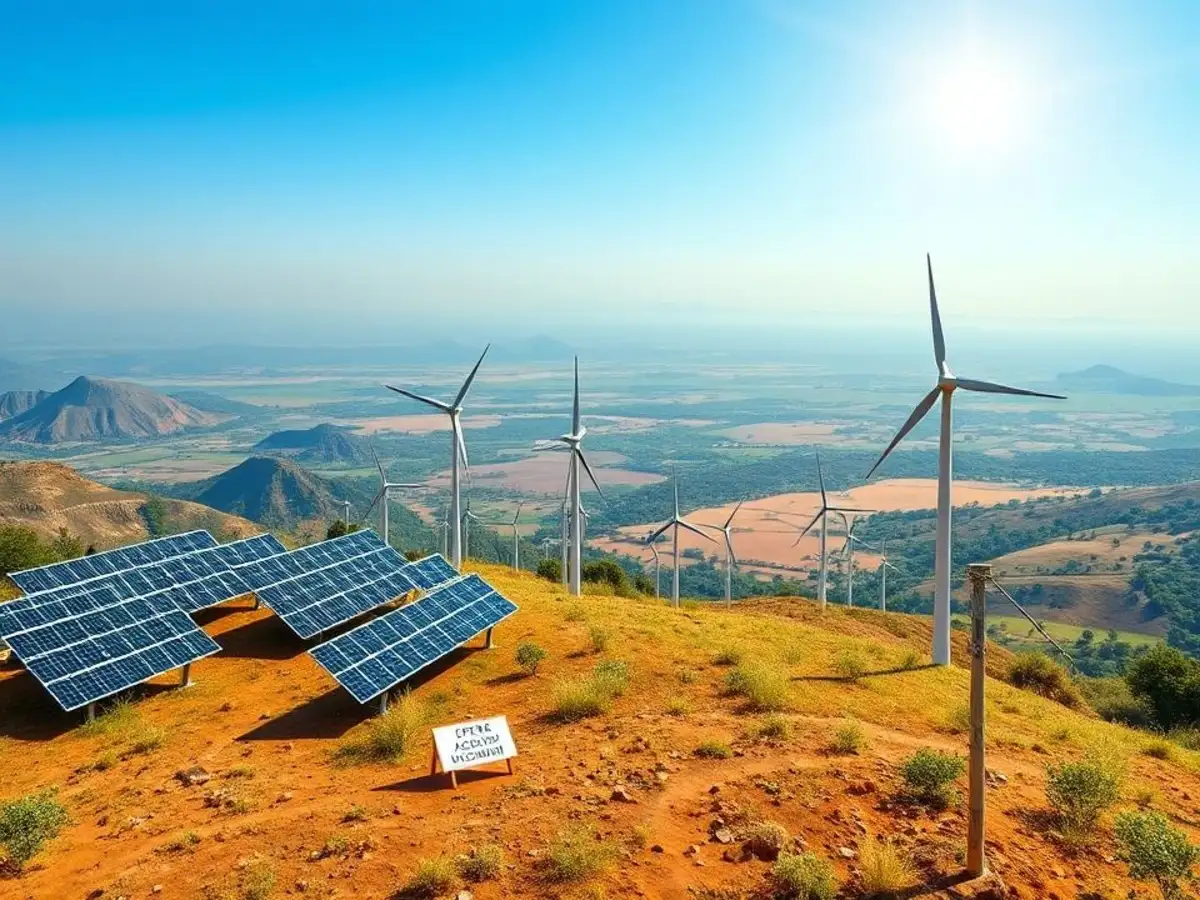
A representative image

A representative image

Facebook
Twitter
WhatsAppTelegramEmail

India’s climate and energy agenda is set, as the country has successfully met its 2030 target for non-fossil fuel electricity generation, five years ahead of schedule. The milestone comes after a decade of sustained policy efforts under the Paris Agreement on Climate Change, during which India implemented over 650 policies focused on energy transition, industrial reform, and sustainable growth.

According to a new report by the Deep Decarbonisation Pathways (DDP) Initiative at the Institute for Sustainable Development and International Relations (IDDRI), India’s success positions it among the few major economies to have delivered on one of its key Paris commitments well before the deadline. The report, which draws on collaborative research by experts from 21 countries, shows India’s crucial role in driving global climate progress through large-scale deployment of renewables, technological innovation, and industrial decarbonisation.

A decade of policy-driven transformation

Since the signing of the Paris Agreement in 2015, India has undertaken one of the world’s most ambitious clean energy transformations, implementing more than 650 national and sub-national policies aimed at reducing dependence on fossil fuels, particularly coal, while enhancing renewable capacity.

The report highlights that the country’s energy transition efforts have been most visible in the power and industrial sectors, particularly in electricity generation and energy-intensive industries such as steel, cement, and manufacturing.

Over the last decade, India’s installed renewable capacity, including solar, wind, hydro, and nuclear power, has grown exponentially, pushing the share of non-fossil energy sources in total electricity generation well beyond the 40 percent target originally set for 2030.

This early achievement reflects the combined effect of policy innovations such as:

Expansion of solar parks and green corridors;
Incentives under the National Solar Mission and Wind Energy Programmes;
Electrification and energy-efficiency schemes like Ujjwala, Saubhagya, and UJALA; and
Industrial transition frameworks promoting low-carbon steel and hydrogen-based technologies.

The economic challenge ahead

Despite the achievement, the DDP report warns that India’s journey toward long-term decarbonisation and net-zero will require a massive financial push. To sustain the momentum, the country will need an estimated $4.5 trillion in investments by 2040, across infrastructure, clean technology, energy storage, and industrial innovation.

The report notes that while India’s progress in renewable deployment has been commendable, the next phase will demand deeper structural reforms and cross-sectoral coordination to align energy policy with industrial, financial, and social goals.

“India’s achievement in the power sector is a global example of determined policymaking and political will. But maintaining growth while cutting emissions will depend on how effectively we mobilise green finance and build low-carbon industries,” the report emphasises.

Bridging policy and practice

While the report praises India’s success, it also highlights persistent institutional and implementation challenges that could slow down further progress. One of the major observations is that long-term strategies are often disconnected from short-term policy decisions, creating inconsistencies between planning and execution.

It also notes that inter-ministerial coordination remains a critical challenge, especially when aligning goals between energy, industry, and finance ministries. “Countries have accelerated low-carbon technologies, but gaps remain in coordination, social inclusion, and linkage between long-term goals and current policies,” the report states.

The DDP analysis calls for stronger interdepartmental collaboration, inclusive policy design, and just transition frameworks that safeguard workers and vulnerable communities affected by the shift away from coal and other fossil-intensive industries.

‘Next decade must focus on scaling up action’

Henri Waisman, Director of the Deep Decarbonisation Pathways Initiative, emphasised that India’s early success in achieving its electricity goals should now be leveraged to build a more inclusive and innovation-driven green economy.

“The progress made in the last 10 years is significant. However, the lesson is clear: to achieve the goals of the Paris Agreement, the next decade must focus on scaling up efforts, addressing social and industrial challenges, and ensuring that ambition is consistently translated into effective action,” Waisman said.

He further added that developing nations like India represent a “test case” for equitable climate action, demonstrating how large economies can grow rapidly while still contributing meaningfully to global decarbonisation goals.

India’s broader climate commitments

India’s current Nationally Determined Contributions (NDCs) under the Paris Agreement commit to:

Reducing emissions intensity of GDP by 45 percent by 2030 from 2005 levels.

Achieving about 50 percent cumulative electric power installed capacity from non-fossil fuel sources by 2030 (now achieved).

Creating an additional carbon sink of 2.5 to 3 billion tonnes of CO₂ equivalent through forest and tree cover.

In August 2022, India also formally updated its NDCs, reinforcing its commitment to sustainable growth while ensuring that developmental priorities remain uncompromised. The focus remains on a just transition, balancing economic resilience with environmental responsibility.

Towards a green industrial future

The DDP report also points to India’s emerging potential in green industrialisation, particularly through the National Hydrogen Mission, Battery Energy Storage Mission, and Green Steel initiatives, which aim to decarbonise heavy industries.

Experts believe that if properly funded and implemented, these programmes could place India at the forefront of the global green manufacturing revolution, generating millions of jobs and positioning the nation as a clean technology hub for the Global South.

However, to reach this potential, the report cautions that India will need sustained international financial support, technology transfer, and public-private partnerships that can bridge the capital gap for next-generation clean technologies.

India leads the South in climate responsibility

India’s early achievement of its 2030 non-fossil power target stands as a rare instance where development and sustainability have progressed hand in hand. The success validates India’s long-term strategy of balancing energy security, economic growth, and climate responsibility.

As the DDP report notes, the coming decade will be decisive, not just for India’s energy future, but for the world’s collective ability to limit global warming. The challenge ahead lies in mobilising the $4.5 trillion investment, strengthening policy coordination, and ensuring that every renewable megawatt contributes to inclusive, sustainable development.


Topics: Renewable EnergyParis Agreementsustainable developmentIndia energy transitionnon-fossil powerDeep Decarbonisation Pathways
Share
Tweet
SendShareSend
✮ Subscribe Organiser YouTube Channel. ✮
✮ Join Organiser's WhatsApp channel for Nationalist views beyond the news. ✮
Previous News

Muhurat Trading 2025: Deepawali one-hour market rally set to boost investor wealth across India

Next News

The Hidden Epidemic: Surge in counterfeit drugs across India

Related News

Representative Image

India crosses 300 GW non-fossil power milestone, Surpasses 60 per cent of 2030 target

Borosil’s journey from everyday glassware to advanced solar glass highlights how Indian materials expertise is quietly powering the clean-energy revolution

From Kitchen Bowls to Solar Panels: How Borosil turned glass expertise into a clean-energy technology breakthrough

AI Generated Image

The Great E20 Myth: How pseudoscience is fuelling misinformation against Bharat’s ethanol revolution

PM Surya Ghar Yojana: Nearly 19 Lakh Households Receive Zero Electricity Bills

PM Surya Ghar Scheme: Over 19 lakh households receive zero electricity bills, over 40 lakh rooftop solar installations

Record wind energy generation powers India's clean energy transition, strengthening sustainable growth and energy security

Record 6.05 GW wind addition in FY26 in Bharat shatters ‘renewable slowdown’ narrative

India has risen from a negligible solar player to the world's third-largest solar market, driven by rapid clean energy growth

From Zero to Third: How India emerged as the world’s third-largest solar power nation in just two decades

Load More

Latest News

Vatican’s strict financial laws put foreign transactions, institutional assets and Curial entities under layers of transparency, monitoring and economic oversight

Vatican’s Foreign Funding Rules: How Holy See controls finance and what they mean for India’s FCRA debate

New Delhi, Aug 13 (ANI): Prime Minister Narendra Modi stands for 'Vande Mataram' before the proceedings of the Lok Sabha during the Monsoon Session of Parliament, in New Delhi on Thursday. Union Ministers Amit Shah, Rajnath Singh, Nitin Gadkari, Kiren Rijiju, Giriraj Singh, and Pralhad Joshi; Union MoS Jitendra Singh; and Union MoS (I/C) Arjun Ram Meghwal present. (Sansad TV/ANI Video Grab)

Historic Recitation: Full Vande Mataram sung in Lok Sabha after stormy Monsoon session ends

Ex-TMC MLA Nirmal Ghosh arrested over the hurried cremation in the RG Kar case

RG Kar Rape & Murder Case: Ex-TMC MLA Nirmal Ghosh arrested over ‘Hurried Cremation’ of victim

Lashkar-e-Taiba social media operative Adeel Aslam

Who was Adeel Aslam? LeT-linked social media operative, Hafiz Saeed aide, dies under mysterious circumstances

Bharatiya Mazdoor Sangh to hold nationwide protest on August 17

Bharatiya Mazdoor Sangh to hold nationwide demonstrations on August 17 over long-pending workers’ issues

West Bengal government recently honoured 325 people imprisoned during the 1975 Emergency with the Paschimbanga Loktantra Senani Samman

Paschimbanga Loktantra Senani Samman: Bengal honours 325 emergency prisoners

Russian President Vladimir Putin aspires about India's partnership in the Arctic region

Putin hints India’s Arctic interest; Russia seeks partnership in strategic sea route & emerging global power corridor

Delhi commission for women puts Newslaundry under scanner over sexual harassment allegations, ICC & POSH compliance

CPIM Ditches Athapookalam for Pork Fest: Kerala Left Sells Meat on Hindu Pitru Paksha to Celebrate Onam| Karkidaka Vavu

CPIM Ditches Athapookalam for Pork Fest: Kerala Left Sells Meat on Hindu Pitru Paksha to Celebrate Onam| Karkidaka Vavu

80th Independence Day: Know the right way to fold and store the Tiranga with respect

Load More
  • Privacy
  • Terms
  • Cookie Policy
  • Refund and Cancellation
  • Delivery and Shipping

© Bharat Prakashan (Delhi) Limited.
Tech-enabled by Ananthapuri Technologies

  • Home
  • Search Organiser
  • Bharat
    • Assam
    • Bihar
    • Chhattisgarh
    • Jharkhand
    • Maharashtra
    • View All States
  • World
    • Asia
    • Africa
    • North America
    • South America
    • Europe
    • Australia
  • Editorial
  • Operation Sindoor
  • Opinion
  • Analysis
  • Defence
  • Culture
  • Sports
  • Business
  • RSS @ 100
  • Entertainment
  • More ..
    • Sci & Tech
    • Vocal4Local
    • Special Report
    • Education
    • Employment
    • Books
    • Interviews
    • Travel
    • Health
    • Politics
    • Law
    • Economy
    • Obituary
  • Subscribe Magazine
  • Read Ecopy
  • Advertise
  • Circulation
  • Careers
  • About Us
  • Contact Us
  • Policies & Terms
    • Privacy Policy
    • Cookie Policy
    • Refund and Cancellation
    • Terms of Use

© Bharat Prakashan (Delhi) Limited.
Tech-enabled by Ananthapuri Technologies