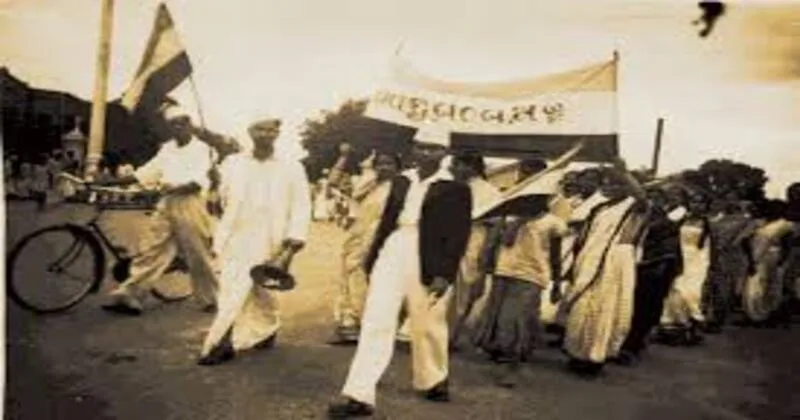
The Swadeshi Movement remains one of the most transformative chapters in India’s struggle against colonial rule. More than a political strategy, it was a cultural awakening and an economic assertion that aimed to reclaim India’s dignity through self-reliance. At a time when British economic policies had crippled Indian industries and turned a self-sufficient economy into a dependent one, Swadeshi emerged not just as resistance but as reconstruction. Over a century later, its core message—self-sufficiency, pride in local craftsmanship, and economic nationalism—has once again gained critical relevance in the face of global dependency, consumerist homogenization, and the marginalization of traditional knowledge systems.
Historically, the Swadeshi Movement began as a mass reaction to the 1905 partition of Bengal, but it swiftly evolved into a broader movement that emphasized the boycott of foreign goods and the promotion of indigenous products. It was not limited to textile mills or khadi production; it energized cottage industries, encouraged the use of local languages in education, and created a cultural renaissance where art, literature, and music intertwined with political consciousness. While history tends to associate the movement with a few towering personalities, the reality is that it was built and sustained by a much wider community of thinkers, poets, educators, traders, and common people.
Figures like Aurobindo Ghose played a pivotal intellectual role in giving philosophical depth to the idea of Swadeshi, linking it to India’s spiritual and civilizational ethos. Bipin Chandra Pal infused it with fiery nationalism, writing and speaking passionately about the dangers of economic dependence. In Bengal, Ashwini Kumar Dutta mobilized schools, local self-help groups, and cooperatives to replace foreign goods with Indian-made products. Subramania Bharati in Tamil Nadu wove Swadeshi into the fabric of poetry and identity, while V.O. Chidambaram Pillai founded the Swadeshi Steam Navigation Company to directly challenge British economic monopoly in maritime trade. These and many more forgotten figures demonstrate that the movement was a decentralized force, rooted in local consciousness but united in its larger vision of a sovereign India.
What did Swadeshi achieve in the past? It successfully politicized consumption. It made buying, selling, and even weaving a saree a nationalistic act. It was perhaps the first time when economic activity became a vehicle of political expression. The movement instilled pride in Indian craftsmanship and revived local industries that were facing extinction due to British industrial imports. In many parts of the country, women participated by spinning yarn, running home-based industries, and forming self-reliant collectives. Artisans and weavers, once discarded by colonial policies, were brought back into the nation-building narrative. This deep and widespread involvement of the masses—across caste, class, and gender—gave the Swadeshi movement its true strength and resilience.
Fast forward to today, and the landscape looks eerily similar in a different disguise. The Indian market is flooded with foreign brands—clothing, electronics, food, cosmetics—all packaged attractively to suggest quality and status. Malls brim with products whose profits flow out of the country. Social media algorithms push westernized aesthetics while the crafts of Bhuj, Kanchipuram, Chanderi, or Pattachitra struggle for visibility. In this hyper-globalized ecosystem, the Indian consumer once again stands at a crossroad: to follow the comfort of imported choices or to consciously support what is locally made.
The call to be “vocal for local” is not new; it echoes the very soul of the Swadeshi movement. Supporting local handicrafts today is not just about preserving heritage—it is an act of economic justice, sustainability, and cultural resilience. India’s traditional crafts are not static relics of the past; they are dynamic, adaptive, and capable of evolving with contemporary tastes. A Banarasi sari woven on a handloom, a terracotta artifact from Molela, a hand-block print from Bagru—all are perfect examples of tradition and modernity coexisting. These crafts carry stories, community knowledge, and aesthetic sensibilities refined over generations. They are not just products; they are living heritage.
Moreover, Swadeshi today is more than an economic strategy—it is a civilizational reaffirmation. In an age where soft power plays a significant role globally, showcasing India’s indigenous creativity, wellness systems, design philosophies, and linguistic diversity becomes essential. Just as the Swadeshi movement of the early 20th century sought to restore India’s economic dignity, today it can help India reclaim cultural confidence. When we choose to wear a locally woven fabric, eat from locally grown produce, or furnish our homes with artisanal goods, we are actively participating in the narrative of national self-respect.
There is also a crucial ecological aspect to the Swadeshi philosophy. Locally produced goods generally have a lower carbon footprint than mass-produced imported alternatives. The use of natural dyes, sustainable materials, minimal mechanisation, and local supply chains makes traditional Indian industries more aligned with environmental sustainability than most global fast-fashion or fast-consumption models. Thus, Swadeshi today is a green choice—a path toward ecological harmony, not just economic nationalism.
Another major takeaway from the original Swadeshi movement was community-building. The emphasis on local enterprises brought artisans, consumers, and traders into a mutual ecosystem of support. In today’s era of isolation, digital addiction, and identity crises, reestablishing community linkages through local markets, cooperative societies, and skill-based employment can heal the socio-economic fabric of our country. When we support local artisans, we not only help them survive economically but also validate their cultural existence. We help rural youth believe that their ancestral skills are not inferior to coding or management degrees. Education and innovation must also align with Swadeshi values. India doesn’t lack talent or creativity; what it needs is a systemic support for local innovation rooted in Indian needs and traditions. Whether it’s in the field of healthcare, architecture, textiles, or technology, we must prioritize solutions that are designed for our people, our climate, and our culture. This is not to resist global knowledge but to integrate it with indigenous intelligence. Just as the early Swadeshi thinkers dreamt of schools that taught in Indian languages and promoted Indian knowledge systems, today we must imagine universities and incubators that draw from the well of local genius.
The relevance of Swadeshi is even more pressing in the post-pandemic world. The COVID-19 crisis exposed the fragility of global supply chains and highlighted the necessity of self-reliance. India, despite challenges, responded with an indigenous vaccine, local production of PPE kits, and digital innovations. But such sparks need continuity. We must build durable local ecosystems that can not only withstand crises but also flourish in normalcy. From farm to fashion, from craft to code, from wellness to entertainment—every sector holds the potential to embody Swadeshi if consumers choose consciously and the state supports structurally.
Yet, the burden of change does not lie solely with the government. Citizens must rise as they once did, not with slogans, but with everyday decisions that echo the Swadeshi spirit. What we purchase, from whom we purchase, and why we purchase—these questions are as relevant today as they were in 1905. Buying Indian is not charity. It is a strategic choice, one that strengthens the economy, preserves the environment, uplifts artisans, and sustains heritage.
In the final analysis, Swadeshi is not a historical memory; it is a living philosophy. It reminds us that true freedom is not just political independence but the ability to define ourselves—culturally, economically, and ethically. A country of 1.4 billion minds and hands should not depend on foreign validation or foreign products for its identity or growth. The road to global leadership passes through local strength. And that strength lies in every loom, every workshop, every small business, every dialect, every tradition that still pulses with life across India. The spirit of Swadeshi, when revived in full, can offer not just a roadmap to self-reliance but also to self-discovery. It can make us value what we have ignored, cherish what we have forgotten, and believe once again in the power of our own people. And that, in essence, is why Swadeshi is not only relevant today—it is essential.