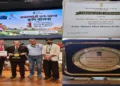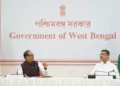
The Centre has sanctioned more than Rs 1,200 crore under the Prime Minister Rashtriya Krishi Vikas Yojana (PM-RKVY) for 10 states, with Agriculture Minister Shivraj Singh Chouhan calling for closer coordination between the Centre and states to address challenges facing Indian agriculture.
The announcements were made on September 29, 2026, during the second day of the National Agriculture Conference – Rabi Campaign 2026. Chouhan said agricultural development requires cooperation across governments and institutions and urged stakeholders to work as a “Team Agriculture” with the interests of farmers and food security at the centre of policymaking.
The sanctioned amounts include Rs 290 crore for West Bengal, Rs 198 crore for Haryana, Rs 181 crore for Chhattisgarh, Rs 154 crore for Arunachal Pradesh, Rs 114 crore for Bihar, Rs 104 crore for Karnataka, Rs 75 crore for Mizoram, Rs 64 crore for Himachal Pradesh, Rs 58 crore for Jharkhand and Rs 43 crore for Punjab.
The financial support is part of the Centre’s efforts to ensure that agricultural schemes are backed by timely funding and can be implemented at the state and field levels without unnecessary delays.
Chouhan calls for ‘Team Agriculture’
Addressing agriculture ministers, officials, scientists and representatives of agricultural institutions, Chouhan said Centre-State cooperation should not be affected by political differences.
“Governments and political parties come and go; parties are formed and dissolved, but the country and its farmers are eternal,” he said, according to the Ministry of Agriculture and Farmers’ Welfare.
The minister said the agriculture conference should remain focused on practical solutions to problems faced by farmers rather than political differences. The meeting brought together Union Ministers of State for Agriculture and Farmers’ Welfare Ram Nath Thakur and Bhagirath Choudhary, Agriculture Secretary Atish Chandra, ICAR Director General Dr M.L. Jat, senior officials, scientists and representatives of agricultural institutions.
The emphasis on coordination comes as states prepare for the Rabi season, with the Centre focusing on issues ranging from crop selection and water availability to fertiliser use, crop protection, procurement and access to credit.
Agriculture growth at 4.5 percent
Chouhan also highlighted the reported improvement in agriculture-sector growth. According to figures cited by him at the conference, the agriculture growth rate increased from 3 per cent in 2015 to 4.5 per cent.
He also said the average annual increase in foodgrain production had more than doubled, from around 40 lakh tonnes to 84 lakh tonnes.
The minister further highlighted an increase of 205 lakh tonnes in Rabi foodgrain production between 2023-24 and 2025-26. He attributed the increase to the combined efforts of farmers, state agriculture departments, scientists and other stakeholders.
The figures were presented as part of the government’s broader assessment of agricultural performance and the need to build on existing gains during the upcoming Rabi season.
Monthly reviews with states
The Centre is also planning a more regular review mechanism with states to track agricultural programmes and address implementation issues.
Chouhan announced monthly virtual review meetings with states, describing the approach as part of stronger cooperative federalism in agriculture.
At the state level, a State Agriculture Team will bring together the Agriculture Minister, Agriculture Secretary, agricultural universities, ICAR institutions, Krishi Vigyan Kendras, ATMA, Farmer Producer Organisations, progressive farmers, processors, exporters and Central government nodal officers.
The idea is to bring different stakeholders into a common platform instead of treating agricultural issues through separate administrative channels.
District-level coordination will involve Collectors, Deputy Directors of Agriculture, ATMA, KVKs, ICAR scientists, bankers and farmers. These meetings are expected to provide a mechanism for identifying local problems and monitoring implementation more closely.
Fixed calendar for Kharif and Rabi
The Centre has also proposed a fixed annual calendar for preparations ahead of the Kharif and Rabi seasons.
For Kharif, district-level meetings will be held on May 10 and state-level meetings on May 17 every year. For Rabi, district-level meetings will take place on September 10 and state-level meetings on September 17.
A nationwide one-day meeting will also be organised on a common date, bringing together Agriculture Ministers, officials and agricultural scientists.
The objective is to move towards advance planning instead of waiting for problems to emerge after the agricultural season has already begun.
For farmers, issues such as seed availability, water, fertilisers, pest control and credit are often interconnected. Early coordination between departments can therefore help states prepare for these requirements before sowing begins.
‘Khet Bachao Abhiyan’ from October 22
Soil health and sustainable fertiliser use will also receive attention under a nationwide campaign announced by Chouhan.
The minister called for a ‘Khet Bachao Abhiyan’ from October 22 to November 30. Scientists and other stakeholders will participate in the campaign, which will focus on soil health and environmental sustainability.
Soil Health Cards will be used to promote balanced fertiliser application. The stated objective is to protect soil fertility while also safeguarding beneficial insects and maintaining the long-term productivity of agricultural land.
The minister also called for greater cultivation of pulses in rice fallow areas of eastern India, particularly in Jharkhand, Bihar, Odisha and West Bengal.
The idea is to make better use of land that remains uncultivated after the paddy harvest and increase pulse production in regions where suitable conditions exist.
Rabi strategy focuses on soil and water
The Rabi campaign is also placing greater emphasis on matching crop choices with local soil moisture and water availability.
Chouhan said recommendations relating to crops and improved seeds should take into account the availability of water and soil moisture. Such planning is particularly relevant in areas where irrigation resources are limited or rainfall patterns are uncertain.
States have also been asked to strengthen arrangements to protect crops against diseases and pests.
The minister directed states to ensure that all eligible farmers are covered by Kisan Credit Cards and called for transparent Crop Cutting Experiments under the crop insurance system.
Crop Cutting Experiments are used to assess crop yields and play an important role in determining claims under crop insurance schemes. Greater transparency in the process is therefore intended to strengthen confidence among farmers and other stakeholders.
Chouhan also asked state Agriculture Ministers to personally review the implementation of departmental schemes on a regular basis.
Action against fake farm inputs
The availability and quality of agricultural inputs also figured prominently in the discussions.
Chouhan said the country has adequate stocks of seeds and fertilisers but directed states to take strict legal action against fake fertilisers, spurious seeds and sub-standard pesticides.
The issue is important because poor-quality agricultural inputs can directly affect crop yields and increase the financial burden on farmers.
States were also directed to eliminate forced tagging completely. The instruction is aimed at preventing farmers from being compelled to purchase one agricultural input as a condition for obtaining another.
The minister further called for greater adoption of natural farming, integrated farming systems and crop diversification.
These approaches are being promoted as part of a broader effort to make agriculture more sustainable while improving the economic returns available to farmers.
Focus on better farm prices
Improving returns for farmers remains another major part of the agricultural strategy outlined at the conference.
Chouhan said the government is pursuing a multi-pronged approach involving post-harvest management, scientific warehousing and improved marketing systems.
The objective is to reduce the losses and inefficiencies that can occur after crops leave the farm and improve the ability of farmers to access markets.
The minister also highlighted government procurement of tur, urad and masoor at the Minimum Support Price. He said 100 per cent assured government procurement of these pulses would be undertaken, with arrangements for payments to farmers within 48 hours.
The focus on pulses comes alongside the broader push to increase domestic production and reduce dependence on imports.
Connecting farmers with global markets
The government is also looking at international markets as another avenue for improving returns from agriculture.
Chouhan highlighted opportunities arising from Free Trade Agreements and said India would seek to use new market access to expand exports of agricultural products.
Fruits, vegetables and foodgrains were among the products highlighted by the minister.
Greater access to overseas markets can potentially create additional demand for Indian agricultural products, but expanding exports also requires attention to quality standards, supply chains, storage, processing and reliable logistics.
The government’s approach therefore combines production with post-harvest infrastructure and market connectivity.
Push for agricultural coordination
The National Agriculture Conference comes at a time when Indian agriculture is facing several interconnected challenges, including changing weather patterns, water availability, input costs, crop protection and the need for better market opportunities.
The Centre’s approach, as outlined by Chouhan, places greater emphasis on coordination between different levels of government and agricultural institutions.
The proposed monthly reviews, fixed seasonal calendars and state and district-level agriculture teams are intended to create a more regular system for identifying problems and monitoring the implementation of schemes.
The financial support announced under PM-RKVY is another part of this effort. With more than Rs 1,200 crore sanctioned for 10 states, the Centre has sought to provide states with resources for agricultural development while also pushing for stronger implementation on the ground.
The immediate focus now shifts towards the Rabi season, with states expected to prepare for sowing, ensure the availability of quality inputs, expand access to credit and strengthen crop protection measures.
At the same time, the Centre is pushing longer-term priorities such as soil health, crop diversification, natural farming, integrated agriculture, scientific storage and access to international markets.
The “Team Agriculture” approach outlined by Chouhan is essentially built around closer coordination between farmers, state governments, the Centre, scientists, agricultural institutions, banks and market participants.
For farmers, the success of this approach will ultimately depend on what happens beyond conference halls and policy announcements, whether quality seeds and fertilisers reach them on time, whether credit and insurance work effectively, whether crops receive adequate protection, whether procurement payments arrive quickly and whether better markets translate into better returns.
The Centre has now placed these issues together under a broader Rabi strategy, backed by financial support to states and a push for more regular coordination. The coming agricultural season will provide an opportunity to see how effectively these plans translate into action in the fields.