Ayurveda Meets Artificial Intelligence: India leads the world
August 3, 2026
  • Read Ecopy
  • Circulation
  • Advertise
  • Careers
  • About Us
  • Contact Us
Android AppiPhone AppArattai
Organiser
  • ‌
  • Bharat
    • Assam
    • Bihar
    • Chhattisgarh
    • Jharkhand
    • Maharashtra
    • View All States
  • World
    • Asia
    • Europe
    • North America
    • South America
    • Africa
    • Australia
  • Editorial
  • International
  • Opinion
  • RSS @ 100
  • More
    • Op Sindoor
    • Analysis
    • Sports
    • Defence
    • Politics
    • Business
    • Economy
    • Culture
    • Special Report
    • Sci & Tech
    • Entertainment
    • G20
    • Azadi Ka Amrit Mahotsav
    • Vocal4Local
    • Web Stories
    • Education
    • Employment
    • Books
    • Interviews
    • Travel
    • Law
    • Health
    • Obituary
  • Subscribe
    • Subscribe Print Edition
    • Subscribe Ecopy
    • Read Ecopy
  • ‌
  • Bharat
    • Assam
    • Bihar
    • Chhattisgarh
    • Jharkhand
    • Maharashtra
    • View All States
  • World
    • Asia
    • Europe
    • North America
    • South America
    • Africa
    • Australia
  • Editorial
  • International
  • Opinion
  • RSS @ 100
  • More
    • Op Sindoor
    • Analysis
    • Sports
    • Defence
    • Politics
    • Business
    • Economy
    • Culture
    • Special Report
    • Sci & Tech
    • Entertainment
    • G20
    • Azadi Ka Amrit Mahotsav
    • Vocal4Local
    • Web Stories
    • Education
    • Employment
    • Books
    • Interviews
    • Travel
    • Law
    • Health
    • Obituary
  • Subscribe
    • Subscribe Print Edition
    • Subscribe Ecopy
    • Read Ecopy
Organiser
  • Home
  • Bharat
  • World
  • Operation Sindoor
  • Editorial
  • Analysis
  • Opinion
  • Culture
  • Defence
  • International Edition
  • RSS @ 100
  • Magazine
  • Read Ecopy
Home Bharat

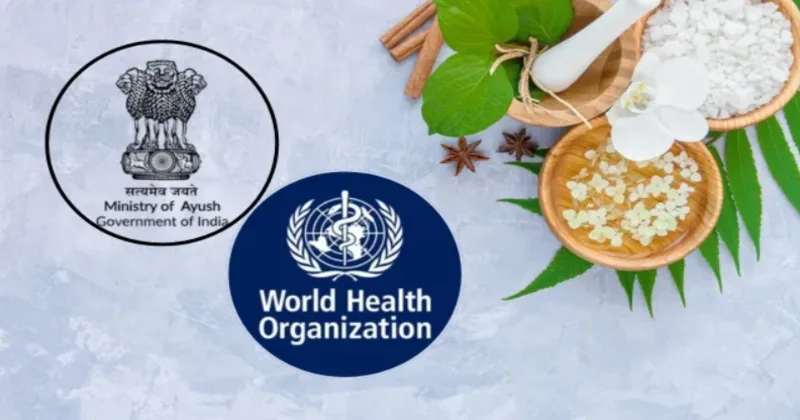
Ayurveda Meets Artificial Intelligence: India leads the world, says WHO

In a groundbreaking moment for global healthcare, the World Health Organisation (WHO) has formally recognised India's pioneering leadership in integrating Artificial Intelligence (AI) with traditional medicine systems, particularly its diverse Ayush disciplines

WEBDESKWEBDESK
Jul 14, 2025, 09:00 am IST
in Bharat, World, Health, International Edition
Follow on Google News
Representative Image

Representative Image

FacebookTwitterWhatsAppTelegramEmail

In a significant milestone for global healthcare innovation, the World Health Organisation (WHO) has released a technical brief titled “Mapping the Application of Artificial Intelligence in Traditional Medicine”, acknowledging India’s pioneering efforts in integrating Artificial Intelligence (AI) with traditional medicine systems, particularly Ayush systems. The release follows India’s proposal on the subject, leading to the development of WHO’s first-ever roadmap for applying AI in traditional medicine.

India’s efforts to harness the potential of Artificial Intelligence (AI) to advance and amplify the strengths of its Ayush systems reflect the broader vision of Prime Minister Narendra Modi, who seeks to position the country as a global leader in digital health innovation and the integration of traditional medicine. Speaking at the inauguration of the Global Partnership on Artificial Intelligence (GPAI) Summit in 2023, Hon’ble  Prime Minister Modi remarked, “We have developed government policies and programmes inspired by the spirit of ‘AI for all’. Our endeavour is to take full advantage of the capabilities of AI for social development and inclusive growth.”

Read More: From Sushruta to Patanjali: Ancient wisdom inspires health & scientific future of Bharat

Union Minister of State (Independent Charge) for Ayush and Minister of State for Health & Family Welfare, Shri Prataprao Jadhav, remarked that India’s AI-led initiatives, mentioned in WHO’s technical brief, reflect the deep commitment of Indian scientists to advancing traditional medicine through cutting-edge technology. “This recognition underscores our alignment with Hon’ble Prime Minister Shri Narendra Modi ji’s visionary call to harness emerging technologies like Artificial Intelligence to expand the global relevance of Traditional Medicine. By integrating AI with Ayush systems—and through pioneering digital platforms such as the SAHI portal, NAMASTE portal, and the Ayush Research Portal—India is not only safeguarding its centuries-old medical wisdom but also leading the way in shaping a future of personalised, evidence-based, and globally accessible healthcare.”

Vaidya Rajesh Kotecha, Secretary, Ministry of Ayush, said, “The WHO document highlights several pioneering AI-driven innovations led by India—ranging from predictive diagnostics using Prakriti-based machine learning models to the groundbreaking Ayurgenomics project that brings together Ayurveda knowledge and modern genomics. At the core of this digital transformation is the Ayush Grid—a comprehensive digital health platform launched in 2018—which serves as the foundation for several citizen-centric initiatives such as the SAHI portal, NAMASTE portal, and the Ayush Research Portal. Together, these AI-enabled platforms are not only preserving and validating India’s traditional knowledge systems of medicine but are also advancing their global integration within evidence-based, digital healthcare frameworks.”

This WHO publication not only validates India’s growing influence in the global traditional medicine landscape but also acknowledges several key Indian innovations in the AI and Ayush space.

The document showcases a range of AI-driven applications in Ayurveda, Siddha, Unani, Sowa Rigpa, and Homoeopathy, including diagnosis support systems that integrate traditional methods like pulse reading, tongue examination, and Prakriti assessment with machine learning algorithms and deep neural networks. These efforts are enhancing diagnostic accuracy and enabling personalised preventive care.

One of the standout features in the WHO brief is the mention of Ayurgenomics, a scientific breakthrough that combines genomics with Ayurvedic principles. This initiative aims to identify predictive disease markers and personalise health recommendations using AI-based analysis of Ayurvedic constitution types. The document also highlights efforts to decode the genomic and molecular basis of herbal formulations for repurposing in modern disease conditions—a major leap in integrating traditional wisdom with contemporary science.

India’s initiatives to digitise traditional knowledge, such as the Traditional Knowledge Digital Library (TKDL), are praised as global models for the preservation and responsible use of indigenous medical heritage. Furthermore, AI-powered tools are being used for cataloguing and semantic analysis of ancient texts, enabling easier access to time-tested therapeutic knowledge.

Another critical aspect recognised by the WHO is the use of AI for drug action pathway identification, comparative studies across systems like Ayurveda, TCM, and Unani, and the development of artificial chemical sensors to assess traditional parameters such as Rasa, Guna, and Virya. These technological interventions are helping validate and modernise traditional formulations.

The document also applauds India’s broader efforts in incorporating digital platforms for online consultations, promoting digital literacy among Ayush practitioners, and building interoperable systems to integrate traditional medicine with mainstream healthcare.

The Ministry of Ayush welcomes this recognition as a testament to India’s leadership in creating a robust scientific ecosystem for traditional medicine. It also reaffirms the country’s commitment to fostering global collaboration and responsible innovation, as envisioned under WHO’s broader framework for AI and traditional medicine.

 

Topics: Ministry of AYUSHWHOArtificial IntelligenceWorld Health OrganisationGlobal Partnership on Artificial IntelligenceAyurvedaPrime Minister Narendra Modi
ShareTweetSendShareSend
✮ Subscribe Organiser YouTube Channel. ✮
✮ Join Organiser's WhatsApp channel for Nationalist views beyond the news. ✮
Previous News

Pre-Launch alert of ISRO saves Axiom-4 Crew: LOX leak detected, delay in return of Shubhanshu Shukla

Next News

Bihar: Police arrests Md. Meraj for issuing threats to Union Minister Chirag Paswan on social media

Related News

The Politics of Strategic Retreat: Why PM Narendra Modi wins big by losing small

Sovereign AI Models of India: A bold strategic shield to fortify digital sovereignty amid tech weaponisation

Ayurveda is rapidly emerging as one of India's strongest tools of global health diplomacy and soft power

From Jamnagar to the World: How Ayurveda is transforming India’s global health diplomacy and soft power

'Rahul Gandhi Changed Goalposts': Jitendra Singh on NEET Protest

CJP Protest in New Delhi: ‘Rahul Gandhi in mood for conflict,’ says Union MoS for the PMO Jitendra Singh

BMS hosts 15th BRICS Trade Union Forum (TUF) Summit 2026 in Hyderabad; Calls for worker-centric global order

BRICS TUF Summit 2026: Shifting the labour discourse

PM Modi Applauds Sant Niranjan Dass' Social Welfare Work During Punjab Visit

PM Modi meets Sant Niranjan Dass, lauds his contribution to spiritual awareness and social welfare

Load More

Latest News

Site of Suicide bombing attack in which 14 people were killed in in Swat district of Khyber Pakhtunkhwa province in Pakistan

Pakistan: 8 policemen among 14 killed in suicide bombing at Kabal police station in Swat district, 22 injured

(Left) Bilawal Bhutto (Right) Pakistan PM Shehbaz Sharif

PoJK Polls: Bilawal accuses PML-N of robbing votes through bullets & batons; warns of withdrawing support to PM Sharif

Minister Vanni Arasu, CM Vijay Joseph (Left to right) (File Photo)

Tamil Nadu: VCK Minister Vanni Arasu mistakes NCC’s ‘jai hind, sriman’ for ‘jai shri Ram’, BJP hits back

Protesters affiliated to Cockroach Janta Party confronting a policeman on duty at Jantar Mantar protest sight

Cockroach Janta Party: Scientific dissection of cockroaches

Dr Suresh Hanagavadi conferred with Padmashri

Dr Suresh Hanagavadi: The remarkable journey of a doctor who revolutionised haemophilia care & patient advocacy

A discussion on anti-paper leak in Parliament

Public Examinations (Prevention of Unfair Means) Amendment Bill, 2026: Passing the trust test

(Left) Sanket Upadhyay (Right) Veteran BBC journalist Rehan Fazal

Veteran Journalist Rehan Fazal claims BBC India blocked RSS coverage, raising questions over editorial neutrality

Kanwar Yatra

When Faith Walks the Highways: A journey through the Kanwar yatra and the living soul of India

Bhojshala Campus

Bhojshala: The legacy of  a scholarly king

Boxer Lovlina protests against incorrect India map at a Glasgow restaurant

CWG silver medalist Lovlina flags incorrect India map in Glasgow restaurant; Protests missing Northeast & Kashmir

Load More
  • Privacy
  • Terms
  • Cookie Policy
  • Refund and Cancellation
  • Delivery and Shipping

© Bharat Prakashan (Delhi) Limited.
Tech-enabled by Ananthapuri Technologies

  • Home
  • Search Organiser
  • Bharat
    • Assam
    • Bihar
    • Chhattisgarh
    • Jharkhand
    • Maharashtra
    • View All States
  • World
    • Asia
    • Africa
    • North America
    • South America
    • Europe
    • Australia
  • Editorial
  • Operation Sindoor
  • Opinion
  • Analysis
  • Defence
  • Culture
  • Sports
  • Business
  • RSS @ 100
  • Entertainment
  • More ..
    • Sci & Tech
    • Vocal4Local
    • Special Report
    • Education
    • Employment
    • Books
    • Interviews
    • Travel
    • Health
    • Politics
    • Law
    • Economy
    • Obituary
  • Subscribe Magazine
  • Read Ecopy
  • Advertise
  • Circulation
  • Careers
  • About Us
  • Contact Us
  • Policies & Terms
    • Privacy Policy
    • Cookie Policy
    • Refund and Cancellation
    • Terms of Use

© Bharat Prakashan (Delhi) Limited.
Tech-enabled by Ananthapuri Technologies