


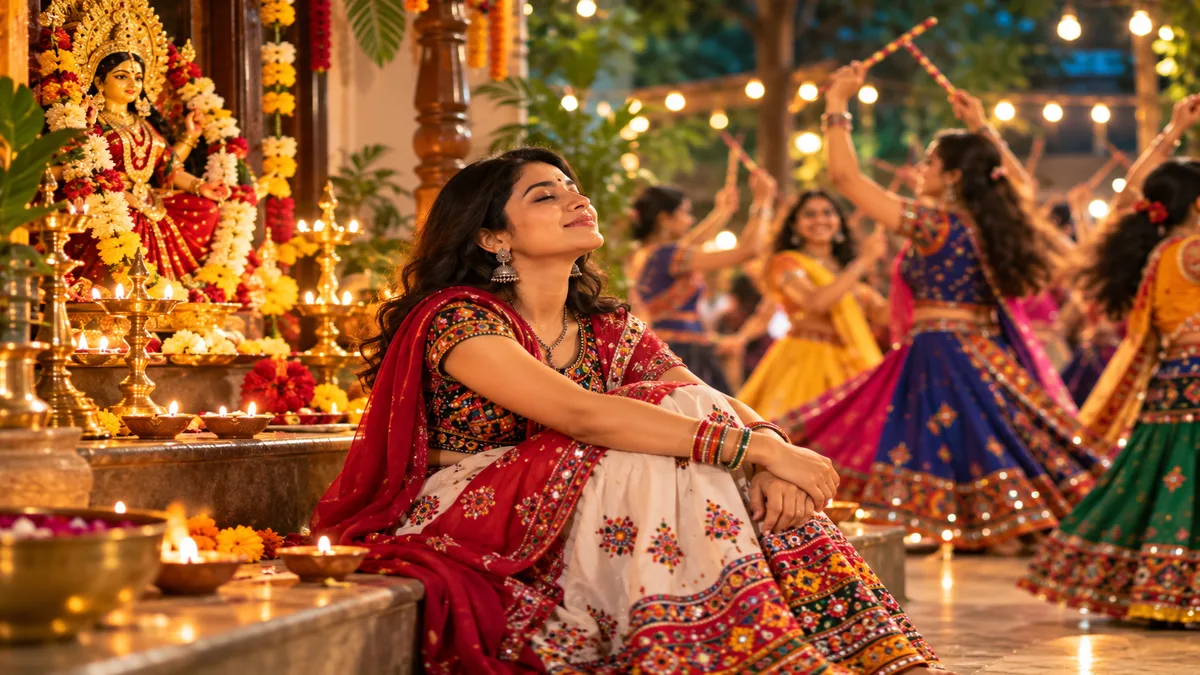
The room was buzzing with excitement. Colourful chaniya cholis lay across the bed, bangles chimed, and a group of youngsters hurried to get ready for an evening of Garba and Dandiya. Amid the laughter and last-minute preparations, one young woman sat quietly, unwilling to join the festivities.
For weeks, she had been feeling low. Messages went unanswered, activities she once enjoyed felt exhausting, and meeting friends seemed like an effort. While everyone around her appeared excited, she struggled to share their enthusiasm.
“Come along, just for a little while,” her friends urged gently. Eventually, she agreed.
At the venue, she stood at the edge of the dancing circle until a friend reached out her hand. She joined reluctantly, missed a few steps, laughed, tried again and gradually found the rhythm. Surrounded by music, movement and familiar faces, she experienced a moment of lightness she had not anticipated.
Her problems had not disappeared. But she felt connected, included and, for a while, less alone.
One evening of dancing cannot cure depression. Yet, the experience illustrates something important about mental wellness: our emotional lives are influenced not only by our thoughts, but also by our bodies, relationships, surroundings and everyday habits.
Could Ayurveda help us understand these experiences? Its concept of Manas, or the mind, and its understanding of the three gunas: Sattva, Rajas and Tamas, offer a traditional framework for reflecting on how we think, feel and respond to life.
Understanding Manas: The Ayurvedic Perspective
World Mental Health Day, observed on 10 October, reminds us of the importance of recognising emotional distress and making mental healthcare more accessible. For today’s young generation, academic pressure, career uncertainty, social media comparisons, relationship challenges and the expectation of always appearing happy can become difficult to navigate.
Ayurveda, India’s traditional system of health, recognises Manas as an integral dimension of well-being. It considers the mind in relation to the body, senses, habits, nourishment, sleep and conduct rather than in isolation. The Charaka Samhita, a foundational Ayurvedic text, discusses the relationship between the body, mind and senses in the pursuit of health.
A particularly interesting concept is that of the three gunas, described in Indian philosophical traditions, including Samkhya and the Bhagavad Gita, and relevant to Ayurvedic discussions of mental disposition.
Sattva represents clarity and harmony, Rajas activity and restlessness, and Tamas inertia and obscuration. These are not fixed personality types or medical diagnoses, but tendencies that offer a way to reflect on our mental states without judging ourselves or others.
Their contemporary relevance becomes clearer when we recognise them in familiar situations.
Rajas: When the Mind Cannot Switch Off
Consider a young professional who checks messages while eating, responds to emails late into the night and feels guilty whenever there is nothing to do. Even during a holiday, the mind remains occupied with deadlines, achievements and notifications.
This reflects a Rajasic tendency.
Rajas is associated with activity, ambition, desire and restlessness. Energy and motivation are essential for learning, working and creating; the challenge arises when constant activity leaves little room for rest or reflection.
Digital life can intensify this pattern. One video leads to another, online comparisons fuel insecurity, and the pressure to remain constantly available fragments our attention. We may be physically still while our minds continue racing.
The answer is not to abandon technology or ambition, but to use them more consciously. Eating without a screen, taking breaks between tasks, limiting late-night scrolling and spending time outdoors without checking the phone can help create space for attention and rest.
Navratri offers a different kind of engagement. Garba and Dandiya bring music, movement and collective participation together, allowing attention to settle on the rhythm, the steps and the people around us.
Being productive all the time is not the same as being mentally well.
Tamas: When Even Beginning Feels Difficult
A student postpones an assignment despite an approaching deadline. A young adult withdraws from friends because responding to messages feels exhausting. Someone who once enjoyed meeting people begins to lose interest in familiar activities.
Tamas is associated with inertia, heaviness and reduced clarity. As a philosophical concept, it can prompt us to reflect on patterns of disengagement and what might help us move forward.
But low mood is not laziness, and emotional distress should never be reduced to Tamas. Persistent sadness, loss of interest, fatigue or difficulty functioning can indicate depression or other health concerns and deserve appropriate professional assessment.
When we feel overwhelmed, a manageable first step may be more helpful than an ambitious plan. Opening the curtains, taking a short walk, preparing a meal or responding to a trusted friend can make re-engagement feel more possible.
The friends who invited the young woman to Dandiya did not demand that she become cheerful. They offered companionship and an opportunity to participate at her own pace. Their gesture reminds us that support does not always mean solving someone’s problems; sometimes, it begins with noticing, listening and making room for connection.
Anxiety, Grief and Trauma: Making Space for Difficult Emotions
Not all emotional distress looks the same. For one young person, it may appear as racing thoughts, constant worry and difficulty switching off. For another, it may be emotional heaviness, withdrawal or a struggle to find motivation. Grief following the loss of a loved one, a relationship breakdown or another significant life change can affect sleep, concentration and the ability to engage with everyday life.
Ayurveda’s understanding of Manas encourages us to consider the interplay of mental states, bodily health, daily routines and our surroundings. Its concepts of Rajas and Tamas offer a traditional vocabulary for reflecting on restlessness and inertia, but they should not be used to diagnose anxiety disorders, depression or trauma.
What can help us navigate difficult periods? Sometimes, it begins with restoring small anchors to the day: regular meals, adequate rest, gentle movement, a few minutes of quiet reflection and contact with someone we trust. Prayer, meditation or familiar cultural rituals may offer comfort to those who find meaning in them.
Grief is not an illness that must be overcome quickly. Nor can trauma be resolved simply through positive thinking, spiritual practice or greater self-discipline. Someone who has experienced trauma may find silence, meditation or crowded celebrations uncomfortable. Practices should be adapted to the individual’s needs and sense of safety.
Persistent anxiety, overwhelming grief or trauma-related symptoms deserve compassionate professional support. Ayurvedic and spiritual practices may complement appropriate care when suitable, but they should not replace psychological or psychiatric treatment.
Navratri’s lesson is not that celebration can erase emotional pain. It is that we can create spaces in which people feel safe enough to participate, speak honestly, take time for themselves and seek support without shame.
Sattva: Cultivating Clarity and Balance
Sattva is associated with harmony, clarity and discernment. In everyday life, it offers an image of a mind that can pause before reacting, recognise what deserves attention and respond to challenges with greater awareness.
Imagine a young employee receiving critical feedback. The immediate reaction may be anger, anxiety or self-doubt. With greater mental steadiness, there is room to consider the feedback, separate useful observations from unhelpful criticism and choose a response.
That pause can make a difference.
Cultivating greater clarity does not mean never experiencing anger, anxiety or disappointment. It means developing a more considered relationship with these experiences.
Regular sleep, balanced nourishment, meaningful activity, moderation and supportive relationships can form part of a broader approach to well-being. So can setting boundaries around work, being selective about online content and making time for quiet reflection.
Sattva is best understood as an aspiration towards balance, not a standard by which to judge ourselves. No one remains calm all the time, and emotional difficulties are not evidence of a spiritual or personal failure.
The most useful question is not whether we are Sattvik, Rajasic or Tamasic, but whether we can recognise what is happening within us and respond with greater awareness.
Why Rituals and Community Still Matter
Navratri is celebrated differently across India through Durga Puja, Garba and Dandiya, Golu and numerous regional traditions of Goddess worship. For some, it is primarily devotional; for others, it is a time for family, music, dance and community.
Meaningful rituals provide structure, while shared celebrations create opportunities for connection. Physical activity and supportive social relationships can contribute to general well-being, although their effects vary from person to person.
The circle of Garba offers a particularly powerful image. Each dancer participates individually, yet the celebration comes alive through collective movement. One need not dance perfectly to belong.
In a world that often measures young people by achievement, appearance and online approval, this offers a refreshing alternative: participation without the pressure to perform.
For one person, well-being may be nurtured by prayer or meditation; for another, by dancing, helping at a community event or sharing a meal with friends. There is no single experience that works for everyone. The value lies in finding meaningful ways to connect with ourselves and others.
Everyday Ways to Care for Manas
Ayurveda’s emphasis on daily living is reflected in concepts such as Dinacharya, or daily routine, and Sadvritta, broadly referring to sound conduct and ethical living. Their contemporary relevance lies not in following rigid rules, but in recognising how everyday habits shape our lives.
A few simple practices can help translate this wisdom into daily life:
Create pauses: Spend a few minutes in quiet reflection, prayer, meditation or slow breathing between demanding tasks.
Protect sleep: Establish a reasonably consistent sleep routine and reduce late-night screen use.
Eat mindfully: Make meals an opportunity to nourish the body rather than another task performed while scrolling.
Move with enjoyment: Walk, practise yoga, dance, cycle or play a sport. Physical activity need not become another performance target.
Be mindful of digital consumption: Notice how online comparisons and constant notifications affect attention and mood. Set boundaries that work for you.
Allow emotions their place: Acknowledge anxiety, sadness and grief without labelling yourself weak. Speak to someone you trust and seek professional help when distress persists.
Stay connected: Make time for genuine conversations, listen without judgement and reach out to friends who seem withdrawn.
These are supportive habits, not a guaranteed treatment or a substitute for professional care. Their purpose is to create room for greater awareness and steadiness amid the demands of daily life.
When the Music Fades
As Navratri ends, the decorations come down, the music grows quieter and familiar routines resume. What remains is an opportunity to carry its deeper lessons into everyday life.
For young people especially, this means challenging the expectation that one must always be productive, cheerful, socially active and in control. There is room for ambition and rest, solitude and companionship, celebration and silence.
When sadness, anxiety, loss of interest or emotional distress persists, seeking help from a qualified mental health professional is an important act of self-care. Ayurvedic and spiritual practices may provide meaning and complement a broader approach to well-being, but they should never replace appropriate mental healthcare.
Returning to the young woman at the Dandiya gathering, the most significant part of her experience was not that music made her problems disappear. It was that her friends noticed her withdrawal, invited her without judgement and reminded her that she belonged. Sometimes, what a person navigating anxiety, grief, emotional exhaustion or a difficult life transition needs is not advice or an insistence that they cheer up, but patient companionship, the freedom to express what they feel and reassurance that seeking help is not a sign of weakness.
Navratri celebrates the power of the Devi Ma (Divine Mother), whose many forms represent courage, wisdom, compassion and strength. These qualities can inspire not only personal reflection but also a more caring response to the emotional struggles of those around us. Ayurveda’s understanding of Manas invites us to pay attention to the relationship between our minds, bodies, habits and surroundings. Its concepts of Sattva, Rajas and Tamas encourage reflection, while its emphasis on balanced living reminds us to cultivate supportive routines. These traditional insights can sit alongside modern mental healthcare, not in place of it.
Perhaps the deeper lesson of Navratri is that strength does not mean never feeling vulnerable. It means having the courage to acknowledge what we feel, the wisdom to seek support and the compassion to stand beside someone who is struggling.
The music may fade, but these lessons can remain in the way we care for our minds, the relationships we nurture and the space we make for others to belong.