India halts IWT after Pahalgam attack; Simla agreement affected
June 24, 2026
  • Read Ecopy
  • Circulation
  • Advertise
  • Careers
  • About Us
  • Contact Us
Android AppiPhone AppArattai
Organiser
  • ‌
  • Bharat
    • Assam
    • Bihar
    • Chhattisgarh
    • Jharkhand
    • Maharashtra
    • View All States
  • World
    • Asia
    • Europe
    • North America
    • South America
    • Africa
    • Australia
  • Editorial
  • International
  • Opinion
  • RSS @ 100
  • More
    • Op Sindoor
    • Analysis
    • Sports
    • Defence
    • Politics
    • Business
    • Economy
    • Culture
    • Special Report
    • Sci & Tech
    • Entertainment
    • G20
    • Azadi Ka Amrit Mahotsav
    • Vocal4Local
    • Web Stories
    • Education
    • Employment
    • Books
    • Interviews
    • Travel
    • Law
    • Health
    • Obituary
  • Subscribe
    • Subscribe Print Edition
    • Subscribe Ecopy
    • Read Ecopy
  • ‌
  • Bharat
    • Assam
    • Bihar
    • Chhattisgarh
    • Jharkhand
    • Maharashtra
    • View All States
  • World
    • Asia
    • Europe
    • North America
    • South America
    • Africa
    • Australia
  • Editorial
  • International
  • Opinion
  • RSS @ 100
  • More
    • Op Sindoor
    • Analysis
    • Sports
    • Defence
    • Politics
    • Business
    • Economy
    • Culture
    • Special Report
    • Sci & Tech
    • Entertainment
    • G20
    • Azadi Ka Amrit Mahotsav
    • Vocal4Local
    • Web Stories
    • Education
    • Employment
    • Books
    • Interviews
    • Travel
    • Law
    • Health
    • Obituary
  • Subscribe
    • Subscribe Print Edition
    • Subscribe Ecopy
    • Read Ecopy
Organiser
  • Home
  • Bharat
  • World
  • Operation Sindoor
  • Editorial
  • Analysis
  • Opinion
  • Culture
  • Defence
  • International Edition
  • RSS @ 100
  • Magazine
  • Read Ecopy
Home Politics

Pakistan rattled as India puts IWT on abeyance post Pahalgam terror attack, Simla agreement also affected

India’s decision to suspend the Indus Waters Treaty after the Pahalgam attack marks a strategic shift in bilateral ties with Pakistan, challenging outdated frameworks like the Simla Agreement. As terrorism continues unchecked, India signals it will no longer adhere to treaties that ignore ground realities

Ameya KulkarniAmeya Kulkarni
Jun 15, 2025, 01:00 pm IST
in Politics, Bharat, World, South Asia, Opinion
Follow on Google News
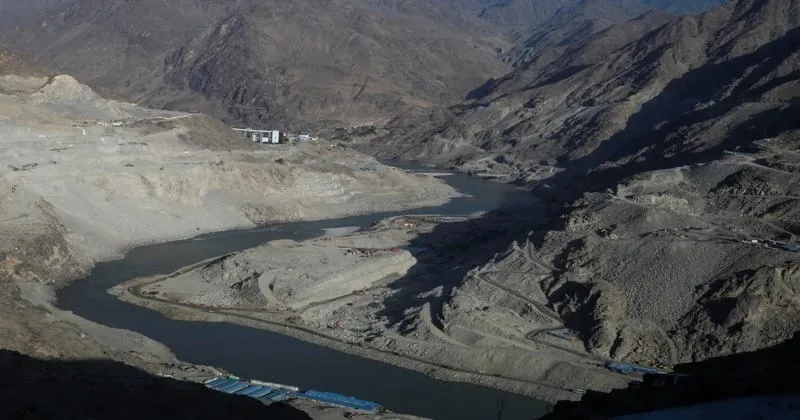
Representative image

Representative image

FacebookTwitterWhatsAppTelegramEmail

One of the measures India undertook in the aftermath of the Pahalgam attack (22 April 2025) was to keep in ‘abeyance’ the 1960 Indus Waters Treaty (IWT). In response, Pakistan announced that it would place in abeyance its participation in all bilateral agreements with India, including the 1972 Simla Agreement. The central point is that while the Pahalgam attack was the inflexion point for India on the IWT, Pakistan merely mirrored India’s actions without offering any rationale. To place ‘ in abeyance’ implies suspending all processes of bilateral engagement under the Treaty, including the World Bank’s ‘mediation’ in the process. This is a diplomatic decision taken because of Pakistan’s continued intransigence on terrorism. The absence of a specific provision in the treaty allowing such a move does not render India’s actions bad in law, as has been claimed by Pakistan. On the contrary, Islamabad’s consistent violations of the Simla Agreement and other bilateral pacts make a mockery of the very essence of international law and practice.

The IWT has always favoured Pakistan and, in many ways, has been made obsolete by modern technology—making its revision long overdue. On two prior occasions, in January 2023 and then in September 2024, India requested a “review and modification” of the IWT, but did not hear back from Pakistan. Therefore, placing the IWT in abeyance now provides an opportunity to effectively curtail the flow of water to Pakistan as much as possible. One of the first responses to India’s action on the IWT post- Pahalgam saw Syed Ali Murtaza, Pakistan’s Water Resources Secretary, reaching out to his Indian counterparts, expressing readiness to engage in discussions on clauses of the Treaty which India finds ‘objectionable’.

Islamabad has been rattled by the announcement of keeping the treaty in abeyance, as the move signals that India is ready to take unilateral steps without batting an eyelid. External Affairs Minister (EAM) S. Jaishankar has made it clear that India is only willing to talk ‘terror’ with Pakistan, and that no discussions on the IWT would be held anytime soon. Jaishankar stated, “The Indus Waters Treaty is held in abeyance and will continue to be held in abeyance until the cross-border terrorism by Pakistan is credibly and irrevocably stopped.”

In January 2025, the ‘Neutral Expert’ appointed by the World Bank at India’s request stated that he was ‘competent’ to adjudicate the differences between India and Pakistan on the Kishenganga and Ratle Hydro Electric Projects (HEPs). India has thus far not participated in the proceedings of the “illegally constituted” Court of Arbitration in The Hague, initiated by the World Bank at Pakistan’s request. Logically, all proceedings between both countries under the IWT should automatically be held in abeyance. World Bank President Ajay Banga recently clarified that as the Bank was only a facilitator, it would not “step in to fix” India’s suspension of the treaty. Notably, in 2016, the World Bank itself chose to ‘pause’ the working of the treaty to allow both countries to find an amicable solution to their differences.

Therefore, the question arises as to the basis for India’s actions. The 1969 Vienna Convention on the Law of Treaties (VCLT) offers some guidance on this issue. Article 62 alludes to a “fundamental change in circumstances” since the signing of the treaty as a valid ground for termination. Several factors, including technological advancements and climate change, render the original terms of the IWT void. Additionally, Pakistan’s sponsorship of terrorism and its continuing impact on India reinforces the argument that India would be justifies in invoking Article 62(3) of the Convention— which states: “…… a party may invoke a fundamental change of circumstances as a ground for terminating or withdrawing from a treaty; it may also invoke the change as a ground for suspending the operation of the treaty.” This is why in 2023 and 2024, India sent notices to Pakistan, seeking its cooperation in modifying the treaty – highlighting concerns over demographic changes, environmental issues, the need for clean energy development, as well as the impact of cross-border terrorism.

These concerns, in turn, raise the issue of increasing India’s capacity to store and utilise the waters of the rivers to the maximum extent possible, thereby limiting their flow into Pakistan. Many projects, including the Ratle HEP, are underway, and in due course, these will reduce the downstream flow of water into Pakistan. However, disputes between states such as Punjab and Haryana over the sharing of river water risk undermining the national interest. Another priority must be to constitute an empowered committee to monitor progress on all Indus Basin projects. Its remit must include project monitoring, ensuring timely completion , enhancing storage capacity, and optimising irrigation potential. This is an action that Prime Minister Narendra Modi can initiate promptly, with the Minister for Jal Shakti serving as the chairman of the Committee.

Pakistan appears to be under the illusion that a tit-for-tat suspension of all treaties signed with India will somehow counterbalance India’s decision to place the IWT ‘in abeyance’. The Simla Agreement, signed in 1972, provides the basis for the conduct of bilateral relations between India and Pakistan. Its suspension means that both sides do not recognise the Line of Control (LoC). This suits Pakistan, as it sends terrorists across the LoC and simultaneously claims that parts of the International Boundary are merely a ‘ working boundary’. This kind of perfidy is best treated with a cold shoulder. For India, the suspension of the Simla Agreement opens the door to militarily modify or alter the LoC whenever it chooses. This, however, is a subject of another analysis.

Post-1972, it was Pakistan which violated the clause on the non-use of force – Article 1 (VI) of the Simla Agreement – by sending terrorists into Jammu and Kashmir, and eventually into the Indian heartland. Therefore, India is justified in maintaining that the only issue worth discussing with Pakistan is terrorism. Another matter that must remain on the table is the Pakistani retreat from areas that today constitute Pakistan-occupied Jammu and Kashmir (PoJK).

While there are several bilateral agreements between India and Pakistan, the Simla Agreement and IWT remain the most important. India’s call for the revision of the IWT is based on practical considerations. By the same logic, New Delhi must now also consider seeking a revision of the Simla Agreement.


Topics: Indus Waters TreatyPahalgam AttackIndia-Pakistan tensionsSimla AgreementIWT Abeyancecross border terrorism
ShareTweetSendShareSend
✮ Subscribe Organiser YouTube Channel. ✮
✮ Join Organiser's WhatsApp channel for Nationalist views beyond the news. ✮
Previous News

Balancing the Separation of Power: Working within the “Lakshman Rekha”

Next News

Odisha: CRPF jawan injured in Sundargarh IED blast succumbs to injuries

Related News

India calls Indus Waters Treaty outdated at UNHRC, says Pakistan cannot seek cooperation while exporting terror

“Indus Waters Treaty outdated”: India slams Pakistan at UN for “exporting terror”

Saurav Das, Chief Spokesperson of CJP

Exposing CJP’s Saurav Das: Inside his controversial commentary on Article 370, Umar Khalid & nationalism

NHPC CMD Bhupender Gupta inaugurated construction activities of the 240 MW Uri-I Stage-II Hydroelectric Project in Uri

J&K eyes round-the-clock power supply: NHPC begins work on 240 MW Uri-I stage II project

Ops Sindoor Anniversary: Revisiting India’s largest multi-domain military strike against terrorism in Pakistan

PM Modi changes display picture on X to 'Operation Sindoor' on anniversary of military operation

Operation Sindoor Anniversary: PM Modi changes X display picture to honour Indian Armed Forces’ valour

First Anniversary of Operation Sindoor: The Doctrinal shift

Load More

Latest News

Uttarakhand Government replaces Madrasa Board with Unified Minority Education framework

Uttarakhand Ends Madrasa Board Era: New Minority Education Authority to take over from July 1

As growth slows and business failures mount, China’s debt enforcement system is turning financial distress into long-term social exclusion

China’s debt blacklist traps millions of citizens in financial ruin, exposing the human cost of a slowing economy

Keralam Chief Minister VD Satheeshan (Left Side)

Keralam: CM Satheeshan’s new liquor policy proposal triggers internal conflict within Congress

Suhail arrested for plotting terror attack on Ayodhya Ram Mandir

Karnataka: Terror plot targeting Ayodhya Ram Mandir unearthed after arrest of suspected terrorist Suhail

Ketan Vishal Agarwal’s 400-foot fall exposes alleged plot by Siya Goyal and Chetan Chaudhary

Pune Fort Murder: Ketan Agarwal thrown off Lohagad Fort; Fiancee Siya & lover Chetan arrested for plotting the killing

Bangladeshi infiltrators arrested by Assam Police

Assam Police arrests 10 Bangladeshi infiltrators from Guwahati lodge; 33 arrested in two weeks 

Punjab CM Bhagwat Mann

Bhagwant Mann Video Row: Gurugram police claim Punjab officers paid Rs 10 lakh to tailor forensic report

France’s annual music festival turns into night of fear amid alleged syringe attacks, sexual assaults & street violence

France Music Festival Violence: Women stabbed, drugged and sexually assaulted; 243 arrests made

Can Karnataka bypass SIR rules? Residence certificate move sparks citizenship debate

Karnataka SIR Controversy: Residence certificate plan unlikely to pass ECI’s voter verification test

The US Ambassador to India Sergio Gor and Tamil Nadu Chief Minister Joseph Vijay; The tweet of BJP Tamil Nadu State Secretary Ashvathaman.

BJP Tamil Nadu urges Jaishankar to intervene over US Ambassador’s ‘two nations’ remark after meeting CM Joseph Vijay

Load More
  • Privacy
  • Terms
  • Cookie Policy
  • Refund and Cancellation
  • Delivery and Shipping

© Bharat Prakashan (Delhi) Limited.
Tech-enabled by Ananthapuri Technologies

  • Home
  • Search Organiser
  • Bharat
    • Assam
    • Bihar
    • Chhattisgarh
    • Jharkhand
    • Maharashtra
    • View All States
  • World
    • Asia
    • Africa
    • North America
    • South America
    • Europe
    • Australia
  • Editorial
  • Operation Sindoor
  • Opinion
  • Analysis
  • Defence
  • Culture
  • Sports
  • Business
  • RSS @ 100
  • Entertainment
  • More ..
    • Sci & Tech
    • Vocal4Local
    • Special Report
    • Education
    • Employment
    • Books
    • Interviews
    • Travel
    • Health
    • Politics
    • Law
    • Economy
    • Obituary
  • Subscribe Magazine
  • Read Ecopy
  • Advertise
  • Circulation
  • Careers
  • About Us
  • Contact Us
  • Policies & Terms
    • Privacy Policy
    • Cookie Policy
    • Refund and Cancellation
    • Terms of Use

© Bharat Prakashan (Delhi) Limited.
Tech-enabled by Ananthapuri Technologies