New Delhi: A woman fighter pilot of the Indian Air Force was part of the strike package that targeted the Lashkar-e-Taiba (LeT) headquarters at Muridke during Operation Sindoor, marking one of the clearest indications yet of women officers taking part in India’s frontline combat missions against Pakistan-based terror infrastructure.
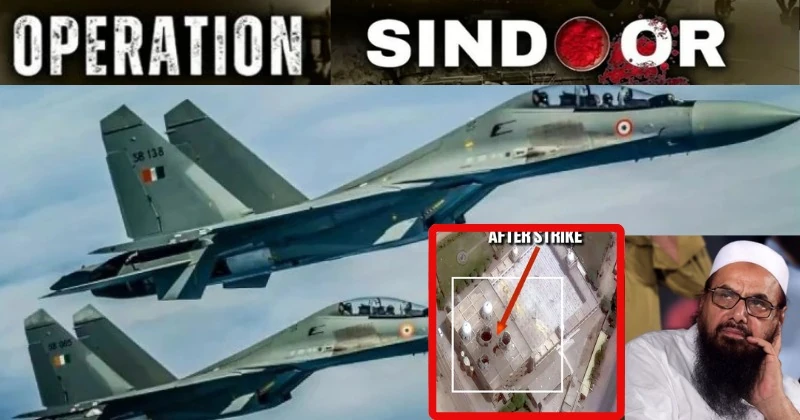
According to defence and security sources, the woman Flight Lieutenant flew a Su-30MKI as part of the Indian Air Force mission that struck the LeT facility at Muridke in Pakistan on May 7, 2025. The precise weapon used by the aircraft during the strike remains classified.
The revelation adds a significant new dimension to Operation Sindoor, which saw the Indian Armed Forces launch precision strikes against nine terror infrastructure sites in Pakistan and Pakistan-occupied J&K (PoJK) following the April 22, 2025, Pahalgam terror attack, in which 26 people were killed.
Woman pilot among those who struck terror headquarters
The Muridke facility, known as Markaz Taiba, has long been associated with Lashkar-e-Taiba, the Pakistan-based terror organisation responsible for several major attacks against India. The site was among the most significant targets struck during the opening phase of Operation Sindoor.
Defence sources said the woman officer was flying a Su-30MKI, one of the IAF’s principal frontline fighter aircraft. The platform can employ advanced air-to-ground weapons, including the BrahMos and Rampage missiles.
However, the sources declined to disclose which weapon was used in the particular Muridke strike, citing the classified nature of operational details. The sources also indicated that Pakistan could have recovered missile debris from the targeted locations and attempted to determine the identity and origin of the weapons employed during the strikes.
The disclosure is particularly significant because it establishes that women fighter pilots were not merely involved in ceremonial, representational or support roles during Operation Sindoor. They were part of actual combat missions against terrorist infrastructure and, subsequently, Pakistani military targets.
Women flew Su-30MKI and Rafale
According to the defence sources, more than one woman fighter pilot participated in Operation Sindoor. Women officers reportedly operated both the Su-30MKI and Rafale fighter aircraft during the 88-hour confrontation.
In some missions, women officers served as pilots, while in others they performed the role of Weapon System Operators (WSOs).
The operational distinction between male and female fighter pilots is effectively eliminated once officers enter the fighter stream, a source explained. They undergo the same training, meet the same operational standards and undertake the same responsibilities. The role of women therefore extended far beyond the public face of the operation.
During the initial days of Operation Sindoor, Colonel Sofiya Qureshi and Wing Commander Vyomika Singh became prominent representatives of the Indian Armed Forces during official briefings. Their presence symbolised the growing role of women in India’s military.
The latest revelation, however, shows that women officers were simultaneously operating behind the scenes in India’s frontline combat missions.
Muridke among nine targets hit on May 7
Operation Sindoor began in the early hours of May 7, 2025, when Indian forces targeted nine terror infrastructure sites in Pakistan and PoJK. The strikes were presented by the Indian government as focused attacks on terrorist facilities linked to the planning and direction of attacks against India. Among the nine locations were Markaz Taiba at Muridke, associated with Lashkar-e-Taiba, and Markaz Subhanallah at Bahawalpur, associated with Jaish-e-Mohammed.
The IAF was responsible for striking the major targets at Muridke and Bahawalpur, while the remaining locations were engaged by the Indian Army using loitering munitions and long-range artillery.
The selection of Muridke carried considerable significance. The sprawling facility had for years been linked to Lashkar-e-Taiba and its leadership and training infrastructure.
By striking the site, India demonstrated that its response to the Pahalgam attack would extend beyond conventional retaliation and directly target the infrastructure of Pakistan-based terror organisations.
From Balakot to Operation Sindoor
Operation Sindoor represented a significant expansion in the scale of India’s response to cross-border terrorism compared with the 2019 Balakot air strike. While the Balakot operation targeted a Jaish-e-Mohammed facility, Operation Sindoor involved strikes on multiple terror infrastructure sites spread across Pakistan and PoJK.
The operation subsequently developed into a wider military confrontation, with Pakistan retaliating against India and Indian forces targeting Pakistani military infrastructure.
The IAF employed a range of long-range precision weapons during the conflict. Su-30MKIs were also reportedly used for long-range strikes involving BrahMos missiles against Pakistani military targets. The participation of women fighter pilots in these missions demonstrates the extent to which India’s combat aviation stream has evolved.
Classified weapons, visible message
While the identity of the woman officer and the precise weapon used during the Muridke strike have not been disclosed, the significance of the revelation extends beyond the individual mission.
The Su-30MKI is capable of carrying some of India’s most sophisticated air-to-ground weapons. Yet defence sources have deliberately kept details of the particular weapon employed during the Muridke mission classified.
The operational secrecy states the nature of mission, the focus was on achieving the military objective rather than publicising individual contributions. The fact that a woman officer was part of the strike package nevertheless carries a powerful message about the changing profile of India’s combat forces.
Women fighter pilots are no longer simply symbols of inclusion within the armed forces. They are increasingly being integrated into the same frontline operational structures as their male counterparts.
Pressure mounted as conflict expanded
The confrontation continued for several days after the initial strikes, with India subsequently targeting Pakistani military infrastructure as hostilities escalated. On May 10, Pakistan’s Director General of Military Operations contacted his Indian counterpart at around 3:35 pm.
India later announced that the two sides had agreed to halt military action across land, air and sea from 5 pm.
The events of those four days demonstrated the growing importance of long-range precision strike capabilities and integrated air operations in modern warfare. They also provided a rare glimpse into the operational role being played by India’s women fighter pilots.
Documentary sheds light on undisclosed dimensions
The latest disclosure comes shortly after the release of Discovery’s two-part documentary “Declassified: Operation Sindoor,” which premiered on August 15.
The documentary provides a behind-the-scenes account of the planning and execution of the operation and features military personnel and others associated with the campaign. It also features a woman officer whose identity has been concealed.
The documentary, coupled with information emerging from defence sources, has brought greater attention to the previously undisclosed participation of women in India’s combat missions during Operation Sindoor.
While the public saw women officers representing the Indian Armed Forces during official briefings, women fighter pilots were simultaneously flying India’s frontline combat aircraft and participating in missions against terror infrastructure and military targets.