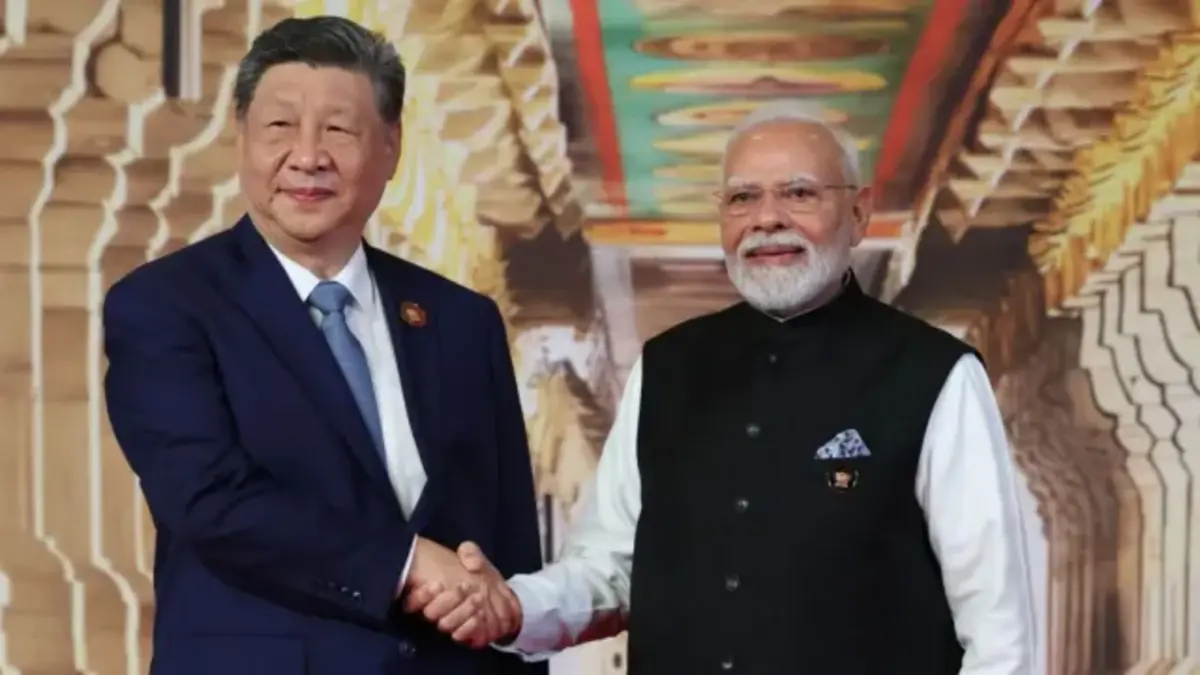
NEW DELHI: The BRICS New Delhi Declaration illustrated significant diplomatic boldness and strategic firmness of India as China signed the statement condemning cross-border terrorism and the heinous Pahalgam terror attack. This also reflects India’s persistent fight against terrorism, its sponsorers and supporters. As Beijing who apparently share, visible diplomatic and military bonhomie with Pakistan acknowledged and inked the declaration, it sends biggest message across the geopolitical mosaic about India’s diplomatic leverage, potential to converge all parties on same ground and seal victory against illicit acts.
The BRICS member-states condemned the April 22, 2025 Pahalgam terror attack that killed 26 people. The BRICS countries also called for “zero tolerance” against terrorism, including the cross-border movement of terrorists, terror financing and safe havens. The consensus is particularly significant for India as China, Pakistan’s long-standing strategic partner, joined the declaration and voiced suppot for India’s counter-terror efforts.
India’s diplomatic ability to endorse China for a document, which is evidently pointed towards Pakistan and its terror crimes speaks big about New Delhi’s strategic propositions in the regional and collective security architecture, in a landscape where, Beijing and Islamabad have steep diplomatic and military ties and in an era where, it is said that China assisted Pakistan during Operation Sindoor with critical military and intelligence inputs.
New Delhi, thus navigated amid this deep Beijing-Islamabad ties and ensured that China signs the document on condemning Pahalgam terror attack and acknowledges to cooperate on counter-terrorism. Indeed, a big strategic posture by India, resonating its unequivocal commitment to uproot terrorism.
India outrightly mentions Pahalgam attack; Members reaffirm to combat terror network
The 140-point New Delhi Declaration does not merely issue a generic condemnation of terrorism. It specifically refers to the April 22, 2025 attack in Jammu and Kashmir’s Pahalgam, in which 26 people were killed, and condemns the attack in the strongest terms. “We express strong condemnation of any acts of terrorism as criminal and unjustifiable, regardless of their motivation, whenever, wherever and by whomsoever committed”, the declaration stated.
The BRICS leaders reaffirmed their commitment to combating terrorism in all its forms and manifestations, including the “cross-border movement of terrorists, terrorism financing and safe havens”. The grouping also called for accountability for those involved in terrorist activities and their supporters, while urging concerted action against all terrorists and terrorist entities designated by the United Nations.
For New Delhi, the language is significant because it closely reflects concerns India has repeatedly raised over terrorism emanating from across its borders. Etching such strong statements, by having China on the table, apparently pakistan’s strategic partner, is a remarkable strategic gesture by New Delhi.
China joins consensus despite close Pakistan ties
China’s endorsement adds particular diplomatic weight to the declaration. Beijing remains one of Islamabad’s closest strategic partners, with extensive defence, economic and infrastructure cooperation, including through the China-Pakistan Economic Corridor.
The significance is heightened by the fact that India has linked the Pahalgam attack to Pakistan-based terror networks. The National Investigation Agency has chargesheeted Pakistan-based Lashkar-e-Taiba and The Resistance Front in connection with the case, describing them as involved in planning, facilitating and executing the attack.
China had itself condemned the Pahalgam attack shortly after it occurred. However, Beijing adopted a different position after India launched Operation Sindoor on May 7, 2025. It expressed regret over India’s military action. Despite India launching precision attacks on illicit terror networks and ensuring zero attacks on civilians or no collateral damage, Pakistan escalated the conflict and attacked civilian, military spaces of India. It is said that China rendered significant military assistance to Islamabad during its attacks against India during Operation Sindoor
The New Delhi Declaration therefore marks an important distinction: It places the attack within a collective BRICS framework and responsibility for countering terrorism, terror financing and safe havens for terror outfits.
Zero tolerance & Convention on International Terrorism under UN
The BRICS leaders reiterated that terrorism must not be associated with any religion, nationality, civilisation or ethnic group and rejected double standards in countering terrorism. “We urge to ensure zero tolerance for terrorism and reject double standards in countering terrorism”, the declaration mentioned.
The document also stresses that states have the primary responsibility for combating terrorism and calls for those involved in terrorist activities and their support networks to be held accountable and brought to justice in accordance with relevant national and international law.
The leaders further called for the expeditious finalisation and adoption of the Comprehensive Convention on International Terrorism under the United Nations framework. For India, the emphasis on accountability and support networks is important because it broadens the focus beyond individual terrorists to the wider ecosystem that enables terrorism to operate.
BRICS condemns & flags radicalisation of young people
The declaration goes beyond conventional counter-terrorism measures by highlighting the growing challenge of extremism and radicalisation among younger generations. BRICS leaders stressed the importance of countering extremism and radicalisation, particularly among young people, and called for enhanced cooperation between member countries and their competent authorities, including through the sharing of best practices.
The emphasis comes amid the expanding use of digital platforms and online communication by extremist organisations for propaganda, recruitment and radicalisation. Pakistan-affiliated terror groups, specifically hires young, innocent men from PoJK and Kashmir regions. It radicalises them and uses as weapons against India. In this direction, BRICS statement on radicalisation of young people, seeks importance.
The leaders also welcomed the activities of the BRICS Counter-Terrorism Working Group and its five subgroups operating under the BRICS Counter-Terrorism Strategy, Counter-Terrorism Action Plan and Counter-Terrorism Working Group Position Paper.
Terror financing, illicit financial flows under focus
Another important element is the declaration’s focus on the financial infrastructure supporting terrorism and organised crime. BRICS leaders expressed concern over terrorism financing alongside illicit financial flows, money laundering, corruption, trafficking in firearms and persons, drug-related proceeds, illegal virtual asset flows and financial fraud linked to organised crime.
The declaration also flags cross-border scam networks and “so-called scam compounds”, highlighting the misuse of digital technologies and payment systems. The grouping thus, called for stronger information-sharing, data analytics and capacity-building to identify and disrupt money laundering schemes. It also stressed greater cooperation among financial intelligence units, law enforcement agencies, customs and tax authorities, telecom providers and technology platforms.
Second consecutive reference to Pahalgam attack by BRICS
The New Delhi Declaration is also notable because it follows the BRICS Rio de Janeiro declaration of July 2025, which similarly condemned the April 22, 2025 Pahalgam attack.
The repeated reference means the attack has remained part of the BRICS counter-terrorism agenda despite differences among member states on wider geopolitical and security issues. India’s ability to secure consensus on the issue is particularly notable given the presence of China and other countries with close ties to Pakistan within the grouping.