Operation Sindoor: Dharma, danda and drones
June 24, 2026
  • Read Ecopy
  • Circulation
  • Advertise
  • Careers
  • About Us
  • Contact Us
Android AppiPhone AppArattai
Organiser
  • ‌
  • Bharat
    • Assam
    • Bihar
    • Chhattisgarh
    • Jharkhand
    • Maharashtra
    • View All States
  • World
    • Asia
    • Europe
    • North America
    • South America
    • Africa
    • Australia
  • Editorial
  • International
  • Opinion
  • RSS @ 100
  • More
    • Op Sindoor
    • Analysis
    • Sports
    • Defence
    • Politics
    • Business
    • Economy
    • Culture
    • Special Report
    • Sci & Tech
    • Entertainment
    • G20
    • Azadi Ka Amrit Mahotsav
    • Vocal4Local
    • Web Stories
    • Education
    • Employment
    • Books
    • Interviews
    • Travel
    • Law
    • Health
    • Obituary
  • Subscribe
    • Subscribe Print Edition
    • Subscribe Ecopy
    • Read Ecopy
  • ‌
  • Bharat
    • Assam
    • Bihar
    • Chhattisgarh
    • Jharkhand
    • Maharashtra
    • View All States
  • World
    • Asia
    • Europe
    • North America
    • South America
    • Africa
    • Australia
  • Editorial
  • International
  • Opinion
  • RSS @ 100
  • More
    • Op Sindoor
    • Analysis
    • Sports
    • Defence
    • Politics
    • Business
    • Economy
    • Culture
    • Special Report
    • Sci & Tech
    • Entertainment
    • G20
    • Azadi Ka Amrit Mahotsav
    • Vocal4Local
    • Web Stories
    • Education
    • Employment
    • Books
    • Interviews
    • Travel
    • Law
    • Health
    • Obituary
  • Subscribe
    • Subscribe Print Edition
    • Subscribe Ecopy
    • Read Ecopy
Organiser
  • Home
  • Bharat
  • World
  • Operation Sindoor
  • Editorial
  • Analysis
  • Opinion
  • Culture
  • Defence
  • International Edition
  • RSS @ 100
  • Magazine
  • Read Ecopy
Home Bharat

Operation Sindoor: Dharma, danda and drones

An intense situation brings out the either the best or worst in us. Either way, the truth will be out. In a war like situation like operation Sindoor, Bharat showed the world her true capabilities, that it is not going to bow down to others now no matter the unscrupulous attempts of our adversaries

Prof Manoj Sinha & Ramanand SharmaProf Manoj Sinha & Ramanand Sharma
May 26, 2025, 07:40 pm IST
in Bharat, Opinion
Follow on Google News
FacebookTwitterWhatsAppTelegramEmail

War, in the conscience of a modern state, is never the preferred path. It carries with it the burden of destruction, the collapse of order, and the unravelling of human progress. Yet, history teaches us that peace sometimes emerges only through the crucible of conflict. The irony of war lies also in its unintended gifts. Some of humanity’s most significant inventions: wristwatches, life-saving medicines, X-ray, GPS and internet owe their origins to warring times. Even the sacred Hindu scripture, the Bhagavad Gita, was revealed amidst the echoes of conch shells and war drums on the fields of Kurukshetra. It is there that Bhagwan Krishna, embodying both divine wisdom and political realism, delivered the essence of Dharma. Peace must be pursued with all effort, but when righteousness is threatened, war must not be shunned, it must be embraced as a moral duty.

As realpolitik and restraint form the basis of Bharatiya policy, it is a long-standing desire of Bharat to maintain peace with Pakistan. Often, this kindness has been falsely seen as a sign of weakness. Infiltrations, attacks and provocations have continued from Pakistan. When terrorists arrived in Pahalgam and killed Hindus for no reason, it went beyond just a terrorist attack. It signalled that war had been declared. Once peace is trampled upon in such a cruel way, a nation has to act, not out of anger, but to make things right again. Bharat was shaken by the events of the Pahalgam massacre. Even compared to the actions of a rogue state like Pakistan, this brutality was completely out of the ordinary. It was necessary to respond steadily and decisively, at least until we reached the point of an all-out war. Bharat avoided fighting war and instead preferred subduing the enemy through strategy. In quick succession, Bharat broke the Indus Waters Treaty, lowered diplomatic relations and blocked trade and visas. Stopping the flow of Pakistani content, influencers and media forced the adversary to face isolation in diplomatic matters and the economy.

The Bharatiya Stand

Still, the strongest impact was made by Operation Sindoor. Military operations deep within Pakistan’s borders were carried out by flying jets. Bharat deployed drones and missiles to attack and destroy not just terrorists, but their supporters as well, without soldiers crossing over the Pakistani border. The time bombings were carried out against nine major terror camps and in most cases, their reactions from Pakistan were stopped. It was obvious to all that Bharat would not let the killers of its people go unpunished, and allow the wiped sindoor of widows go unacknowledged. The strike by Bharat caused disturbances in Sindh and Balochistan, making it harder for Pakistan to stay stable. At the same time, New Delhi chose to exercise restraint, skipping civilian bombings and no effort to take over part of the territory. This discipline earned Bharat rare global support, even silencing traditionally critical voices like the OIC.
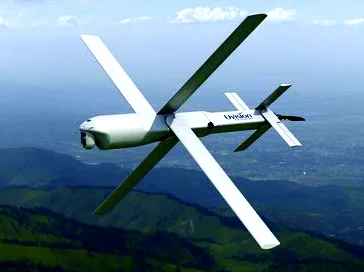
SkyStriker Drones Used In Operation Sindoor

Bharatiya diplomats leveraged international forums to expose Pakistan’s terror links, firmly branding it a state sponsor of terrorism. Meanwhile, carefully curated high-definition footage from the battlefield attacking terrorist camps dismantled Pakistan’s usual victimhood narrative. Bharatiya strikes extended far beyond the borders, crippling key airbases in Skardu, Jacobabad, Bholari, and even near Islamabad. Within 72 hours, Bharat demonstrated it could reach and breach every corner of nuclear-armed Pakistan, using its own advanced weaponry. Chinese, Turkish and US proved ineffective against Bharat’s air defenses, underscoring its indigenous strength. Interpreting Sun Tzu through a modern lens, Bharat executed a strategy of decapacitation, degradation, and deterrence, with surgical precision and minimal civilian harm.

The Might of Bharat

During this conflict, one of Bharat’s most significant—yet often overlooked—strengths was its internal unity. In contrast to the domestic disarray seen during the 1962 war with China or the politically charged atmosphere of the Kargil conflict in 1999, this time the nation stood remarkably united. Civil society, political opposition, and the Bharatiya diaspora found common ground, reflecting a rare sense of national cohesion. Bharat’s traditional stance of strategic restraint appeared to have transformed into a more assertive posture. The message sent to the world was unambiguous: Bharat would no longer be cowed by the specter of nuclear threats or suffer the slow drain of hybrid warfare without response. Pakistan’s military establishment and its intelligence agency, the ISI, came out of the confrontation weakened and discredited. Meanwhile, Bharat’s homegrown defense technologies  demonstrated impressive performance—often surpassing imported systems—capturing the attention of global defense markets.

As expected, China aligned itself with Pakistan, guided by its strategic interests in the region. The United States, staying true to its pattern of diplomatic ambiguity, avoided siding with India and instead urged both parties to halt hostilities. However, India notably refused to use the word “ceasefire,” preferring instead to describe the development as a “mutual understanding” between the two countries. Predictably, Pakistan declared victory—a familiar script—likely preparing to shower its military brass with honours. In Bharat, public sentiment was mixed: while there was a sense of national pride, there was also a subtle frustration that a decisive opportunity to reshape the regional power dynamic had perhaps been missed. Yet Bharat’s goal was never about capturing territory; it was about deterrence, delivering a strong enough response to make any future provocation from Pakistan exceedingly costly. Remarkably, daily life in most parts of Bharat remained unaffected by the conflict. Flights operated as usual, the skies remained open, and the rhythm of everyday life continued with calm resolve, unfazed by the backdrop of war.

Bharat: A Formidable Force

In the true Kautilyan spirit, Bharat wielded the Danda, without overreach, guided by the principles of Dharmayuddha. Strategic measures like the suspension of the Indus Waters Treaty, trade embargoes, and cultural bans remain firmly in place, upheld under a carefully calibrated “mutual understanding,” not formal peace. Bharat continues to reject any third-party mediation on Kashmir, including the US overtures, staying consistent with its sovereign stance. The inauguration of the BrahMos production facility in Lucknow reinforces Bharat’s emergence as a formidable defense power, sending a clear signal to global markets about its indigenous capability.

Going forward, Bharat has drawn a red line that any act of terror will be treated as an act of war. Bharat did not seek this war. However, when she was forced into it, it did not just respond. She stood tall without any foreign support and will continue to do so as Operation Sindoor is far from over.

Topics: hindu scripturePakistan'sOperation SindoorSindh and Balochistan
ShareTweetSendShareSend
✮ Subscribe Organiser YouTube Channel. ✮
✮ Join Organiser's WhatsApp channel for Nationalist views beyond the news. ✮
Previous News

From Vulnerability to Vitality: India’s economic surge under PM Modi; From fragile ten to formidable four

Next News

“CPEC is built on Baloch blood and displacement”: Qazi Mohammad Rehan, Baloch National Movement leader

Related News

India's firm national security response after Operation Sindoor reshaped ties with Turkey, forcing Celebi's exit from the country's aviation sector

Operation Sindoor Impact: Turkish firm Celebi Aviation says India exit erased Rs 4,700 crore overnight

Chinese President Xi Jinping, Russian President Vladimir Putin and Prime Minister Narendra Modi

China’s New Tone Towards India: Tactical shift or strategic necessity? What Beijing’s push for RIC ties really signals

Saurav Das, Chief Spokesperson of CJP

Exposing CJP’s Saurav Das: Inside his controversial commentary on Article 370, Umar Khalid & nationalism

As Khalistani networks seek new platforms beyond the West, Azerbaijan has emerged as a key venue for conferences, campaigns and narratives aligned with the Pakistan-Turkey axis against India.

Khalistan’s New Grazing Ground: Azerbaijan emerges as new hub for Turkey-Pakistan backed anti-India networks

Bangladesh’s reported JF-17 push has triggered fresh scrutiny after India’s Ops Sindoor exposed the vulnerabilities of Pakistani-Chinese defence systems and precision strike capabilities

Shadows of Operation Sindoor: Questions loom over Bangladesh’s JF-17 ambitions amid Sino-Pakistani tech vulnerabilities

Rajnath Singh releases book on Operation Sindoor; The publication chronicles unparalleled valour of the Indian soldiers

Load More

Latest News

Uttarakhand Government replaces Madrasa Board with Unified Minority Education framework

Uttarakhand Ends Madrasa Board Era: New Minority Education Authority to take over from July 1

As growth slows and business failures mount, China’s debt enforcement system is turning financial distress into long-term social exclusion

China’s debt blacklist traps millions of citizens in financial ruin, exposing the human cost of a slowing economy

Keralam Chief Minister VD Satheeshan (Left Side)

Keralam: CM Satheeshan’s new liquor policy proposal triggers internal conflict within Congress

Suhail arrested for plotting terror attack on Ayodhya Ram Mandir

Karnataka: Terror plot targeting Ayodhya Ram Mandir unearthed after arrest of suspected terrorist Suhail

Ketan Vishal Agarwal’s 400-foot fall exposes alleged plot by Siya Goyal and Chetan Chaudhary

Pune Fort Murder: Ketan Agarwal thrown off Lohagad Fort; Fiancee Siya & lover Chetan arrested for plotting the killing

Bangladeshi infiltrators arrested by Assam Police

Assam Police arrests 10 Bangladeshi infiltrators from Guwahati lodge; 33 arrested in two weeks 

Punjab CM Bhagwat Mann

Bhagwant Mann Video Row: Gurugram police claim Punjab officers paid Rs 10 lakh to tailor forensic report

France’s annual music festival turns into night of fear amid alleged syringe attacks, sexual assaults & street violence

France Music Festival Violence: Women stabbed, drugged and sexually assaulted; 243 arrests made

Can Karnataka bypass SIR rules? Residence certificate move sparks citizenship debate

Karnataka SIR Controversy: Residence certificate plan unlikely to pass ECI’s voter verification test

The US Ambassador to India Sergio Gor and Tamil Nadu Chief Minister Joseph Vijay; The tweet of BJP Tamil Nadu State Secretary Ashvathaman.

BJP Tamil Nadu urges Jaishankar to intervene over US Ambassador’s ‘two nations’ remark after meeting CM Joseph Vijay

Load More
  • Privacy
  • Terms
  • Cookie Policy
  • Refund and Cancellation
  • Delivery and Shipping

© Bharat Prakashan (Delhi) Limited.
Tech-enabled by Ananthapuri Technologies

  • Home
  • Search Organiser
  • Bharat
    • Assam
    • Bihar
    • Chhattisgarh
    • Jharkhand
    • Maharashtra
    • View All States
  • World
    • Asia
    • Africa
    • North America
    • South America
    • Europe
    • Australia
  • Editorial
  • Operation Sindoor
  • Opinion
  • Analysis
  • Defence
  • Culture
  • Sports
  • Business
  • RSS @ 100
  • Entertainment
  • More ..
    • Sci & Tech
    • Vocal4Local
    • Special Report
    • Education
    • Employment
    • Books
    • Interviews
    • Travel
    • Health
    • Politics
    • Law
    • Economy
    • Obituary
  • Subscribe Magazine
  • Read Ecopy
  • Advertise
  • Circulation
  • Careers
  • About Us
  • Contact Us
  • Policies & Terms
    • Privacy Policy
    • Cookie Policy
    • Refund and Cancellation
    • Terms of Use

© Bharat Prakashan (Delhi) Limited.
Tech-enabled by Ananthapuri Technologies