How Kargil war shaped India’s precision strike doctrine?
June 30, 2026
  • Read Ecopy
  • Circulation
  • Advertise
  • Careers
  • About Us
  • Contact Us
Android AppiPhone AppArattai
Organiser
  • ‌
  • Bharat
    • Assam
    • Bihar
    • Chhattisgarh
    • Jharkhand
    • Maharashtra
    • View All States
  • World
    • Asia
    • Europe
    • North America
    • South America
    • Africa
    • Australia
  • Editorial
  • International
  • Opinion
  • RSS @ 100
  • More
    • Op Sindoor
    • Analysis
    • Sports
    • Defence
    • Politics
    • Business
    • Economy
    • Culture
    • Special Report
    • Sci & Tech
    • Entertainment
    • G20
    • Azadi Ka Amrit Mahotsav
    • Vocal4Local
    • Web Stories
    • Education
    • Employment
    • Books
    • Interviews
    • Travel
    • Law
    • Health
    • Obituary
  • Subscribe
    • Subscribe Print Edition
    • Subscribe Ecopy
    • Read Ecopy
  • ‌
  • Bharat
    • Assam
    • Bihar
    • Chhattisgarh
    • Jharkhand
    • Maharashtra
    • View All States
  • World
    • Asia
    • Europe
    • North America
    • South America
    • Africa
    • Australia
  • Editorial
  • International
  • Opinion
  • RSS @ 100
  • More
    • Op Sindoor
    • Analysis
    • Sports
    • Defence
    • Politics
    • Business
    • Economy
    • Culture
    • Special Report
    • Sci & Tech
    • Entertainment
    • G20
    • Azadi Ka Amrit Mahotsav
    • Vocal4Local
    • Web Stories
    • Education
    • Employment
    • Books
    • Interviews
    • Travel
    • Law
    • Health
    • Obituary
  • Subscribe
    • Subscribe Print Edition
    • Subscribe Ecopy
    • Read Ecopy
Organiser
  • Home
  • Bharat
  • World
  • Operation Sindoor
  • Editorial
  • Analysis
  • Opinion
  • Culture
  • Defence
  • International Edition
  • RSS @ 100
  • Magazine
  • Read Ecopy
Home Bharat

Operation Safed Sagar: How Kargil war shaped India’s precision strike doctrine

On May 26, 1999, the Indian Air Force launched Operation Safed Sagar during the Kargil War, marking the first large-scale use of air power by India in the Himalayan conflict zone. The operation not only helped Indian forces push back Pakistani intruders from Kargil heights but also laid the foundation for India’s modern precision strike doctrine seen later in Balakot and Operation Sindoor

WEBDESKWEBDESK
May 27, 2026, 09:30 am IST
in Bharat, Defence
Follow on Google News
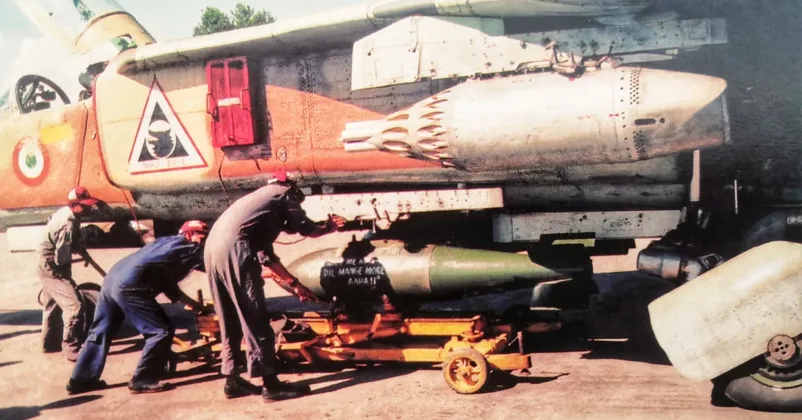
Operation Safed Sagar; a turning point in the history of military aviation

Operation Safed Sagar; a turning point in the history of military aviation

FacebookTwitterWhatsAppTelegramEmail

Twenty-seven years ago, on May 26, 1999, the Indian Air Force (IAF) launched Operation Safed Sagar to support the Indian Army’s Operation Vijay during the Kargil War. The mission was aimed at targeting Pakistani regulars and armed intruders who had occupied strategic heights along the Line of Control (LoC) in Jammu and Kashmir.

The operation marked a major turning point in India’s military history. For the first time, the IAF was tasked with conducting air operations in extremely high-altitude warfare conditions while operating under strict political restrictions. Indian fighter aircraft were allowed to strike enemy positions but were not permitted to cross the Line of Control.

The challenge before the IAF was unprecedented. Unlike conventional wars fought in plains or deserts, Indian pilots had to target deeply entrenched enemy positions located between 14,000 and 18,000 feet above sea level. The terrain was steep, narrow, and unforgiving. Even a slight deviation in bombing accuracy could result in complete mission failure.

At such heights, aircraft performance was severely affected. Thin air reduced engine thrust, while weapon systems behaved differently because of changes in air density and temperature. Computerised targeting systems that worked effectively in normal conditions became unreliable in the mountains.

The situation became even more dangerous because Pakistani positions were equipped with portable surface-to-air missiles, including Stinger missiles. In the early phase of the operation, India lost a MiG-21 fighter aircraft and an Mi-17 helicopter.

Flight Lieutenant K Nachiketa was captured after ejecting from his aircraft and was later repatriated. Squadron Leader Ajay Ahuja, who flew in support during the mission, was shot down and killed. The Mi-17 helicopter crew, Squadron Leader Rajiv Pundir, Flight Lieutenant S Muhnot, Sergeant Raj Kishore Sahu, and Sergeant PVNR Prasad, also lost their lives during combat operations.

These losses forced the IAF to rapidly change its strategy. Armed helicopters were withdrawn from offensive roles, and fighter aircraft began operating from higher altitudes to stay outside the range of enemy missiles.

A major turning point came with the deployment of Mirage 2000 fighter aircraft. Equipped with laser-guided bombs and advanced targeting systems, the Mirage jets carried out highly accurate strikes on Pakistani supply bases and command positions. The precision bombing campaign disrupted enemy logistics and command structures in the Kargil sector.

Operation Safed Sagar also changed India’s understanding of air power. Instead of using fighter aircraft only for close support to ground troops, the IAF focused on cutting enemy supply lines, destroying logistics routes, and weakening command centres. This approach later became central to India’s precision strike doctrine.

Military experts believe the lessons of Safed Sagar directly influenced later Indian air operations, including the 2019 Balakot air strike. On February 26, 2019, Mirage 2000 aircraft crossed into Pakistani territory and struck a Jaish-e-Mohammed terror facility in Balakot, marking the first Indian air strike across the international boundary since 1971.

The Balakot operation reflected many principles first tested during Kargil, precision targeting, limited escalation, intelligence-based strikes, and the use of advanced air power under political constraints.

The same doctrine evolved further during Operation Sindoor, where the Indian Air Force reportedly carried out deep precision strikes on terror infrastructure in Pakistan and Pakistan-occupied Kashmir using advanced platforms and long-range weapons.

Unlike 1999, today’s Indian Air Force possesses far more advanced capabilities. Rafale fighter jets equipped with SCALP cruise missiles, integrated targeting systems, improved surveillance, and air defence platforms such as the S-400 have significantly expanded India’s strike capability.

Despite these advancements, the core doctrine remains rooted in the lessons of Operation Safed Sagar, using precision strikes to impose military costs while avoiding uncontrolled escalation.

Before the Kargil War, many military strategists believed the use of air power in a limited conflict could easily trigger a full-scale war. Operation Safed Sagar changed that perception. It demonstrated that India could use calibrated and precise air power effectively while keeping the conflict contained.

More than two decades later, Operation Safed Sagar continues to be seen as the blueprint for India’s modern precision warfare strategy. From Kargil to Balakot and later Operation Sindoor, the evolution of India’s air strike doctrine can be traced back to the mountains of Kargil in the summer of 1999.

Topics: Kargil WarMirage 2000Operation VijayOperation SindoorBalakot air strikeOperation Safed SagarIndian Air Force
ShareTweetSendShareSend
✮ Subscribe Organiser YouTube Channel. ✮
✮ Join Organiser's WhatsApp channel for Nationalist views beyond the news. ✮
Previous News

How did India move from 10% inflation to 3.4% stability between 2013 and 2026?

Next News

PM Modi gifts tribal heritage to global leaders: Gond art, muga silk, chak-hao rice boost Aatmanirbhar Bharat & exports

Related News

Joint Drill being held by security forces in Arunachal Pradesh

Arunachal Pradesh: Army-ITBP joint drill boosts border security readiness

With new military deployments, export opportunities and potential Russian production, BrahMos is entering a new era of strategic relevance

BrahMos enters high-volume production as military demand and global export orders surge

Prime Minister Narendra Modi and French President Emmanuel Macron

India-France 114-Rafale Deal: How New Delhi is turning defence procurement into a Make-in-India aerospace revolution

India's firm national security response after Operation Sindoor reshaped ties with Turkey, forcing Celebi's exit from the country's aviation sector

Operation Sindoor Impact: Turkish firm Celebi Aviation says India exit erased Rs 4,700 crore overnight

Air Force AN-32 aircraft crashes in Jorhat, 5 officers die in line of duty

Air Force AN-32 aircraft crashes in Jorhat; 3 officers and 2 Agniveervayu made supreme sacrifices in the line of duty

Chinese President Xi Jinping, Russian President Vladimir Putin and Prime Minister Narendra Modi

China’s New Tone Towards India: Tactical shift or strategic necessity? What Beijing’s push for RIC ties really signals

Load More

Latest News

President Droupadi Murmu paid tribute to the heroes of the Santhal rebellion on the occasion of Hul Diwas

Hul Diwas: President Murmu pays tribute to heroes of Santhal rebellion, says their sacrifice will inspire forever

A representative image

Escalating unrest and civilian casualties in Pakistan Occupied Jammu and Kashmir: A 15 year overview

A representative image

Twelve years of pension reforms: Over 3.28 lakh PPOs issued through Bhavishya platform

Representative image made using AI

Religious festival or display of violence? 12 incidents of killings and attempts to kill Hindus during Muharram

A representative image

Nirbhay Chetna: Govt launches world’s largest gender sensitisation drive for women, targets 17.5 lakh representatives

A representative image made from AI

From Digital Consumer to Technology Powerhouse: How India is building technologies that are shaping Viksit Bharat 2047

Representative image

FCRA Amendment Bill 2026: Why evangelical groups are rattled over India’s oversight on foreign funding

Sir Dinshaw Maneckji Petit Birth Anniversary: Remembering Bombay's Textile Pioneer

Birth Anniversary of Sir Dinshaw Petit: The visionary who built Bombay’s textile empire

Guru Hargobind ji

Remembering Guru Hargobind Ji on Prakash Parv: Visionary who united spirituality with the sword of justice

Security personnel along with the miscreants and arma and ammunitions that have been seized in assam

Manipur: Huge cache of arms and ammunitions recovered: Security forces intensify operations

Load More
  • Privacy
  • Terms
  • Cookie Policy
  • Refund and Cancellation
  • Delivery and Shipping

© Bharat Prakashan (Delhi) Limited.
Tech-enabled by Ananthapuri Technologies

  • Home
  • Search Organiser
  • Bharat
    • Assam
    • Bihar
    • Chhattisgarh
    • Jharkhand
    • Maharashtra
    • View All States
  • World
    • Asia
    • Africa
    • North America
    • South America
    • Europe
    • Australia
  • Editorial
  • Operation Sindoor
  • Opinion
  • Analysis
  • Defence
  • Culture
  • Sports
  • Business
  • RSS @ 100
  • Entertainment
  • More ..
    • Sci & Tech
    • Vocal4Local
    • Special Report
    • Education
    • Employment
    • Books
    • Interviews
    • Travel
    • Health
    • Politics
    • Law
    • Economy
    • Obituary
  • Subscribe Magazine
  • Read Ecopy
  • Advertise
  • Circulation
  • Careers
  • About Us
  • Contact Us
  • Policies & Terms
    • Privacy Policy
    • Cookie Policy
    • Refund and Cancellation
    • Terms of Use

© Bharat Prakashan (Delhi) Limited.
Tech-enabled by Ananthapuri Technologies