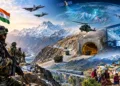
“Centre will not compromise with an inch of country’s land. Keeping in mind the needs of the twenty first century, we are equipping our armies, our security forces with modern resources.”
– PM Modi while addressing the troops at Kachchh on Diwali day
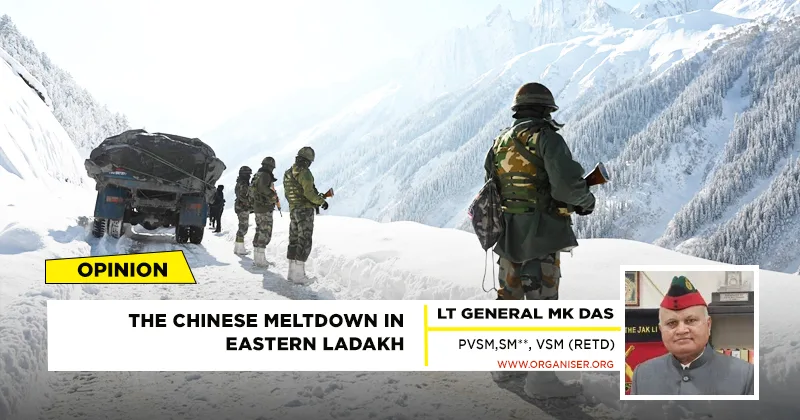
After a tense standoff lasting more than four years, Indian Army and Chinese Army (PLA) have just reverted to verification of patrolling activity in Demchok and Depsang in the Eastern Ladakh. Just before the 16th BRICS Summit scheduled from 22 to 24 October at Kazan in Russia came the news that both India and China have agreed to end the four years plus standoff in Eastern Ladakh in a phased manner. During the BRICS Summit, PM Modi and Chinese President Xi Jinping finally met amidst the signs of thaw that had pitched world’s two most populous nations against each other. Since China had disturbed the status of the Line of Actual Control (LAC) in the Eastern Ladakh in March- April 2020, the Chinese decision to pull back and the meltdown in the snowcapped mountains of the Eastern Ladakh has to be analysed from the military, diplomatic and political angle.
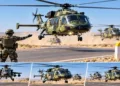
To put things in perspective, the Chinese transgression in the Eastern Ladakh region began sometime in March 2020, almost coinciding with the lockdown during the first wave of COVID19 pandemic. Chinese had come to their side of the LAC in the garb of doing training. Some minor transgression along the LAC is routine which gets resolved during the Border Management meetings of the local military commanders. This time around, the Chinese were in larger numbers and were carrying much more equipment. The Indian Army responded appropriately and beefed up the strength at the LAC even during the lockdown period. Tensions were high during this period and when Indian soldiers went to Patrolling Point 14 near Galwan, Chinese used unorthodox methods which led to violent clash between two armies on 15 June 2020. This unexpected clash left 20 Indian soldiers dead and much more casualties on the Chinese side. With such vitiated atmosphere, both the armies and the nations hardened their stance. The diplomatic channels broke down and soon Eastern Ladakh had more than 50,000 troops deployed from each Army, face to face with mirror image disposition.
The Chinese objectives in the sudden aggressive posturing along the LAC in the Eastern Ladakh still remains fuzzy. One reason could be to avenge the embarrassment it suffered from the Indian Army in the Doklam standoff of 2017, when it had to withdraw from the trijunction of India, China and Bhutan under dubious circumstances. The second obvious objective appears that Chinese wanted to take advantage of the COVID 19 pandemic but here they seriously underestimated the resolve of the Indian Army. The third reason which has been talked about is overenthusiasm of a local Chinese military commander who exceeded his brief and it was too late for the political leadership of China to backdown. But Chinese generally are not impulsive planners and their leadership is known to think ahead for the possible outcomes. In that context, the Chinese meltdown has to be analysed in greater detail.
Among the friction points and border disputes of China, the most of them are with the nations in the South China Sea and Taiwan where the warfare is largely in the maritime domain. It is only against India and to some extent against Bhutan that China has border dispute in the land warfare domain, that too in the high-altitude region. Fighting at such altitude of 12000 or more feet is a specialised warfare and puts tremendous strain on the manpower and military resources. Indian Army has the distinct advantage here because of our near permanent presence near the LAC throughout the year. The Chinese have also agreed for the disengagement process in Arunachal Pradesh which indicates that it has made up its mind not to spend another harsh winter in these icy heights.
From purely military perspective, the Chinese would have reviewed and refined their fighting capability in the high-altitude terrain. These four years would have given them adequate time to analyse their doctrine and practice the battle drills. One theory doing the rounds is that Chinese officer cadre, even at the junior level was increasingly found medically unfit to continue to operate in these harsh climatic conditions. In such terrain, mountain sickness is common and is fatal if an unfit soldier is not evacuated. It is believed that the Chinese military leadership would have been cognizant of this reality and may have recommended disengagement to the political leadership.
At the strategic level, China certainly failed to achieve much. While they have improved the defence infrastructure and are building villages along the LAC, such developments can be counterproductive if India springs a surprise during the hostilities. China would have realised that it is nearly impossible to man the approximately 3500 km of LAC. Indian Army has clear advantage in most of the sectors and Chinese certainly realise that it is difficult to beat Indian Army in close combat. Therefore, this disengagement is akin to a strategic withdrawal in a conventional war. It is here that Indian leadership, particularly the military leadership that has to exercise caution and guard against any complacency. As the past events have indicated, the Chinese cannot be trusted in military matters.
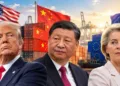
At the political level, it is not difficult to visualise that the peace between India and China has been brokered by President Putin. The peace initiative has also been welcomed by the US. China is also conscious that India still remains its largest trading partner. Chinese leadership would have also realised that it cannot fight simultaneously on three fronts, namely, India, South China Sea and Taiwan. The Chinese plan to tie down India through Pakistan also has met with limited success. In fact, Chinese are having second thoughts about the security of Chinese personnel working in Pakistan. All these events would have compelled the Chinese leadership to focus primarily on the stated aim of annexing Taiwan and stay away from a conflict situation with India.
India too would have learnt some good lessons, at the tactical, strategic and political level. At the tactical and operational level, the rebalancing of forces has been put in place by the Indian Army. Indian Air Force has considerably improved its presence and capability in the region. Indian Air Force will have to further master the precision shooting capability, of the type demonstrated by Israel against Hamas, Hezbollah and Iran. The air defence shield has to improve in a big way to counter the Chinese missile threat. Indian Army still has some deficiencies in arms and equipment and it is good to note that most of the deficiencies were made up through emergency procurement powers. As the PM Modi has assured the nation, the Armed Forces, particularly the soldiers would be equipped with cutting edge technology to fight a modern war. At the same time, the human resource of a soldier remains paramount to fight any adversary, particularly in the high-altitude areas and it is here that we must invest in the best. At the political level, all parties must speak the same language in matters of national security. It is here that voices of dissonance among the political powers did not help our national cause.
Besides reducing trade deficit with China, India has to manufacture most of the military hardware in-house, so that supply chain does not get interrupted during war. The major focus has to be on the small arms, artillery guns, light tanks, all terrain vehicles and ammunition of all types. It is heartening to note that the private industry has been encouraged by the Modi government to produce hardware for the armed forces. Now both the Defence Public Sector Units (DPSUs) and the private industry must focus on quality control to make world class military hardware. Unlike any other industry, the seconds do get sold to the military. Our in-house production also has the advantage of military hardware being tested in a variety of terrain like plains, mountains, jungles, islands etc. and thus may find takers in many countries as part of our defence exports.
For the starters in the peace building process, the patrolling activity between Indian Army and the PLA has resumed in the contentious Demchok and Depsang sector of Eastern Ladakh. Well begun but it will be phased activity which requires very close monitoring. The use of technology with satellite mapping, air photographs and drone surveillance in addition to foot on the ground would be key to judge the intentions of the Chinese. The deinduction of troops is still far away as the routine patrolling has to lead to de-escalation in due course. As stated by the Army Chief, Indian Army would like to restore and revert back to March 2020 situation. Once again, the resilience and resolute action of the armed forces, particularly the Indian Army has played a major role in the Chinese meltdown. Indian diplomacy under the EAM S. Jaishankar also has to be lauded for astute behind the scenes negotiations and hard bargaining. Overall, India has emerged stronger as compared to China in the battle of wits, grit and determination in Eastern Ladakh. India may have won Round One of this long-drawn boxing bout, but has to outlast the opponent many times over. More success to our comprehensive national power.