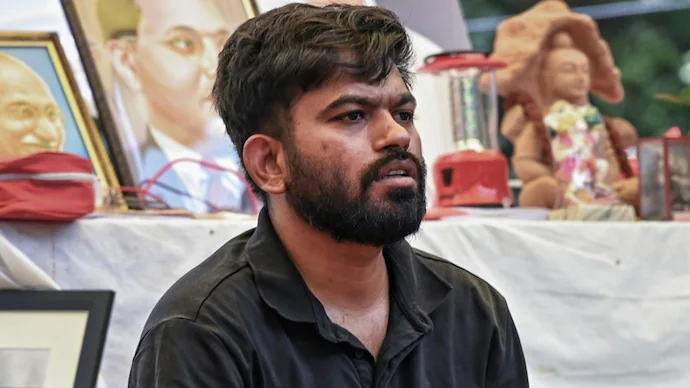
DELHI: The Cockroach Janata Party’s (CJP’s) Abhijeet Dipke, has repeatedly questioned the Election Commission over voter-list revisions, Special Intensive Revision (SIR), the functioning of Chief Election Commissioner Gyanesh Kumar and reported differences within the poll panel. But the organisation’s own approach to transparency raises a basic question: does the same standard it demands from the Election Commission also apply to CJP itself?
CJP has stepped up its criticism of the Election Commission in recent weeks. After reports that Election Commissioners Sukhbir Singh Sandhu and Vivek Joshi had raised objections to certain decisions, CJP demanded answers from CEC Gyanesh Kumar and called for his resignation.
Dipke subsequently issued a 48-hour ultimatum to Kumar, demanding that he step down and warning of protests. CJP also questioned the Election Commission over voter deletions during SIR and raised allegations concerning millions of names being removed from electoral rolls. These claims remain disputed, with the Election Commission defending the revision process.
The organisation later expanded its campaign, announcing protests against Kumar and demanding greater accountability from the poll body. CJP has also linked its campaign to wider concerns over voter-list changes and the functioning of the electoral system.
But who funds CJP?
The repeated demand for transparency from the Election Commission brings another question into focus: how transparent is CJP about its own finances?
When questions are raised about the organisation’s funding, donations, sources of money and expenditure, the public deserves the same clarity that CJP demands from constitutional institutions. If the Election Commission is expected to explain its decisions, an organisation campaigning against the poll body should also be prepared to explain how it funds those campaigns.
The issue is particularly relevant because CJP has been organising protests, holding press conferences and running a sustained public campaign against the Election Commission. Who pays for these activities? What are the organisation’s sources of funding? How much does it receive and from whom? How is the money spent?
Dipke’s transparency test
The controversy surrounding a recent interaction involving Dipke has brought the question into sharper focus. A reporter asked him about CJP’s funding, and the response has itself become a point of discussion.
Dipke in response, said, “The question has no logic. Will my details of funding will solve the problem with election commison?” he said.
DIPKE’S TRANSPARENCY TEST – ONLY FOR OTHERS?@abhijeet_dipke and @Cockroachisback demand transparency from the Election Commission at every turn.
But the moment a reporter asks Dipke about CJP’s own source of funding, the transparency warrior gets visibly irritated and dodges… pic.twitter.com/PdIDtYkD00
— Media Expose (@MediaExpose_) October 1, 2026
CJP can legitimately question the Election Commission and demand answers from public institutions. At the same time, journalists and the public can legitimately ask CJP questions about its own organisation, finances and activities.
Accountability cannot have two standards
CJP’s campaign has repeatedly placed the Election Commission under scrutiny over SIR, voter-roll changes, internal decision-making and the role of the CEC. Its demands include Kumar’s resignation and greater transparency from the poll body.
But demanding accountability from a constitutional institution also invites scrutiny of the campaigner itself. If CJP believes voters deserve complete transparency from the Election Commission, voters also have a legitimate interest in knowing who finances CJP’s campaign, how its operations are funded and how donations are used.
The question is therefore not whether CJP should question the Election Commission. It is whether the organisation is willing to face the same level of questioning that it expects from the institution it is challenging.