Uttar Pradesh: Govt defends madrasa law before Supreme Court, challenges Allahabad HC's unconstitutional verdict
July 7, 2026
  • Read Ecopy
  • Circulation
  • Advertise
  • Careers
  • About Us
  • Contact Us
Android AppiPhone AppArattai
Organiser
  • ‌
  • Bharat
    • Assam
    • Bihar
    • Chhattisgarh
    • Jharkhand
    • Maharashtra
    • View All States
  • World
    • Asia
    • Europe
    • North America
    • South America
    • Africa
    • Australia
  • Editorial
  • International
  • Opinion
  • RSS @ 100
  • More
    • Op Sindoor
    • Analysis
    • Sports
    • Defence
    • Politics
    • Business
    • Economy
    • Culture
    • Special Report
    • Sci & Tech
    • Entertainment
    • G20
    • Azadi Ka Amrit Mahotsav
    • Vocal4Local
    • Web Stories
    • Education
    • Employment
    • Books
    • Interviews
    • Travel
    • Law
    • Health
    • Obituary
  • Subscribe
    • Subscribe Print Edition
    • Subscribe Ecopy
    • Read Ecopy
  • ‌
  • Bharat
    • Assam
    • Bihar
    • Chhattisgarh
    • Jharkhand
    • Maharashtra
    • View All States
  • World
    • Asia
    • Europe
    • North America
    • South America
    • Africa
    • Australia
  • Editorial
  • International
  • Opinion
  • RSS @ 100
  • More
    • Op Sindoor
    • Analysis
    • Sports
    • Defence
    • Politics
    • Business
    • Economy
    • Culture
    • Special Report
    • Sci & Tech
    • Entertainment
    • G20
    • Azadi Ka Amrit Mahotsav
    • Vocal4Local
    • Web Stories
    • Education
    • Employment
    • Books
    • Interviews
    • Travel
    • Law
    • Health
    • Obituary
  • Subscribe
    • Subscribe Print Edition
    • Subscribe Ecopy
    • Read Ecopy
Organiser
  • Home
  • Bharat
  • World
  • Operation Sindoor
  • Editorial
  • Analysis
  • Opinion
  • Culture
  • Defence
  • International Edition
  • RSS @ 100
  • Magazine
  • Read Ecopy
Home Bharat

Uttar Pradesh: Govt defends madrasa law before Supreme Court, challenges Allahabad HC’s unconstitutional verdict

The Uttar Pradesh government defended its madrasa law in the Supreme Court, contesting the Allahabad High Court's ruling that deemed the law unconstitutional. The state argued that the 2004 Act, which regulates madrasas to ensure educational quality, should not be fully invalidated

WEBDESKWEBDESK
Oct 23, 2024, 06:00 pm IST
in Bharat, Law, Uttar Pradesh
Follow on Google News
Chief Minister of Uttar Pradesh, Yogi Adityanath (Photo: Real India News)

Chief Minister of Uttar Pradesh, Yogi Adityanath (Photo: Real India News)

FacebookTwitterWhatsAppTelegramEmail

The Uttar Pradesh government, on October 22, defended its legislation regulating madrasas, asserting before the Supreme Court that the Allahabad High Court erred in declaring the Uttar Pradesh Board of Madarsa Education Act, 2004 as unconstitutional. The state government claimed that the law was enacted to ensure the quality of education in madrasas, in line with constitutional principles, and should not have been invalidated in its entirety.

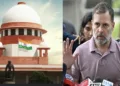
During the hearing, a bench headed by Chief Justice of India (CJI) D Y Chandrachud, along with Justices J B Pardiwala and Manoj Misra, directly questioned Additional Solicitor General K M Natraj, representing the state government, about the government’s stance on the law. “Are you standing by the validity of the Act?” the CJI inquired as Natraj began his submissions.

Natraj affirmed the state’s commitment to upholding the law, which governs the operation of madrasas across Uttar Pradesh. “I support the validity of the Act,” Natraj responded, adding, “The constitutionality of the law was struck down, and we want to clarify our position. We are defending the legislation, and the state cannot deviate from its stand.”

He further emphasised that while the government had not initially filed a special leave petition (SLP) against the High Court’s verdict, it remained firm in its support for the law.

The 2004 Act was designed to regulate madrasas, ensuring they provided quality education alongside religious teachings. On March 22, 2024, the Allahabad High Court declared the Act unconstitutional, stating it violated the principle of secularism. The court’s judgment called for madrasa students to be integrated into the formal schooling system. However, the state government maintained that striking down the entire law was unnecessary and an overreach.

Natraj, addressing the Supreme Court bench, argued, “The entire legislation need not be struck down. The issue is not one of legislative competence but of fundamental rights, and it is incorrect to invalidate the law in its entirety.”

He further pointed out that under Section 20 of the madrasa law, the state holds the authority to ensure basic educational standards in madrasas, and if those standards are not met, the government can intervene.

The Supreme Court bench appeared to agree with this interpretation, with CJI Chandrachud noting that as a state, Uttar Pradesh has “wide powers” to regulate educational quality in madrasas. “If the basic level of education is not being followed, the state always has the authority to intervene,” the Chief Justice remarked.

Earlier in the day, senior advocate Mukul Rohatgi, representing a litigant, also challenged the High Court’s ruling, asserting that it violated fundamental rights. Referring to the court’s suggestion that madrasa students be moved to regular schools, Rohatgi stated, “My fundamental right is violated as I will not be receiving religious instructions.”

He emphasised that hundreds of students rely on madrasas for religious education, and secularism does not mean forcing students out of these institutions.

The Supreme Court had previously provided interim relief to madrasa students on April 5, staying the High Court’s judgment, which would have impacted nearly 17 lakh students across the state. The hearing on the matter continues, with the state government steadfast in its defence of the 2004 Act.

The next phase of the hearing is expected to delve deeper into the constitutionality of the law and the balance between secularism and the rights of religious educational institutions, as the Uttar Pradesh government continues to advocate for the regulation of madrasas while ensuring compliance with constitutional mandates.

 

Topics: Madrasa LawAllahabad High Court rulingUttar PradeshSupreme Court
ShareTweetSendShareSend
✮ Subscribe Organiser YouTube Channel. ✮
✮ Join Organiser's WhatsApp channel for Nationalist views beyond the news. ✮
Previous News

Waqf Boards seen by Muslims as mafia and corruption hub: Muslim Rashtriya manch Patron Dr Indresh Kumar

Next News

The road to March 31, 2026: The strategy which will eradicate Maoism from India

Related News

Uttar Pradesh cabinet has approved the renaming of Jalalabad in Shahjahanpur district to Parshuram Puri

UP cabinet approves renaming of Jalalabad to Parshuram Nagar in Shahjahanpur to reflect cultural heritage

VHP International President Alok Kumar

Ram Mandir Donation Case: VHP’s Alok Kumar demands evidence from Kejriwal, Priyanka Gandhi over allegations

UP has raised the monthly maintenance grant for mentally challenged and destitute divyangjan in shelter homes from Rs 2,000 to Rs 3,000

Seva, Samvedna, Sammaan: How Yogi government rewrote Uttar Pradesh’s compact with its Divyangjan

ATS investigation into foreign funding of 4,000 Uttar Pradesh madrasas set to accelerate after HC order

Allahabad High Court clears way for ATS probe into foreign funding of 4,000 Uttar Pradesh madrasas

Raja Raghuvanshi Murder Case: Supreme Court refuses to stay bail granted to Sonam Raghuvanshi

Akhil Bharatiya Adhivakta Parishad explores India’s early constitutional battles over free speech and judicial review

The First Amendment at 75: Revisiting Organiser’s historic free speech battle against the Nehru government

Load More

Latest News

Shri Ram Janmabhoomi Teerth Kshetra Trust accepts resignation on moral grounds; SIT submits interim report

Ayodhya Ram Mandir Donation Row: Trust accepts resignations, promises greater transparency; SIT submits interim report

Nida Khan one of the accused in Nashik TCS Corporate Jihad Case gets bail

Nashik TCS Corporate Jihad Case: Court grants bail to Nida Khan in conversion and sexual harassment case

Karnataka State BJP files complaint with Election Commission over irregularities in voter verification

Karnataka SIR Row: NDA submits documentary evidence to Election Commission, alleges irregularities in voter revision

Hindenburg report was a conspiracy to tarnish the image of India’s industrial sector using the Adani Group as a pretext

Battlefield to Top of the World: Indian Paralympian Hokato Hotozhe Sema becomes No.1 in shot put F57 category

Editor of Organiser Weekly Prafulla Ketkar and West Bengal Governor R N Ravi at the Narad Jayanti Udjapan & Narad Samman 2026

Whether my reporting is in the interest of nation or not is a litmus test for journalist: West Bengal Governor R N Ravi

POJK Protests: A reality check on atrocities committed by Pakistan

117 pseudo-intellectuals write to PM Modi to extend diplomacy with Pakistan at the cost of national security

80 years of Organiser: Enduring voice

PM Modi and Australian PM Anthony Albanese

Powering India’s Nuclear Future: PM Modi’s Australia visit brings the landmark Uranium deal into focus

Load More
  • Privacy
  • Terms
  • Cookie Policy
  • Refund and Cancellation
  • Delivery and Shipping

© Bharat Prakashan (Delhi) Limited.
Tech-enabled by Ananthapuri Technologies

  • Home
  • Search Organiser
  • Bharat
    • Assam
    • Bihar
    • Chhattisgarh
    • Jharkhand
    • Maharashtra
    • View All States
  • World
    • Asia
    • Africa
    • North America
    • South America
    • Europe
    • Australia
  • Editorial
  • Operation Sindoor
  • Opinion
  • Analysis
  • Defence
  • Culture
  • Sports
  • Business
  • RSS @ 100
  • Entertainment
  • More ..
    • Sci & Tech
    • Vocal4Local
    • Special Report
    • Education
    • Employment
    • Books
    • Interviews
    • Travel
    • Health
    • Politics
    • Law
    • Economy
    • Obituary
  • Subscribe Magazine
  • Read Ecopy
  • Advertise
  • Circulation
  • Careers
  • About Us
  • Contact Us
  • Policies & Terms
    • Privacy Policy
    • Cookie Policy
    • Refund and Cancellation
    • Terms of Use

© Bharat Prakashan (Delhi) Limited.
Tech-enabled by Ananthapuri Technologies