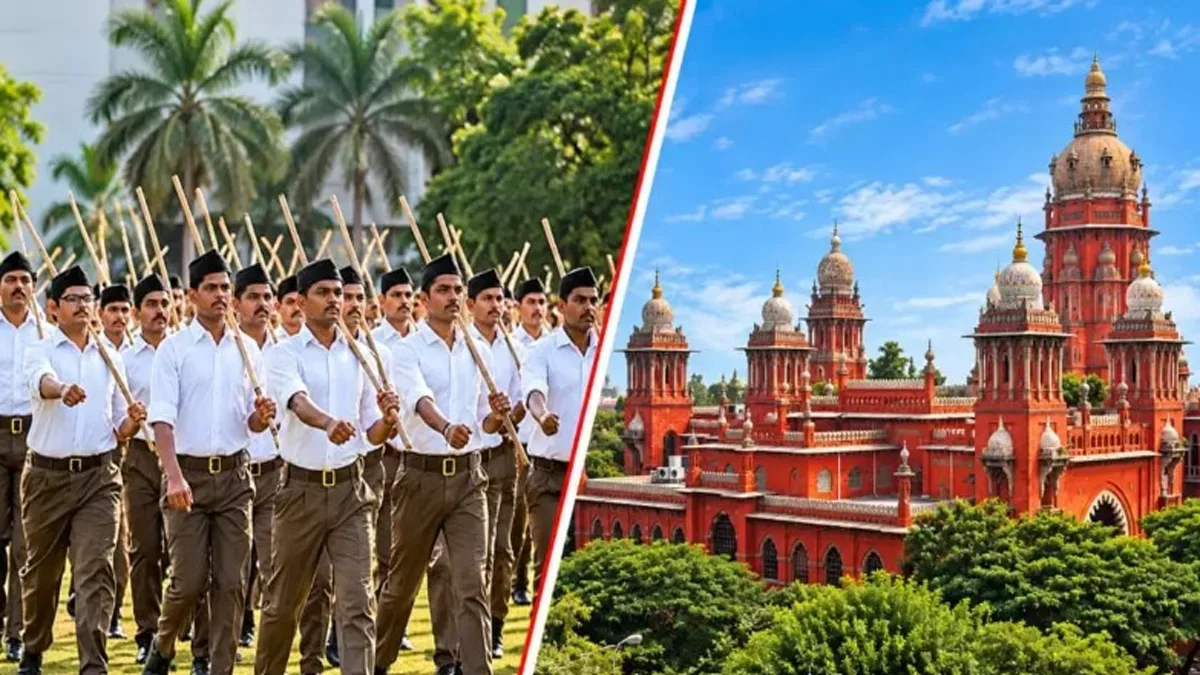
New Delhi: The Madras High Court on October 15 questioned Tamil Nadu police for repeatedly denying permission for RSS route marches on grounds rejected in earlier proceedings, with Justice V. Lakshminarayanan declaring that citizens’ rights could not be left to police discretion.
“Citizens’ rights cannot be surrendered to the whims and fancies of the police,” the judge orally remarked during the hearing.
The court expressed frustration that guidelines intended to end recurring litigation had failed to do so. It noted that reasons previously rejected by Justice G. Jayachandran were being used again to refuse permission, bringing the same dispute back before the judiciary.
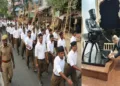
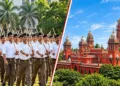
The RSS had sought permission to conduct route marches at 128 locations across Tamil Nadu. However, police were willing to permit marches at only 58 locations.
Among the objections examined were the presence of mosques and churches along proposed routes, possible traffic congestion and organisations holding views opposed to the RSS. The court noted that earlier proceedings had already dealt with these grounds. It also questioned reliance on incidents involving the banned Popular Front of India while opposing the marches.
The judge objected to the police treating the presence of an Idgah as a reason to anticipate opposition to a procession. The court’s criticism was directed at the assumption that religious structures or communities along a route would themselves present an obstacle to the march.
Today’s hearing followed discussions between the petitioner’s representatives and State Public Prosecutor R. John Sathyan. The court was informed that the meeting, held on its directions yesterday, had produced no solution.
The judge also made clear that both sides were expected to cooperate under the existing guidelines. Repeated litigation over arrangements that should have been settled through that process was consuming judicial time.
The exchanges followed yesterday’s hearing, when the court asked why RSS marches were repeatedly refused in Tamil Nadu despite being permitted in Jammu and Kashmir. Senior Counsel N.L. Rajah had submitted that the organisation was ready to follow the prescribed conditions.
For the State, Advocate General Vijay Narayan had cited the festive season, prevailing conditions and proposed routes that were not designated for processions. Rajah argued that police could identify missing requirements and ask the coordinators to comply.
Today, the court also identified omissions in the RSS applications, including alternative routes and particulars of those responsible for the events. It directed the organisation to file an affidavit furnishing the required details and an undertaking to comply with the conditions.
The proposed schedule is October 25 for northern districts and November 1 for southern districts. Local coordinators of march must furnish particulars to the jurisdictional Superintendents of Police.
The Advocate General was asked to obtain instructions from the DGP upon receipt of the affidavit. The court will hear the matter again tomorrow; permission for all the proposed marches has not yet been granted.