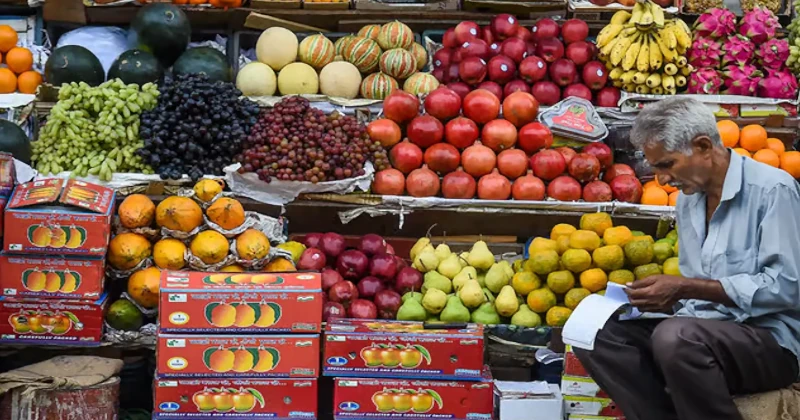
In recent years, India has witnessed a remarkable transformation in its agricultural landscape, particularly regarding the availability and affordability of fresh fruits. This development has had a profound impact on food consumption patterns and nutritional outcomes across the country, highlighting the critical role of government policies, improved infrastructure, and agricultural innovations.
As per the report, a closer look at the data reveals that all regions of India have experienced significant growth in fresh fruit consumption, with the Northeastern states standing out due to their exceptional progress in this domain. This article delves into the factors driving this change, its implications for India’s broader nutritional landscape, and the key role played by the Northeast in this transformative trend.
India’s food consumption patterns have evolved significantly, as highlighted by the Household Consumption Expenditure Survey (HCES) 2022–23, which compares recent data with that of 2011–12. One of the most notable findings is the sharp decline in the proportion of household expenditure on food, especially in rural and urban areas. This decrease in food costs has enabled Indian households to diversify their diets, with a considerable uptick in the consumption of perishable items like fresh fruits and milk.
The Comprehensive Nutrition Report, which analyzes the survey data, points out that fresh fruit consumption has increased across all income groups. The report attributes this growth to advancements in infrastructure, transportation, and supply chain logistics, which have made fresh fruits more accessible and affordable, even in remote regions.
Northeastern States Leading the Way
While all regions of India have experienced growth in fresh fruit consumption, the Northeastern states have emerged as standout performers. According to the HCES data, the monthly per capita expenditure (MPCE) on fresh fruits in Sikkim, for instance, grew by an astonishing 394% between 2011–12 and 2022–23. This represents a remarkable achievement, reflecting significant improvements in the availability and affordability of fresh produce in the region.
Massive improvement in the availability & affordability of fresh fruits across regions of India is remarkable. While all states across all regions show big growth in consumption, just look at the Northeastern states! #SupplyChain #InfrastructureDevelopment
Read full paper:… pic.twitter.com/fehAH2YQnZ— Prof. Shamika Ravi (@ShamikaRavi) September 10, 2024
A combination of government policies, enhanced connectivity, and investment in cold storage infrastructure has helped the Northeastern states overcome the historical challenges of geographical isolation and difficult terrain. These advancements have reduced the seasonality of fresh fruit consumption, ensuring year-round availability in local markets.
The data shows a substantial increase in the number of households consuming fresh fruits. For example, in rural Northeastern states, the proportion of households consuming fresh fruits rose from 63.8% in 2011–12 to 90.3% in 2022–23. This growth has been most pronounced among the bottom 20% of households, underscoring the success of government initiatives aimed at improving food security and increasing access to nutritious food.
A driving force behind the rise in fresh fruit consumption, particularly in the Northeastern states, has been the impact of government programs. Initiatives such as the Pradhan Mantri Garib Kalyan Anna Yojana (PMGKAY), which provides free food grains to millions of households, have allowed low-income families to save money on staple items like cereals. With these savings, many households have been able to purchase fresh fruits and other perishable goods, thereby improving their overall dietary diversity.
Infrastructure investments have also played a crucial role. Improvements in transportation networks, market access, and cold storage facilities have ensured that fresh fruits reach consumers faster, reducing spoilage and lowering costs. This is particularly beneficial for the Northeastern states, where farmers have historically struggled to access markets due to poor infrastructure. The construction of better roads and logistics networks has opened new markets for farmers, while simultaneously expanding consumer access to a wider variety of fruits at affordable prices.
The shift in fresh fruit consumption patterns is closely linked to changes in agricultural practices. Farmers across India, including those in the Northeastern states, are increasingly moving away from traditional cereal farming toward the cultivation of high-value crops like fruits. This shift has been encouraged by government initiatives focused on promoting sustainable agriculture and improving farmers’ incomes.
In states like Sikkim, a pioneer in organic farming, the emphasis on fruit cultivation has not only boosted local economies but has also contributed to better nutritional outcomes for residents. Organic fruits from the region are now more widely available, and Sikkim’s reputation as a hub for organic produce has driven demand locally and beyond.
Government programs such as the Mission for Integrated Development of Horticulture (MIDH) have been critical in driving this shift. By providing financial support for nurseries, planting materials, and horticultural infrastructure, the government has empowered farmers to embrace fruit cultivation on a larger scale.
The surge in fresh fruit consumption across India, and particularly in the Northeastern states, is likely to have significant long-term benefits for public health and nutrition. Fruits are a rich source of essential vitamins, minerals, and antioxidants, which are critical for maintaining a healthy immune system, reducing the risk of chronic diseases, and promoting overall well-being.
According to the Comprehensive Nutrition Report, the increase in fresh fruit consumption has contributed to a marked improvement in dietary diversity across all income groups. This shift is particularly important for low-income households, which have traditionally relied on a limited diet dominated by cereals and other staple foods.
Dietary diversity is crucial for addressing nutritional challenges such as anemia and micronutrient deficiencies, which are prevalent in many parts of India. The report highlights that by diversifying their diets to include more fresh fruits, milk, and animal-based foods, households are now consuming higher levels of essential nutrients like iron and vitamin A. These nutrients are critical for preventing anemia and other micronutrient deficiencies, which remain significant public health challenges.
Despite the remarkable progress in increasing the availability and affordability of fresh fruits, challenges remain. Some regions, particularly in states like Rajasthan and Uttar Pradesh, continue to face hurdles related to infrastructure, market access, and affordability. In these regions, fresh fruit consumption among the bottom 20% of households remains relatively low compared to other parts of the country.
Addressing these challenges will require continued investment in infrastructure, market reforms, and agricultural policies that support the growth of the horticulture sector. The government must also work towards improving supply chain efficiency, reducing post-harvest losses, and ensuring that farmers receive fair prices for their produce. Furthermore, consumer education campaigns emphasizing the nutritional benefits of fresh fruits could help increase demand and further drive consumption.
The availability and affordability of fresh fruits have significantly improved across India, with the Northeastern states leading the way. This remarkable transformation is credited to targeted government policies, strategic infrastructure investments, and agricultural reforms. The shift has not only altered the food consumption patterns of millions of households but has also laid a strong foundation for improved health and nutrition for future generations.
As India continues to develop economically, it is essential to build on these gains by further supporting the horticulture sector, improving access to fresh produce, and ensuring that all households regardless of their income level or geographic location can benefit from a diverse and nutritious diet. The future looks promising, and with continued efforts, India is well on its way to achieving improved nutritional outcomes for all its citizens.