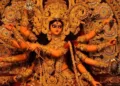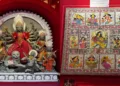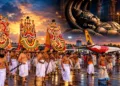




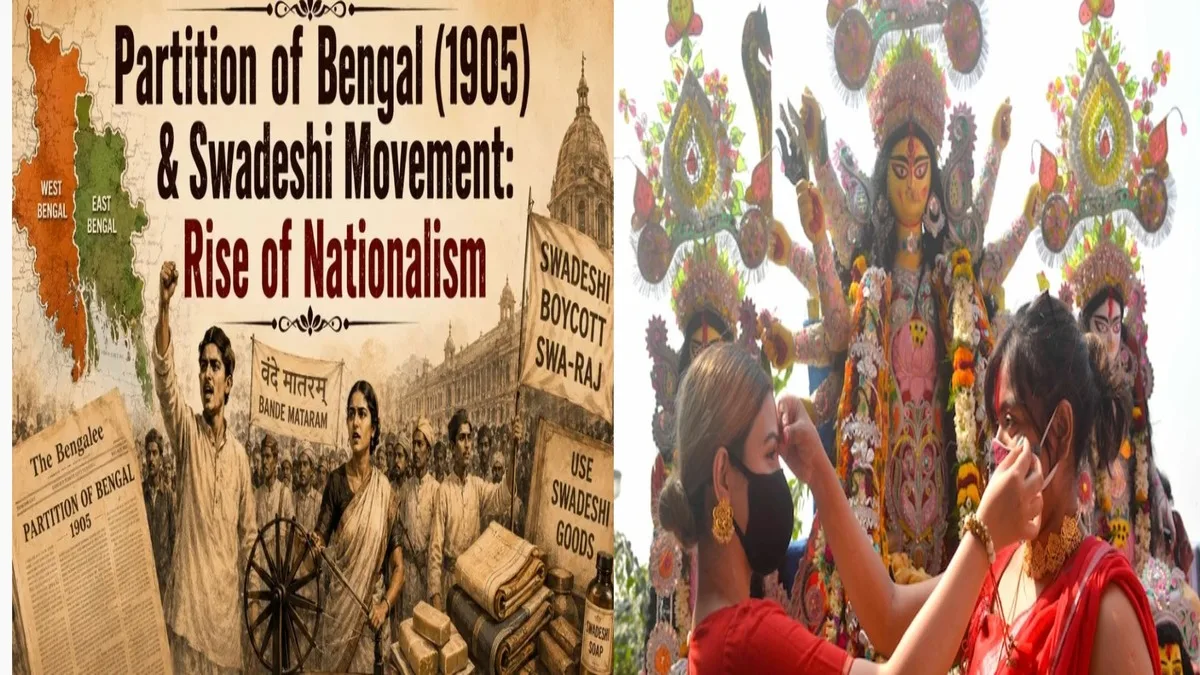
According to Professor Ashoknath Shashtri, Bengalis are known to have worshiped Goddess Durga in her Mahishamardini Idol for significantly over a millennium as mentioned by Swami Jagadishwarananda in his Bengali translation work of “Shri Shri Chandi”. Such claim can be confirmed from the presence of quite a few Mahishamardini Idols of Maa Durga in MET New York as obtained from Bengal and Bihar in the Pala Era. However, in last quite-a-few decades, Bengalis gradually turned amnesiac about the fact that Durgapuja is all about praying for valour to Maha Shakti aspiring for comprehensive prowess. Instead, Bengalis engaged predominantly in festive merry-making during DURGAPUJA instead of engaging in religio-cultural celebrations.
Contrary to such contemporary ‘BONG’ outlook towards Durgapuja, the Bengalis worshipped Maa Durga for awakening of fearless courage within the common people of Bengal Province in the beginning of the twentieth century that ended up yielding Swadeshi Movement shaking the ground of the British Empire in the Bengal Province.
Before recapitulation of Bengalis’ worship of MAA Durga for valour and prowess in the beginning of the 20th century, it is imperative to recall a part of an essay written (in Bengali) by Netaji Subhash Chandra Bose in 1926. In his book named ‘TARUNER SWAPNA’ he wrote in a place that may be translated (an humble attempt by me) as ‘2 particular observations on present Bengal build in confidence:- (1) practice of physical exercises & passion for tourism (2) awakening of the youth. Bengalis once had an ill-repute of being cowards which is no more. Even the arch-enemy of Bengalis won’t perhaps dare anymore to detract Bengalis as cowards.’ Such depiction indicates that Bengalis used to be slandered as cowards which stopped within the first quarter of the twentieth century. How could Bengalis get rid of such ill-repute?
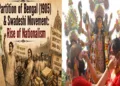
How could they gain impetus for image-makeover removing the stigma of cowardice? Definitely by launching Swadeshi Movement against the British. The Bengali youth was awakened to fearless courage during the span of Swadeshi Movement, starting from around 1902, when the niece of Rabindranath Thakur, Sarala Devi Chaudhurani, revived the original Bengali tradition of observation of Mahashtami as Birashtami.
At this phase of SHARADIYA DURGAPUJA, in our pursuit of the spiritual realisation that the supreme strength Shakti is manifested in femininity and to cognize that Matrimantra is indispensable for self-realization, depiction of the aura of Sarala Devi Chaudhurani seems essential. Knowing this illustrious lady to some length may help realize the reason why Shakti is feminine in essence.
A part of her autobiography ‘JIBANER JHARAPATA’ as given below appears too relevant for Bengalis living in West Bengal at present, and also for Bharatiyas all over Bharat. 124 years ago from this day, a woman of noble wisdom had the pragmatic vision to cultivate masculine gallantry in the lives of Bengali men as a matter of regular practice. For such cause she enlightened and awakened the Bengali mothers for motivating and blessing their sons to be brave & achieve distinction for bravery. Swadeshi Movement was an yield of such efforts & Sadhanas for bravery, gallantry, strength & valour in normal households of Bengal.
Sarala Devi wrote in Bengali, (this part is translated by me, an humble attempt, for the purpose of this article) “just like Muslims engage in exhibition of the usage of various weapons on roads on the day of Muharram, while they prepare in groups throughout the year for such display in various AKHARAS under various leaders, now I focused on fixing a date for a national festival in Bengal. Just like the non-Bengali Hindus of the other parts of Bharat engage in various heroic games on the day of Ramleela or Dashera i.e. Vijaya Dashami, which would be a suitable day for doing the same in Bengal?Dashera of those places is not similar to our Vijaya Dashami as they don’t have to engage in the rituals of Pratima Visarjan while in our case, all remain busy for Visarjan & arrangements thereof. So, that won’t be a suitable day for us to organize open-to-all competitions of special valiant games as Bengalis would have scarcity of time on the day of Vijaya Dashami. Nonetheless, in the same autumnal season, the Pandavas took their arms out of the hideout in the Shamee Vriksh & proceeded for their expedition of वीरभोग्या वसुंधरा. If even the Bengalis don’t engage in valiant practices of heroism during the same autumnal time of the year, they won’t be able to unite with the rest of the Hindus of Bharat. While cogitating in ambivalence, a Bengali almanac came to my rescue. Suddenly, while checking from the almanac the date from which the Puja holidays would begin, I noted the other name of Durga Ashtami to be ‘Birashtami’ & the rituals of ‘Birashtami Brata’ & the religious directives of listening to the ‘Bratakatha’ were prescribed ones. So, I didn’t have to invent a day as I discovered what I was looking for. It was restoration of something that was already there in the practices (Sanskars) of Bengal but turned obsolete due to desuetude. Bringing Bengali mothers back to the path of being mothers of heroes & motivating them to take a vow for such cause restituting their brata (religious practices) for the same was the duty. Setting the trend amongst the pusillanimous Bengali mothers so that the faint-hearted mothers themselves tied RAKSHASUTRA around their sons’ wrists with a word of blessings वीरों भव motivating them to participate regularly into heroic games and pushing them towards acts of valour. How could a land degenerate to such low where mothers and sons together pursued the BRATA of securing the pinnacle of glory for the land as DHARMA? My heart wept. Today, so many boys of this country call me ‘Maa’. I already tied RAKSHASUTRA to some of them without even being aware that to be the very custom on such a day & the very duty of the mothers. Now, after being aware, I realized tying RAKSHASUTRA to all players of all clubs and incite their participation in games requiring physical strength, fitness & gallantry were my DHARMA and nothing other than the divine prompt of DESHMATRIKA. Otherwise, why did she drag my notice to that page of the almanac?
That was the modern resumption of Birashtami Festival. That very year Mahashtami was announced to be the day of ASTRAVIDYA exhibition on the ground of 26, Ballygunge Circular Road sending invitation to as many clubs of Kolkata as I knew asking them to participate in the festival and the competitive games. Each participant got a Birashtami Medal one side of which had engraved वीरों भव and the other देवाः दुर्वलघातकाः
Rituals too were worked out for Birashtami Festival central to which was chanting Vandana Stotra eulogizing the great warriors of the past standing in front of a flower-decorated sword followed by offering PUSHPANJALI at the sword. The ode was as follows:
वीराष्टम्यां महातिथौ पूर्व पूर्वगतान वीरान्
नमस्कुर्य भक्तिपूर्वं पुष्पांजलिं ददाम्यहम्॥
वीरकुलाग्रगण्यं श्रीकृष्ण-नन्दनन्दनम्
वीराष्टम्यां नमस्कुर्य पुष्पांजलिं ददाम्यहम्॥
सानुजं श्रीरामचन्द्रं रघुकुलपतिश्रेष्ठम्
वीराष्टम्यां नमस्कुर्य पुष्पांजलिं ददाम्यहम्॥
भीष्म-द्रोण-कर्णार्जुन-भीमान सर्वपितामहान्
वीराष्टम्यां नमस्कुर्य पुष्पांजलिं ददाम्यहम्॥
इन्द्रजयी महाशूरं मेघनादारिपुत्रासम्
वीराष्टम्यां नमस्कुर्य पुष्पांजलिं ददाम्यहम्॥
राजपुत कुलगर्वं प्रताप महाप्रतापम्
वीराष्टम्यां नमस्कुर्य पुष्पांजलिं ददाम्यहम॥
छत्रपति महावीरम् महाराष्ट्र कुलनायकम्
वीराष्टम्यां नमस्कुर्य पुष्पांजलिं ददाम्यहम्॥
पंजाबकेशरीं वीरं रणजित इति ख्यातम्
वीराष्टम्यां नमस्कुर्य पुष्पांजलिं ददाम्यहम्॥
वंगाधिपं महाशौर्यं प्रतापादित्य वीरेशम्
वीराष्टम्यां नमस्कुर्य पुष्पांजलिं ददाम्यहम्॥
क्षत्रवंशसमुद्भूतं वंगजं राय सीताराम्
वीराष्टम्यां नमस्कुर्य पुष्पांजलिं ददाम्यहम्॥
एतत् सर्वेषान् पूर्वगतान् पदे पुष्पांजलीं दत्वा
वीराष्टम्यां नमस्कुर्य वयम् अद्य नमोनमः॥
PUSHPANJALI in the name of each Great Warrior engendered tremendous thrill stirring ecstatic emotions in the congregation. The ode was composed by the famous Swadeshi icon of Khidirpur named Ashutosh Ghosh. Songs loaded with Nationalist spirit sung in between various games kept the spirit alive and the people motivated.
Birashtami Festival, thus, got established in Bengal. The patriots who couldn’t come to Kolkata to participate, celebrated in their own corresponding stations. I advised to organize at least a swimming competition in those villages where nothing else could be organized. In all, tying RAKSHASUTRAS from corresponding mothers for practicing valiant games & usage of arms were imperative for this day.”
Thus, the twentieth century of Bengal began with re-introduction of Birashtami Festival. Sarala Devi Chaudhurani appeared no less than an embodiment of Shakti awakening the realization of the feminine essence of Shakti. At present again, it appears imperative to re-cultivate the same spirit in the Bengali society, following the footprints of Sarala Devi Chaudhurani, turning the mothers as VEERMATA and the sons & daughters as VEERS for celebration of Mahashtami as Birashtami.