




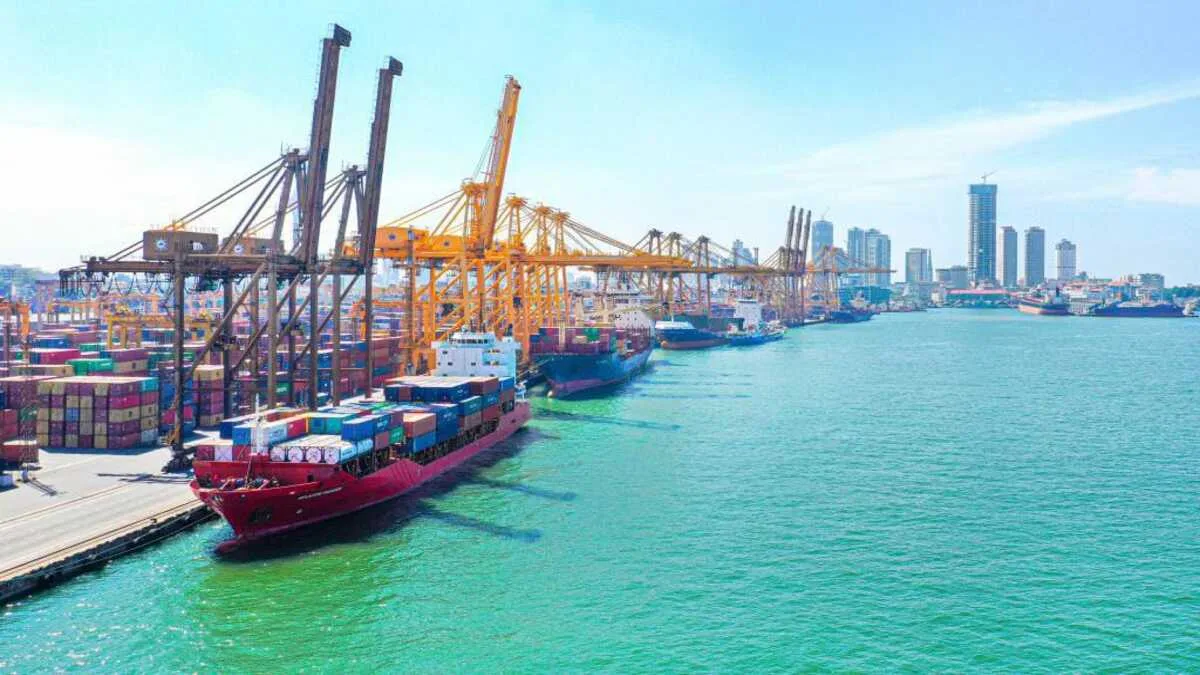
A Chinese state-owned company has withdrawn from a proposed $392 million joint venture to develop a major logistics hub at Colombo Port, Sri Lanka’s principal seaport, prompting the Sri Lankan authorities to seek a new investor for the project.
The Sri Lanka Ports Authority (SLPA) announced on October 19 that China Merchants Port Holdings had decided not to proceed with the collaboration agreed upon in April 2023. The authority maintained that the project would continue despite the withdrawal.
In a statement, the SLPA said the decision followed an assessment of external circumstances, commercial considerations and the interests of the shareholders involved. China Merchants also informed the Hong Kong stock exchange on October 16, that terminating the project would be in the best interests of the parties.
The proposed logistics hub, covering 150,000 square metres within Colombo Port, was intended to strengthen the port’s cargo-handling and logistics infrastructure. Under the original agreement, China Merchants was to hold a 70 per cent stake in the joint venture, while the SLPA and a Sri Lankan private construction company would each own 15 per cent.
Following the Chinese company’s withdrawal, the SLPA said it was looking for a new investor to take forward the development.
Chinese investments in Sri Lanka’s strategic ports
The agreement with China Merchants, announced in 2023, represented the first major foreign investment announced after Sri Lanka’s economy collapsed in April 2022. The country experienced a severe economic crisis marked by shortages of essential goods, dwindling foreign exchange reserves and difficulties servicing its external debt. China Merchants already operates a $500 million deep-water container terminal at Colombo Port.
The Chinese company’s other significant investment is the Hambantota deep-water port on Sri Lanka’s southern coast. Developed under former pro-Chinese president Mahinda Rajapaksa, who governed the country from 2005 to 2015, the port became one of the most prominent examples of Sri Lanka’s debt-financed infrastructure expansion.
Sri Lanka borrowed heavily from China to finance infrastructure projects during Rajapaksa’s presidency. Critics have argued that some of these investments generated insufficient economic returns while increasing the country’s financial liabilities.
Unable to repay a substantial Chinese loan taken in 2017 to develop Hambantota Port, Sri Lanka handed operational control of the facility to China Merchants in exchange for $1.12 billion under a 99-year lease.
Another major Chinese-backed project is Port City Colombo, a $1.4 billion real-estate development located next to Colombo Port.
China’s expanding presence in Sri Lanka’s maritime infrastructure has raised concerns among several countries over Beijing’s growing strategic influence in the Indian Ocean and the potential implications of its access to key regional ports.
China Merchants’ withdrawal leaves the future of the $392 million logistics hub dependent on Sri Lanka’s ability to secure a new investor and sustain the project.