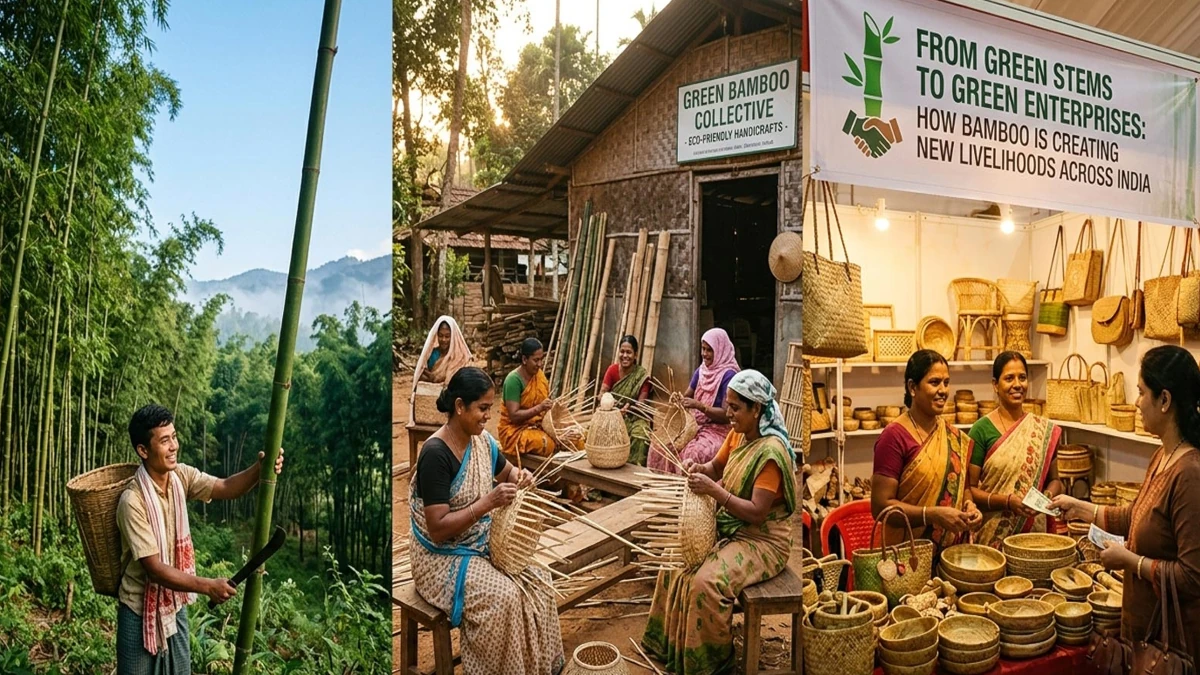
NEW DELHI: Once viewed largely as a traditional resource, bamboo is increasingly emerging as a source of livelihoods, entrepreneurship, technology and sustainable economic growth under a policy push by the Narendra Modi government.
A key turning point came in 2017, when bamboo grown outside forests was removed from restrictive provisions of forest regulations. The policy change opened greater opportunities for farmers, entrepreneurs and industries to cultivate, process and commercialise bamboo without the regulatory hurdles that had previously constrained the sector.
The reform has since been complemented by efforts under the National Bamboo Mission, which aims to strengthen the bamboo value chain from quality planting material and cultivation to processing, value addition and access to markets.
𝐅𝐫𝐨𝐦 𝐛𝐚𝐦𝐛𝐨𝐨 𝐭𝐨 𝐛𝐮𝐬𝐢𝐧𝐞𝐬𝐬, 𝐏𝐌 𝐌𝐨𝐝𝐢’𝐬 𝐯𝐢𝐬𝐢𝐨𝐧 𝐢𝐬 𝐭𝐮𝐫𝐧𝐢𝐧𝐠 𝐚 𝐭𝐫𝐚𝐝𝐢𝐭𝐢𝐨𝐧𝐚𝐥 𝐫𝐞𝐬𝐨𝐮𝐫𝐜𝐞 𝐢𝐧𝐭𝐨 𝐚 𝐦𝐨𝐝𝐞𝐫𝐧 𝐞𝐧𝐠𝐢𝐧𝐞 𝐨𝐟 𝐠𝐫𝐨𝐰𝐭𝐡. 🌱🇮🇳
In 2017, bamboo grown outside forests was freed from restrictive forest… pic.twitter.com/F2n6E6Kfuc
— BJP (@BJP4India) September 14, 2026
From traditional resource to modern industry
The government’s approach seeks to move bamboo beyond its traditional uses and create a modern ecosystem around the crop. Greater emphasis on processing and engineered bamboo is enabling the material to find applications in construction, manufacturing and other value-added industries.
The transformation is also being linked to employment generation, particularly in rural and tribal communities where bamboo cultivation and processing can provide additional livelihood opportunities.
According to the figures provided, NECTAR-supported bamboo technologies generate around 30 million man-days of employment annually, highlighting the potential of bamboo-based enterprises to create jobs at scale.
Engineering bamboo for infrastructure
One of the more notable developments has been the use of engineered bamboo for infrastructure and rehabilitation.
The figures cited indicate that more than 42 lakh square feet of engineered bamboo structures have been built for disaster relief and rehabilitation. In Chhattisgarh, 576 school rooms constructed using engineered bamboo are reported to be serving around 20,000 children.
Such applications demonstrate how bamboo can move beyond handicrafts and traditional products into modern construction, offering a potentially sustainable alternative material while creating demand for local bamboo value chains.
Women at the centre of the bamboo economy
The emerging bamboo economy is also creating opportunities for women. The Gadchiroli Agarbatti Project, according to the figures cited, has established 32 production centres and provides employment to around 1,100 people, with nearly 90 per cent of those employed being women.
The project reportedly provides between 45 and 60 days of employment a year, with the broader bamboo-based livelihood model offering a route towards greater economic participation for women in rural communities.
Value addition holds the key
A major focus of the bamboo push is value addition. Rather than selling bamboo only as a raw commodity, processing it into higher-value products can increase incomes for cultivators and create new opportunities for entrepreneurs and manufacturers.
The figures cited indicate that bamboo commodities can achieve 10 per cent to 70 per cent value addition, depending on the product and processing involved. This shift from raw material to finished and engineered products is central to the government’s broader vision of developing bamboo as an organised economic sector.
Bamboo’s rapid growth, versatility and wide range of applications have also made it an important component of India’s sustainability and green-growth ambitions.
The policy direction is aimed at connecting farmers with processing units, markets and new technologies, thereby creating an integrated ecosystem rather than treating bamboo cultivation as an isolated agricultural activity.