



Over the past few years, a familiar pattern has emerged across political movements in different parts of the world. A government announces a new law, amendment or policy, and before its implementations, sections of the left spring into action, portraying it as a threat to democracy, freedom or civil rights. The next step is predictable: political campaigns, street demonstrations, aggressive rhetoric and, in some cases, prolonged disruption and violence. Instead of debating the actual provisions of a policy, the politics of outrage takes over, with worst-case predictions presented as established facts.
India witnessed this pattern during the anti-CAA and anti-NRC protests of 2019-20. Claims that Muslims would automatically lose their citizenship or be stripped of all their rights circulated widely, even though the Citizenship Amendment Act did not revoke the citizenship of Indian Muslims. The result was a deeply polarised national debate that extended well beyond the legislation itself.
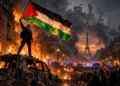
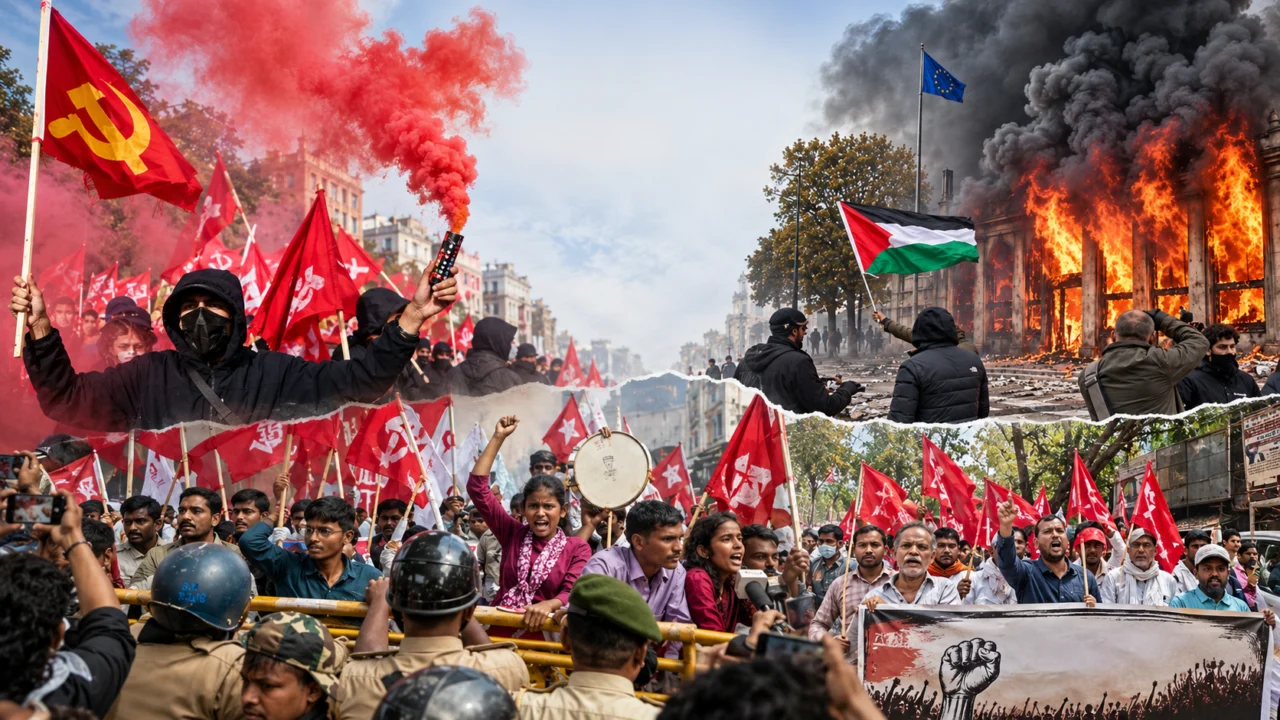
Similar questions arise whenever organised political movements turn policy disagreements into campaigns of permanent confrontation. France’s recent unrest offers a different example: demonstrations over economic and public-service grievances were accompanied by looting, arson and clashes involving violent elements.
Who funds these campaigns, who shapes their messaging, and who takes responsibility when agitation crosses the line into disorder?
Democracy requires opposition, but opposition cannot mean manufacturing panic over every government decision, treating unverified predictions as facts and refusing to engage honestly with the text of a law. Political movements that claim to defend democratic values must be held to the same standards they demand of governments: transparency, factual accuracy and accountability for their actions.
France: From public grievances to looting and arson
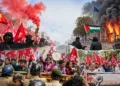
France witnessed widespread protests and violent disorder on October 17, 2026, following demonstrations initially driven by concerns about education, rising living costs and declining public services.
According to reports, between 550,000 and 800,000 people participated in demonstrations nationwide, with the authorities and organisers providing differing estimates. While many demonstrators protested peacefully, fringe groups engaged in looting, arson and clashes with police. More than 1,200 arrests were reported in the initial coverage, and over 150 police officers were injured.
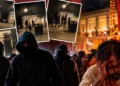
The violence affected several cities. In Lyon, masked individuals targeted shops, urban infrastructure and public spaces before setting fire to the municipal tourism office at Place Bellecour. The Lyon municipal authorities condemned the deliberate burning of the building as an exceptionally serious act of violence.
The destruction raises a fundamental question: what happens when a simple grievance becomes a cover for criminal behaviour?
A demand for better schools does not justify burning a public building. Anger over inflation does not justify looting luxury stores. Opposition to government policy does not give anyone the right to attack police officers or destroy the property of ordinary citizens.
French Prime Minister Sebastien Lecornu blamed ultra-left extremists for contributing to the violence. President Emmanuel Macron also condemned the disorder.
Germany: Radical-left violence is a documented security concern
Germany offers another example of why political extremism on the left must be taken seriously.
The German government’s 2025 domestic intelligence report, presented in June 2026, recorded an increase in extremist offences and violent offences across ideological categories. The report highlighted a rise in left-wing extremist violence, including attacks such as the January 2026 arson attack on Berlin’s electricity infrastructure.
Radical-left and autonomous networks can use demonstrations, direct-action campaigns and confrontational tactics to challenge institutions and public authorities. Where evidence establishes that activists have committed arson, assaulted police or damaged property, those actions warrant investigation and prosecution.
The appropriate response is neither to shield left-wing extremists from scrutiny nor to label every left-led mobilisation an exercise in political violence. It is to demand the same evidentiary standards and accountability applied to every other ideological movement.
India’s CAA-NRC protests
India’s anti-CAA and anti-NRC protests offer a significant case study in how opposition movements can grow beyond their original policy disputes.
The Citizenship Amendment Act was passed by Parliament in December 2019. It provides a route to Indian citizenship for specified persecuted religious minorities from Afghanistan, Bangladesh and Pakistan who entered India by the statutory cut-off date, excluding Muslims from those specified categories. The proposed nationwide NRC became a separate source of concern and political debate.
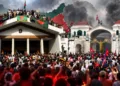
Opposition to the law spread across universities, cities and public spaces. Student groups, left-wing organisations, political parties and civil-society networks participated in or supported demonstrations. Shaheen Bagh in Delhi became one of the most prominent protest sites, with a sit-in that lasted 101 days and inspired similar demonstrations elsewhere.
The protests raised questions about the relationship between political mobilisation, constitutional rights and public order. Opponents argued that the CAA was discriminatory and expressed fears about its possible interaction with citizenship verification. The government defended the legislation as a measure to provide relief to specified persecuted minorities from neighbouring countries.
Left-wing parties and student organisations were among the participants in the agitation. Their role deserves scrutiny, particularly where political rhetoric, calls for prolonged disruption or unlawful actions are concerned. But participation in anti-CAA protests alone does not establish criminal intent, and the peaceful exercise of dissent remains protected in a democracy.
The CJP drama
The recent protests involving the Cockroach Janata Party (CJP) raise questions about this model of agitation and the role of the Left in it.
The protests against Chief Election Commissioner Gyanesh Kumar and the Special Intensive Revision (SIR) of electoral rolls have brought CJP into a wider coalition involving opposition parties and student organisations. Reuters reported that CJP and Left-wing student groups called supporters to gather in Delhi on October 16. The Indian Express also reported the detention of CJP founder Abhijeet Dipke and AISA president Neha Bora amid the demonstrations.
Delhi Police registered multiple FIRs after the CJP’s October 16 march, citing alleged violations of prohibitory orders and obstruction of public servants. More than 100 protesters were detained. Police also reported investigating social media accounts over fabricated videos and misleading content linked to the unrest.
Earlier, CJP leaders Saurav Das and Ashutosh Ranka were sent into judicial custody following a demonstration at Jantar Mantar, where protesters allegedly crossed barricades and demonstrated despite restrictions.
The participation of Left-wing student organisations in the CJP-led mobilisation makes the ideological dimension relevant. Organisations such as AISA and DYFI have their own political identities and agendas. Their participation alongside CJP and opposition groups demonstrates how different organisations can converge around a shared campaign, even when they do not agree on every issue.
The concern is that a specific institutional dispute can become a platform for a much wider political campaign. Demands concerning electoral rolls may expand into slogans about unrelated laws, government policies and ideological causes. Such expansion is not, by itself, evidence of wrongdoing; political coalitions routinely bring multiple demands together. But it raises a legitimate question: are the organisers pursuing a clearly defined reform, or using one grievance to build a broader movement against the elected government?
When demonstrations turn violent
The wider protest period also witnessed violence in several locations. Buses were set on fire near Jamia Millia Islamia in Delhi in December 2019, and confrontations between demonstrators and police resulted in injuries and property damage.
The violence in northeast Delhi in February 2020 was a separate and more serious episode. It resulted in deaths, injuries and extensive damage to property. Investigators alleged that some individuals had coordinated activities connected to the unrest.
This is where political accountability becomes important. Leaders and organisations that mobilise crowds must be questioned about their rhetoric, their calls to action and their response to violence.
The lesson is not that every anti-government protest is a conspiracy. It is that no political movement should be allowed to use democratic freedoms as a shield against scrutiny of unlawful conduct.
The politics of pre-emptive protest
One of the defining features of modern political activism is the ability to mobilise around what a policy might do before its full effects can be assessed.
There are legitimate reasons for such protests. Citizens do not need to wait for a law to harm them before challenging it. Preventive dissent is often central to democratic accountability.
The problem begins when political organisations present predictions as certainties, circulate misleading claims or refuse to reconsider their positions when facts change. In such circumstances, mobilisation can become less about evaluating policy and more about sustaining political opposition.
The CAA-NRC debate illustrates how two related but legally distinct issues became linked in public mobilisation. The French unrest shows a different danger: demonstrations over genuine economic and public-service grievances can provide an opportunity for violent groups and opportunistic criminals to act under the cover of a crowd.
These situations are not identical. They should not be presented as evidence of one coordinated global strategy. But both demonstrate why journalists, citizens and authorities must examine the claims made by protest organisers, the accuracy of their messaging and their response when agitation crosses legal boundaries.
The role of communist and left-wing organisations
Communist parties, left-wing student unions and radical-left groups have a long history of organising demonstrations around labour rights, education, economic policy and state authority. In many cases, these campaigns have brought neglected issues into public debate.
Their political influence, however, should not exempt them from critical examination. Organisations that regularly accuse governments of authoritarianism must also explain how they interpret democratic rights when protests obstruct essential services, intimidate opponents or turn violent.
There is also a clear difference between calling for a protest, advocating civil disobedience and encouraging violence. Each carries different legal and ethical implications. Claims that a specific organisation incited or coordinated violence must be supported by reliable evidence rather than inferred from its ideology or presence at a demonstration.
A democracy becomes weaker when any political camp is treated as inherently virtuous and therefore beyond criticism.
The events in France underline the tension between protecting the right to protest and maintaining public order. The state must permit peaceful demonstrations while protecting people, businesses, public buildings and essential services from violence.
Communist and radical-left organisations should be scrutinised wherever evidence warrants it, just as right-wing extremists and other violent groups should be. Their claims, methods and conduct deserve the same critical attention.
Democracy is not measured by the number of demonstrations a country permits. It is measured by the ability of citizens to express disagreement freely while ensuring that rights, public safety and the rule of law remain protected.