Unravelling the truth: Know about the temples on which the mosques have been built
October 2, 2026
  • Read Ecopy
  • Circulation
  • Advertise
  • Careers
  • About Us
  • Contact Us
Android AppiPhone AppArattai
Organiser
  • ‌
  • Bharat
    • Assam
    • Bihar
    • Chhattisgarh
    • Jharkhand
    • Maharashtra
    • View All States
  • World
    • Asia
    • Europe
    • North America
    • South America
    • Africa
    • Australia
  • Editorial
  • International
  • Opinion
  • RSS @ 100
  • More
    • World Hindu Congress 2026
    • Op Sindoor
    • Analysis
    • Sports
    • Defence
    • Politics
    • Business
    • Economy
    • Culture
    • Special Report
    • Sci & Tech
    • Entertainment
    • G20
    • Azadi Ka Amrit Mahotsav
    • Vocal4Local
    • Web Stories
    • Education
    • Employment
    • Books
    • Interviews
    • Travel
    • Law
    • Health
    • Obituary
  • Subscribe
    • Subscribe Print Edition
    • Subscribe Ecopy
    • Read Ecopy
  • ‌
  • Bharat
    • Assam
    • Bihar
    • Chhattisgarh
    • Jharkhand
    • Maharashtra
    • View All States
  • World
    • Asia
    • Europe
    • North America
    • South America
    • Africa
    • Australia
  • Editorial
  • International
  • Opinion
  • RSS @ 100
  • More
    • World Hindu Congress 2026
    • Op Sindoor
    • Analysis
    • Sports
    • Defence
    • Politics
    • Business
    • Economy
    • Culture
    • Special Report
    • Sci & Tech
    • Entertainment
    • G20
    • Azadi Ka Amrit Mahotsav
    • Vocal4Local
    • Web Stories
    • Education
    • Employment
    • Books
    • Interviews
    • Travel
    • Law
    • Health
    • Obituary
  • Subscribe
    • Subscribe Print Edition
    • Subscribe Ecopy
    • Read Ecopy
Organiser
  • Home
  • Bharat
  • World
  • Operation Sindoor
  • Editorial
  • Analysis
  • Opinion
  • Culture
  • Defence
  • International Edition
  • RSS @ 100
  • Magazine
  • Read Ecopy
Home International Edition News

Unravelling the truth: Know about the temples on which the mosques have been built

It is high time that the world knows about the truth related to Hindu temples which are in actuality a symbol of faith and architectural marvel and how mosques have been built on them,thereby hurting the religious beliefs of the Hindus

WEBDESKWEBDESK
May 28, 2024, 06:00 pm IST
inNews, Bharat, India, Culture, International Edition
Follow on Google News
Mosque built on Hindu temples

Mosque built on Hindu temples

Facebook
Twitter
WhatsAppTelegramEmail

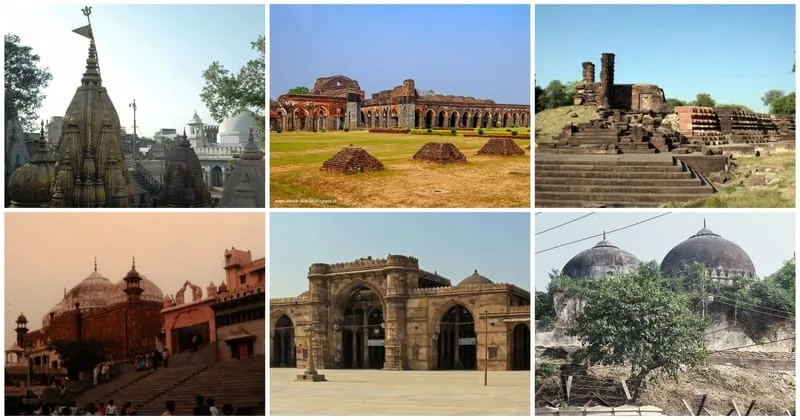
India’s rich history, spanning thousands of years, fills its people with pride. This is the land of epic tales like the Mahabharata and Ramayana, which celebrate vast knowledge, grand infrastructures, immense wealth, and countless temples. Unfortunately, many temples were lost or destroyed due to invasions and the rule of the Mughals and British. Sadly, these temples were not just destroyed but often converted into mosques. Places that once resonated with ancient Sanskrit music, prayers, and slokas now bear no trace of their Hindu origins. The Muslim rule in India led to the loss of some of the country’s most treasured temples and knowledge centres. Here are some popular temples converted into a Mosque.

Organiser E Exit poll Lok Sabha Elections 2024

Ram Janmabhoomi Mandir Ayodhya – Babri Masjid
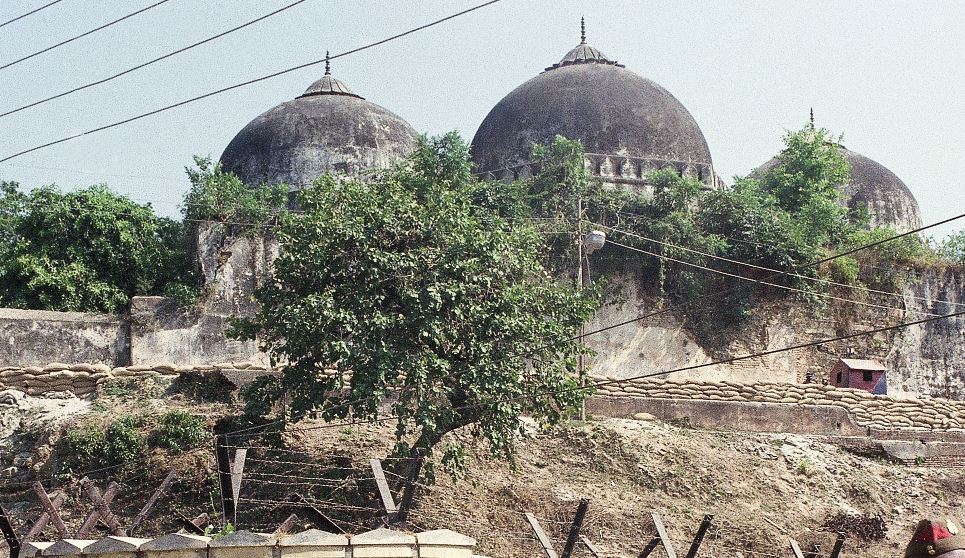
According to Hindus, the land where the Babri Mosque was built in 1528 is the ‘Ram Janmabhoomi’ (birthplace of Shri Ram). It is believed that Mir Baqi, a general of Mughal king Babur, destroyed a pre-existing Ram Mandir to construct the Babri Masjid. Both communities have worshipped at this “mosque-temple,” with Muslims praying inside the mosque and Hindus outside it. Some claim that Babur demolished the temple, while others believe earlier Islamic rulers destroyed it, as the mosque’s architecture doesn’t match Babur’s era. However, it is widely acknowledged that a temple once existed there, and people have worshipped Bhagwan Ram at this site for centuries. Today, the Ram Mandir is being constructed at this historically significant location.

Krishna Janmabhoomi Temple – Shahi Idgah Mosque
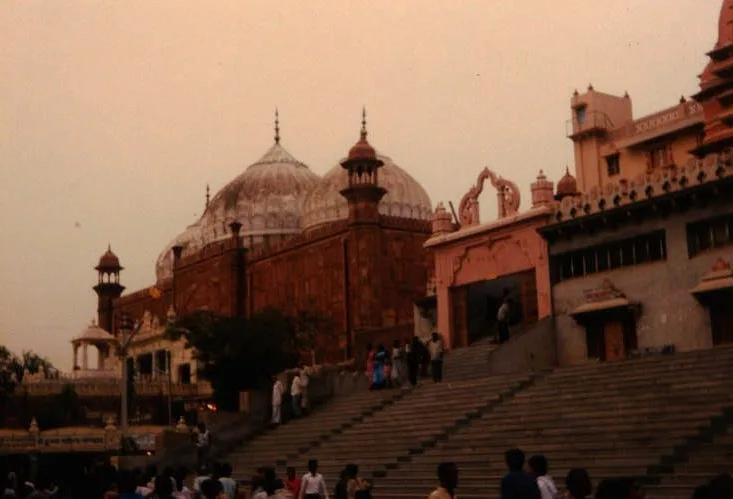
 

The Sri Krishna Janmabhoomi Temple, also known as the Krishna Janmasthan or Kesava Deo Temple, is located in Mathura, Uttar Pradesh, the legendary birthplace of Bhagwan Krishna. It is believed that Bhagwan Krishna’s grandson, Vajra, originally built the temple 5,000 years ago. The temple saw a significant upgrade during the reign of Chandragupta II around 400 AD. After being demolished in 1017 AD, it was rebuilt by Bir Singh Bundela, a king under the Mughal Empire. However, Emperor Aurangzeb later destroyed the temple again and constructed the Shahi Idgah Mosque above the Kesava Deo Temple. The site holds deep historical and religious significance, symbolising the enduring legacy of Bhagwan Krishna in Hinduism.

Kashi Vishwanath Temple – Gyanvapi Mosque
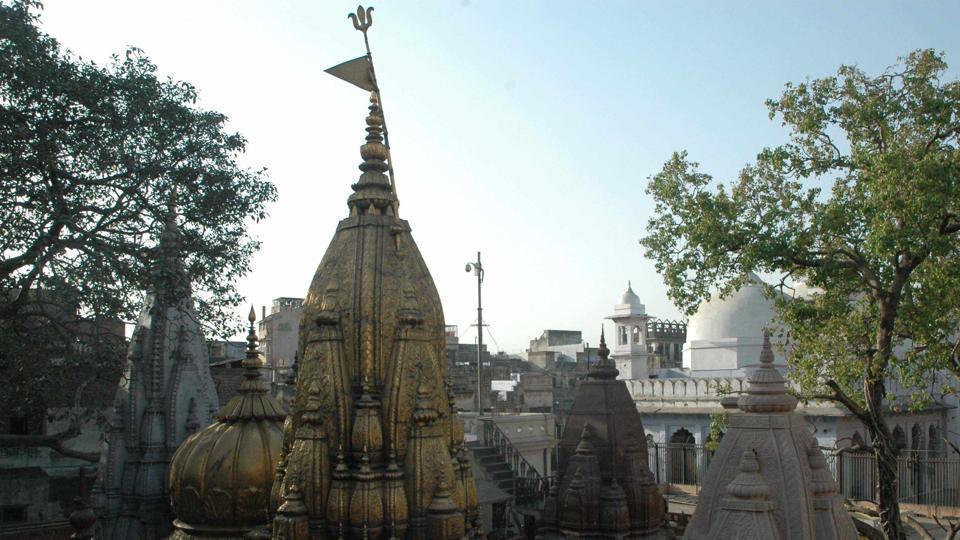
 

The Kashi Vishwanath Temple, dedicated to Bhagwan Shiva, is one of the most renowned Hindu temples located in Varanasi, the holiest city for Hindus. It is a significant pilgrimage site where Hindus are expected to visit at least once in their lifetime and where many pour the ashes of their ancestors into the River Ganges. The main deity, Vishwanatha or Vishweshwara, means the Ruler of the Universe. Varanasi claims to be the oldest living city in the world, with a documented history of 3,500 years. However, the original Jyotirlinga of Kashi Vishwanath is missing. The old temple was destroyed multiple times during the Mughal invasions, with historical records indicating that Muslim rulers repeatedly demolished it.

Rudra Mahalaya Temple – Jami Masjid
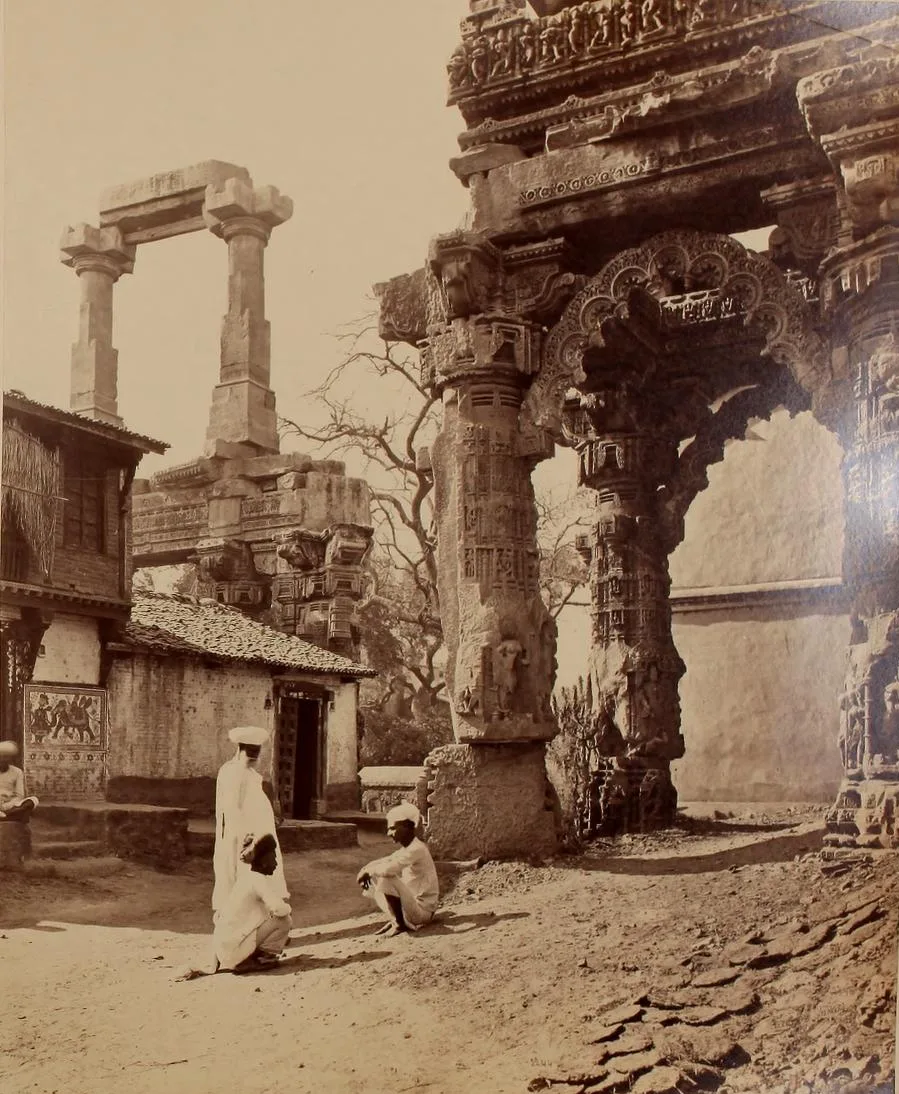
The Rudra Mahalaya temple complex, located in Siddhpur, Patan district of Gujarat, is a significant historical site. Siddhpur, an ancient holy town on the banks of the Saraswati River, is named after Siddhraj Jaisinh, who completed the magnificent temple in the 12th century AD. The construction began in 943 AD by Mularaja Solanki, the founder of the Solanki dynasty, and was completed by Siddharaj Jaisinh in 1140 AD. The temple was dismantled between 1410-1444 by Alauddin Khilji and later further demolished by Ahmed Shah I, who converted part of it into the Jami Masjid.

Adinath Temple – Adina Mosque
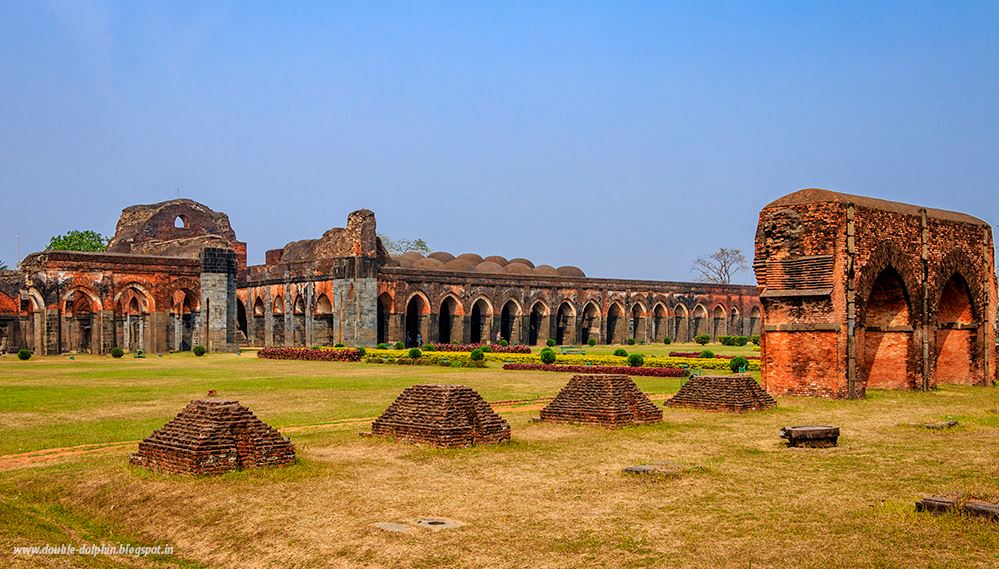
Located in Pandua, West Bengal, the Adina Mosque, built by Sikandar Shah in 1358-90 AD, was erected over a grand ancient Hindu temple and is now considered one of India’s largest mosques. Legend suggests it was originally a Hindu temple dedicated to Bhagwan Shiva, later converted into a mosque. Remnants of Hindu deities adorn the mosque’s gateways and walls, with interior carvings depicting Hindu designs. Signs of Hindu influence abound, with stone slabs featuring Ganesh and Nataraj statues, as well as crests of doorways displaying Hindu motifs. The name “Adina” of Adina mosque is also believed to come from the word “Adinath”, depicting Bhagwan Shiva.

Bhojshala – Kamal Maula Mosque
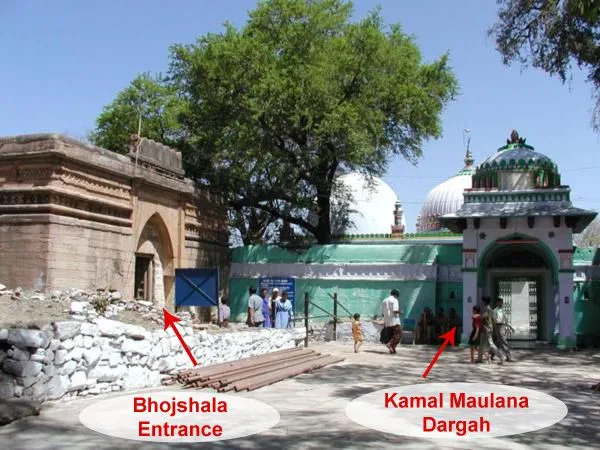
Bhojshala, an ancient temple of Mata Saraswati, was built in 1034 AD by Raja Bhoj, whose vast empire included regions from Rajasthan to Odisha. Located in the Dhar district of Madhya Pradesh, it serves as a major educational centre. The Islamic incursion began in 1269 AD when Kamal Moulana entered Malwa and later provided intelligence to Alauddin Khilji. In 1305 AD, Khilji attacked Bhojshala, killing 1200 Hindu students and teachers. Dilawar Khan later destroyed part of the Saraswati Temple and converted it into a dargah. Subsequent Muslim rulers continued these efforts, with Mehmudshah building the Kamal Moulana Makbara on the site. Before 1997, Hindus could only visit Bhojshala but couldn’t perform puja. CM Digvijaya Singh’s 1997 order allowed Muslims to offer Namaz on Fridays while restricting Hindu access, except on Vasanta Panchami for performing puja.

Bhadrakali Temple – Jama Masjid
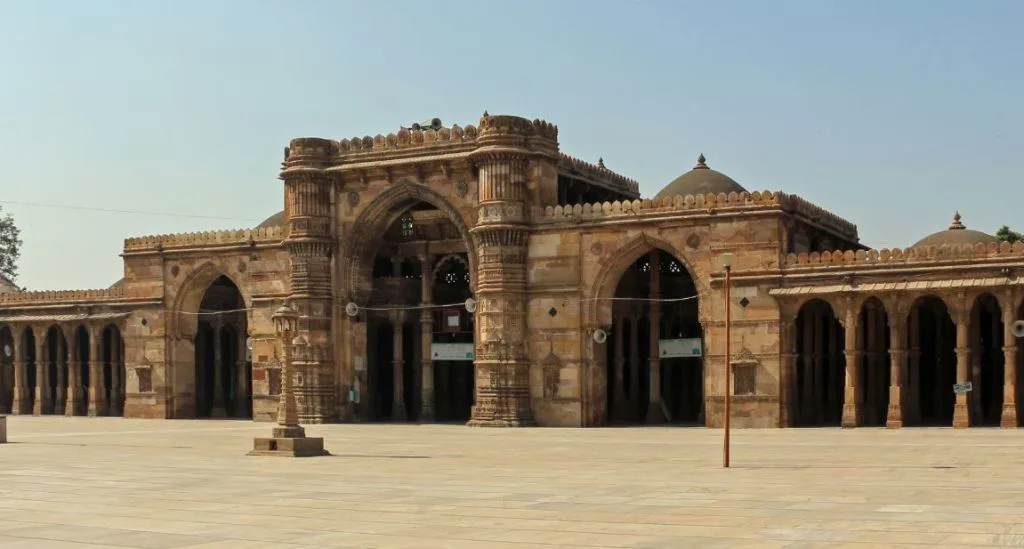
The Jama Masjid, constructed in 1424 CE in Ahmedabad, was originally a Hindu temple dedicated to Mata Bhadrakali. Initially named Bhadra after the goddess, the city was later known as Karnavati, Rajnagar, and Asaval in different periods. Built by Rajput Parmar kings of Malwa, the temple features intricate filigree carvings of flower and Paisley motifs, lotus flowers, and celestial dancers on its pillars. The presence of over 100 elaborately carved pillars in the temple complex suggests its Hindu origin, as mosques typically have open halls for mass prayers, while Hindu temples feature pillar carvings depicting stories from sacred texts like the Puranas and Mahabharata.

Vijay Temple – Bijamandal Mosque
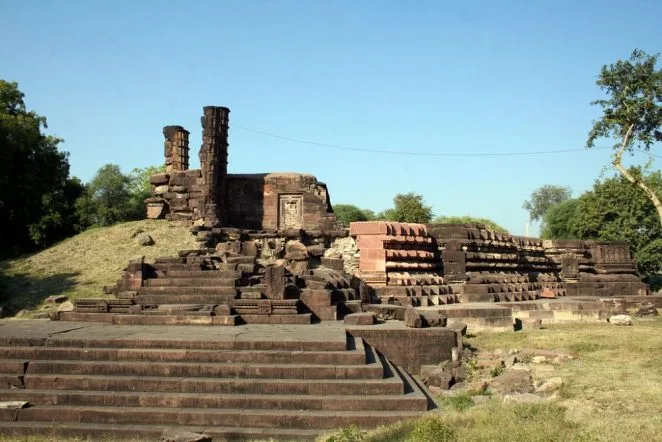
Vidisha, located in Madhya Pradesh, is renowned for the Bijamandal Mosque, which holds a poignant history of Hindu temples being converted into mosques during Islamic rule. Originally dedicated to Mata Charchika by the Paramar Kings, the temple’s materials were repurposed to construct the Bijamandal Mosque. Inscriptions at the site indicate that the temple honoured Mata Vijaya, the deity of victory, and was built by King Naravarman of Malwa. The name “Bija” or “Bijaya” stems from the distortion of the original title of the Mata Vijaya Rani.

Also Read: Hampi’s Heritage Under Threat: Karnataka’s Virupaksha temple caves damaged by heavy rains; ASI swings into action

The presence of mosques standing atop ancient Hindu temples echoes a complex history of religious transformation and cultural assimilation in India.

Topics: Attack on Hindu templesBhojshalaAdinath TempleKashi Vishwanath TempleBabri MasjidKrishna Janmabhoomi temple
Share7
Tweet
SendShareSend
✮ Subscribe Organiser YouTube Channel. ✮
✮ Join Organiser's WhatsApp channel for Nationalist views beyond the news. ✮
Previous News

Jharkhand: High Court seeks ED’s reply on former CM Hemant Soren’s fresh bail petition

Next News

Gujarat Horror: Altaf Hussain Sheikh arrested for attacking Jain Sadhvi’s with belt

Related News

Bihar Temple Vandalism: Police detain 3 minor Muslim boys for stone-throwing, urination at Hanuman murti in Nalanda

Kalyan Singh is remembered on his death anniversary for his role in the Ayodhya movement and Ram Temple cause

Kalyan Singh Death Anniversary: Remembering ‘Babuji’, the leader who became a key face of Ayodhya Ram Mandir movement

India is stepping up diplomatic efforts to bring the 11th-century Maa Vagdevi statue, associated with Bhojshala, back from London

Will Maa Vagdevi Return to Bhojshala from London? India steps up diplomatic efforts at BRICS meeting

Bhojshala Campus

Bhojshala: The legacy of  a scholarly king

Rajabhoj Memorial Lecture Series Committee, Dhar, hosted a lecture on “Bhojshala: India’s Cultural Renaissance” at Milan Mahal

Rajabhoj Memorial Lecture Series: Bhojshala -A powerful symbol of India’s cultural renaissance

Gyanvapi Complex

Gyanvapi Row: Hindu side demands Mosque premises be vacated, Muslim side rejects mediation; Both seek court verdict

Load More

Latest News

Former Prime Minister Lal Bahadur Shastri with Bharatiya Jawans

Red Shadow against Lal Bahadur : from ‘Shastri Vrat’ to ‘Tashkent’

Tamil Nadu: Western Ghats Lit Fest 2026 to celebrate ‘Bharat Rising’ in Coimbatore on October 24–25

From Bombs to Ballots: How Nanoor’s sea of women is rewriting Bengal’s violent political history

Birth Anniversary of Mahatma Gandhi: Examining Hind Swaraj through the lens of the Thirukkural

The RSS has the strength to make India great — Gandhi

Lal Bahadur Shastri Jayanti: The “Shastri Vrat” – Epitome of simplicity and commitment

(Left) Rashtriya Janata Dal (RJD) MP Manoj Jha, centre, advocate Prashant Bhushan, left, and All India Students' Association (AISA) National President Neha Bora address a press conference calling for a protest at Jantar Mantar on October 2 to demand the resignation of Chief Election Commissioner Gyanesh Kumar, in New Delhi (Right) Traffic Restrictions Near Jantar Mantar on October 2; Delhi Police Issues Advisory

CJP 2.0 protest threat: Delhi Police issues traffic advisory, diversions near Jantar Mantar, Connaught Place

Women’s Health Takes Centre Stage at Hindu Community Seminar in New Zealand

NZ Hindu Women’s Forum, HPANZ host women’s health and wellbeing seminar in Wellington

A UK-Iranian dual national has been arrested on suspicion of preparation of terrorist acts in connection with the incident at RAF Fairford, counter-terror police have said

RAF Fairford Terror Plot: UK-Iranian dual national arrested; British Police probe possible Iran link

Image courtesy- @IndiaCoastGuard

Drugs worth Rs 3,000 crore seized from Iranian boat in Arabian Sea; five Pakistanis detained

Load More
  • Privacy
  • Terms
  • Cookie Policy
  • Refund and Cancellation
  • Delivery and Shipping

© Bharat Prakashan (Delhi) Limited.
Tech-enabled by Ananthapuri Technologies

  • Home
  • Search Organiser
  • Bharat
    • Assam
    • Bihar
    • Chhattisgarh
    • Jharkhand
    • Maharashtra
    • View All States
  • World
    • Asia
    • Africa
    • North America
    • South America
    • Europe
    • Australia
  • Editorial
  • Operation Sindoor
  • Opinion
  • Analysis
  • Defence
  • Culture
  • Sports
  • Business
  • RSS @ 100
  • Entertainment
  • More ..
    • Sci & Tech
    • Vocal4Local
    • Special Report
    • Education
    • Employment
    • Books
    • Interviews
    • Travel
    • Health
    • Politics
    • Law
    • Economy
    • Obituary
  • Subscribe Magazine
  • Read Ecopy
  • Advertise
  • Circulation
  • Careers
  • About Us
  • Contact Us
  • Policies & Terms
    • Privacy Policy
    • Cookie Policy
    • Refund and Cancellation
    • Terms of Use

© Bharat Prakashan (Delhi) Limited.
Tech-enabled by Ananthapuri Technologies