The White House announced on August 22, 2023, that President Joe Biden would travel to New Delhi, India, to attend the G20 summit scheduled for September 9-10, 2023. While in India, the President is expected to meet with world leaders, including India’s Prime Minister Narendra Modi. He will focus on his pet agenda of “climate change, clean energy, and reforming multilateral banks, including the World Bank and International Monetary Fund,” according to the White House. This upcoming trip will be Biden’s first to the Republic of India as the President of the United States.
President Biden’s trip to India marks America’s latest round of engagements with the world’s most populous nation. India is also the world’s third-largest (PPP) economy. The White House announcement comes after a high-level State Visit to Washington, D.C., by PM Modi in June. The White House rolled out the red carpet for Modi with a State Dinner. The Indian PM also addressed the joint session of the U.S. Congress.
Modi’s visit was followed by a historic bi-partisan congressional delegation to India to attend India’s Independence Day celebrations on August 15. Indian American Congressman Ro Khanna (Democrat, CA17) led the delegation.
Hesitations of History
According to Rich Verma, the former U.S. Ambassador to India, the history of the U.S.-India relationship is marked by “the periods of alignment, disinterest, frustration, and convergence” (Overcoming the Hesitations of History: An Analysis of U.S.-India Ties; Ph.D. dissertation; Georgetown University; 2020). American leadership, writes Verma, still “doesn’t count India as one of its closest friends and partners… [and] few would assert that we [U.S. and India] have become allies, natural or otherwise.”
The U.S. and India neither have a formal alliance nor a comprehensive defense partnership.
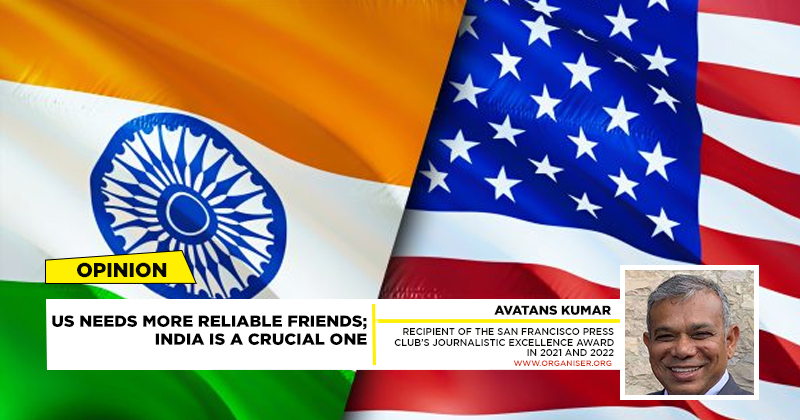
Despite the “hesitations” and the disagreements – some relics of the Cold War era thinking – which have dominated much of American policy-making, there is a growing realization among American policy-makers that America’s national strategic interests are tied to India. On June 21, 2023, the Editorial Board of The Wall Street Journal wrote: “As the new era of competition with China arrives, the U.S. needs more reliable friends. India is a crucial one, arguably the most important in the Indo-Pacific after Japan. Let’s hope the warm welcome to PM Modi is followed by warmer economic and security ties.”
Growing Realism
The growing realism has prompted realpolitik in the U.S. Congressman Ro Khanna wrote a letter to Speaker Kevin McCarthy urging him to invite PM Modi to deliver a joint address to Congress. Later, Khanna also led a Congressional delegation to India to participate in India’s Independence Day celebrations.
The India trip, according to Khanna, “was in preparation for President Biden’s visit in the G-20.” In an exclusive communication with this author, Rep. Khanna said, “India is a critical ally to ensure that China does not become a hegemon in Asia and to help move some of the supply chain hubs from China to India to supply the Asian markets.”
The delegation had wide-ranging engagements with the government of India functionaries and opposition members. Khanna also met with Muslim leaders, Kuki (Manipuri tribe) representatives, Bollywood legend Amitabh Bachchan, and Tushar Gandhi, the great-grandson of M.K. Gandhi, the Mahatma. “We were free to meet anyone,” Khanna told this author, clarifying media rumors.
Areas of Disagreements
Even with the recent bonhomie and an overall ‘track one’ success story, the U.S. and India do not see eye to eye on many issues. For example, the two countries have polar opposite views on the Ukraine war. The two have sparred over India’s purchase of Russian oil, violating U.S. and European sanctions.
While Americans scoff at India’s willingness to buy Russian oil, Indians say their priorities are toward the well-being of 1/5th of humanity (1.4 billion people) rather than a no-skin-in-the-game war in Ukraine. “More generally,” writes Walter Russell Mead of the conservative think tank Hudson Institute, “Indians bristle when they sense Americans and Europeans getting together to write global rules. The more that American Wilsonians talk about a value-based international order, the more that Indians worry about Western arrogance.”
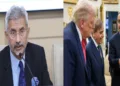
Questions on India’s records on “human rights,” condition of minorities, etc., are often raised by U.S. politicians and media. However, India rejects those concerns and, like any self-respecting sovereign nation, has an aversion to Western interference in its domestic affairs. India quickly highlights America’s racial problems, rising crimes, violence, mental health epidemic, drug addiction, homelessness in their cities, etc., as matters of concern. India, too, has concerns about the human rights situation in the U.S., said Dr. S. Jaishankar, India’s Minister for External Affairs, in a press conference.
Understanding India’s Hindu Renaissance
There is much about India that most Americans don’t know, including many (Indian) American politicians. India lost agency in her narrative due to Islamic and British colonization and a Marxist stranglehold over its education after its Independence in 1947. American efforts to understand India by establishing centers of South Asian studies at U.S. universities, too, have their pitfalls. These centers have added to the growing schism of academic presentation of India, its culture, texts, and traditions, and the ground reality.
Generations of leaders, public intellectuals, scholars, and media persons in the U.S. have also grown up with a Pakistan focus owing to the Cold War legacy. They have difficulty switching to US-India relations and often contribute highly disconnected commentary from the region. Most of these experts also hide their lack of knowledge and understanding of India by calling themselves “South Asia” experts.
The world, the U.S. included, is yet to reconcile with the undercurrents of a Hindu renaissance in India. For the first time in over a thousand years of transgenerational trauma of colonization, destruction, desecration, and genocide, Hindus, who account for about 80% of the population, feel empowered.
The liberation of India
The popular movement behind the success of Prime Minister Narendra Modi and his Bharatiya Janata Party is based on pride in the ethos of the Sanatan Hindu civilization. “It is not enough to send the British packing,” writes Mead, “the liberation of India means placing the Hindu civilization back at the center of Indian cultural and political life.”
Khanna has been one of the fiercest critics of PM Modi and “Hindutva,” the Sanskrit word meaning “Hindu-ness.” Khanna has publicly “rejected” Hindutva and has erroneously suggested it promotes inequality, intolerance, and discrimination. Pew’s 2021 “Religions of India Survey” found that almost 84% (85% Hindus) responded that to be “truly Indian,” it is crucial not just to tolerate but also to “respect” all religions.
The Hindutva accusation is arbitrary. No one has developed the parameters to study “Hindutva.” According to Indologist and philosopher Vishwa Adluri and Joydeep Bagchee, crying Hindutva in academic circles is an effort to “discipline non-conforming [Hindu] scholars.” “To use Hindutva as a smokescreen,” write Adluri and Bagchee, “is to instrumentalize real pain and suffering.”
India’s Hindu renaissance is backed by an unprecedented all-round economic development under PM Modi. “I was left with significant respect,” said Congressman Khanna, “for the caliber of India’s foreign policy, their self-confidence, and their interest in seeing a rules-based international order with economic development for developing nations and tackling climate.”
The Path Ahead
Both the U.S. and India are often chaotic yet vibrant democracies. The past few years in the U.S. have shown how rambunctious and tumultuous things can get for democracy, election integrity, and freedom of speech. To gain a proper and fuller appreciation of each other, “we need to support the cultural connection,” said Congressman Khanna. “One of the most exciting parts of my trip was meeting Amitabh Bachchan for an hour. Ultimately, the people-to-people ties help define the bonds between nations.”
It will take a diligent effort to build those cultural connections. It will take even more focused efforts to bridge the gap. However, to make a more just and equitable world, the two democracies – the oldest and the largest – must get past their differences. They owe this to the world.